Air raids are changing not just when Ukrainians shop, but where, how and how much they buy, forcing retailers to adapt to a consumer base that is increasingly split between urgent in-store purchases, delivery-first habits and a growing preference for smaller, local formats.
Ukraine retail shifts as air raids change shopping
A new Gradus Insights Catcher study, based on a seven-day digital ethnographic survey in September and October across eight Ukrainian cities, shows that repeated alarms and security risks have become a structural part of consumer decision-making rather than a temporary disruption. The findings matter economically because retail demand in wartime is no longer determined only by income or price, but by proximity to shelter, store accessibility and the ability to switch channels fast when alarms sound or stores close.
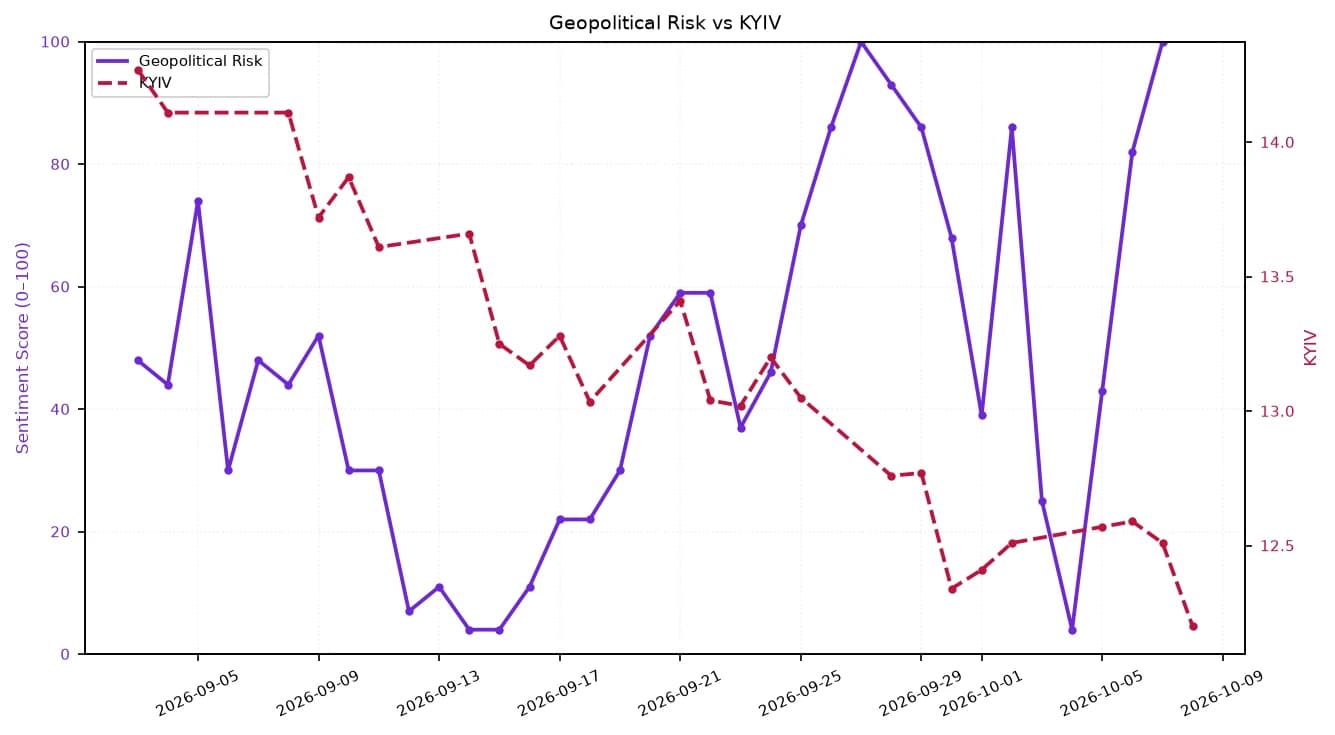
Sentiment IndicatorsⓘProprietary · adalytica.com · October 11, 2026
This is a snapshot — live sentiment, awareness and momentum for 130+ markets update continuously in the dashboard.Open AlphaPulse
The research identifies four distinct regional patterns. In Kyiv, shoppers are still in a phase of acute reaction, changing routes, postponing purchases and leaning more heavily on delivery as attacks intensify. In Odesa, Dnipro and Mykolaiv, consumers have already adapted, but remain flexible enough to reroute or switch channels the moment a threat emerges. Lviv is closer to a stable normal, where convenience and assortment still dominate decisions. Kharkiv stands out as the most advanced case of adaptation, with shopping shifted closer to home, large-format stores losing their daily role and local chains gaining weight.
That matters for retailers because war risk is now influencing basket size, trip frequency and channel mix in ways that can reshape market share. Gradus said that in Kharkiv, impulse purchases fade during heightened shelling and shoppers buy only essentials. It also found a clear split between online-first and offline-first consumers: the former are more likely to order home delivery during air alarms and search online if a product is missing, while the latter are more likely to wait out the threat or head to another store or market. In both cases, the old assumption that Ukrainians simply “got used to” the war is misleading; they have instead learned new rules of consumption.
Consumer Spending — 30-day sentimentadalytica.com
Explore this data interactively — full history, time series and cross-market comparisons.Open AlphaPulse
The study also points to three new shopping missions that have emerged under persistent threat: stock up while goods are available, choose stores or delivery services that stay open during alarms, and use shopping as a psychological break from war. That suggests retailers are being judged not only on price and assortment, but on resilience, convenience and reassurance. Digital tools such as checking stock online and comparing prices in apps have become routine, reinforcing omnichannel retail as a practical necessity rather than a strategic buzzword.
For investors, the implications are clearest for the retail chains and delivery platforms best able to serve neighbourhood-based demand. Larger formats may face pressure if consumers keep shifting toward local stores and shorter trips, while companies with strong e-commerce, app integration and last-mile capabilities could gain share. The research also points to a consumer environment in which promotional spending, inventory planning and store location strategy may matter more than in a traditional peacetime market.
Among listed names, the shift favours retailers with scale, logistics and omnichannel execution, including Walmart, Target and Costco, even if the study is centered on Ukraine rather than their home markets. The broader read-through is that wartime retail demand becomes more defensive and more local, with less room for discretionary purchases and more value placed on reliability. If Kharkiv is indeed a benchmark for “completed adaptation,” as Gradus suggests, other cities could gradually move in the same direction if air-raid conditions persist.
For Ukrainian consumers, the result is a shopping pattern shaped as much by security as by spending power. For retailers, it is a reminder that the war is still redrawing the map of demand, one alarm and one shopping trip at a time.
| Entity | Gains | Losses |
|---|---|---|
| Local Ukrainian chains | ▲More foot traffic | ▼Big-box competitors |
| Delivery and e-commerce | ▲Higher reliance | ▼Pure offline retailers |
| Omnichannel retailers | ▲Greater customer control | ▼Single-channel formats |
| Consumers | ▲More flexible access | ▼Impulse buying, convenience |