Russia’s coal exporters are losing market share in China as higher transport costs, import tariffs and tougher competition from Mongolia and Indonesia erase the price advantage that once made Russian supply a fixture among the biggest sources for the world’s largest coal buyer.
Russia coal exports lose China market share

That matters because China is the single most important swing market for seaborne and cross-border coal trade, and Russia’s setback points to a deeper erosion in the economics of its coal industry: the country is no longer competing on price and logistics at the margin, while domestic rail and port costs are still rising.
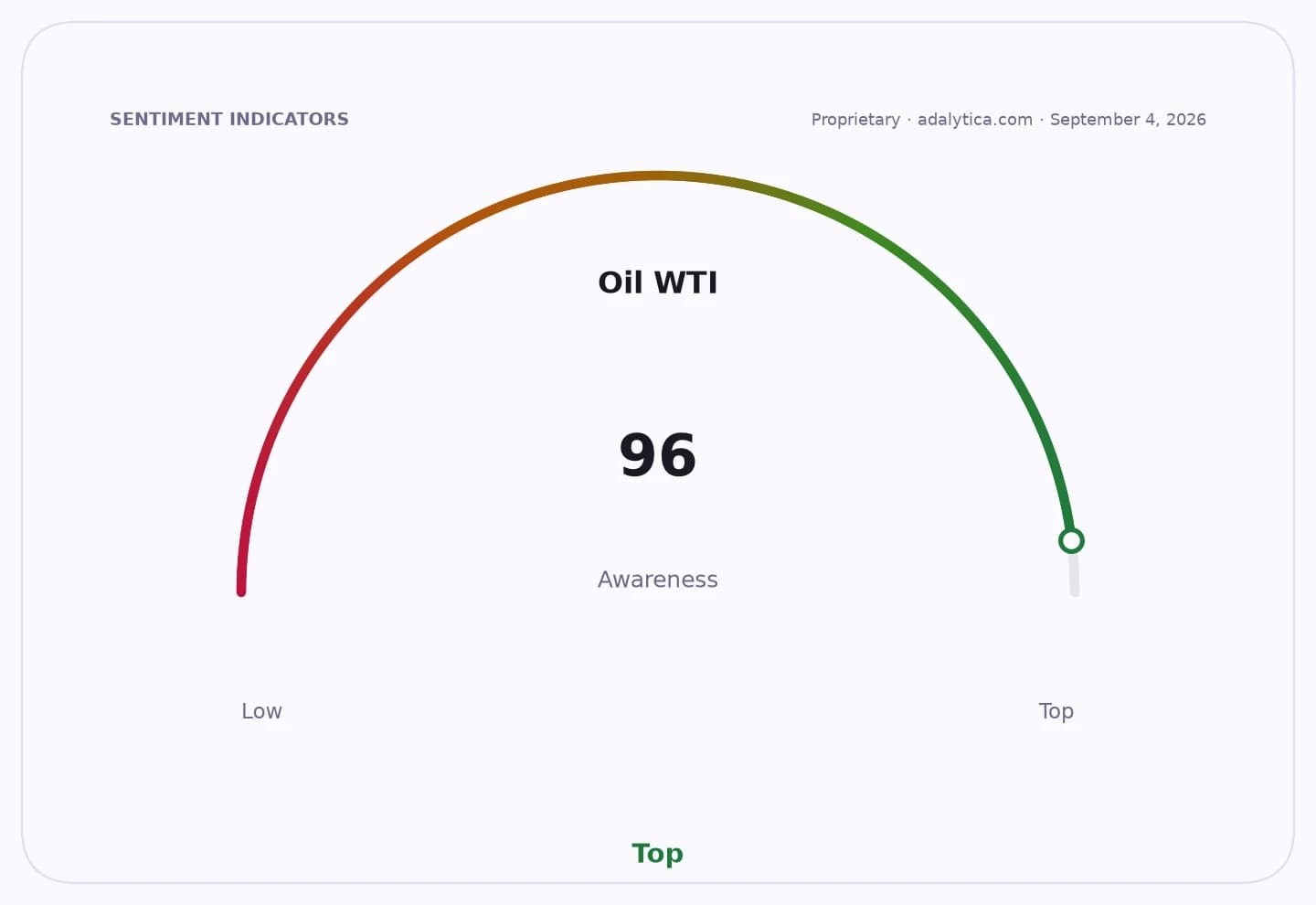
Sentiment IndicatorsⓘProprietary · adalytica.com · October 5, 2026
This is a snapshot — live sentiment, awareness and momentum for 130+ markets update continuously in the dashboard.Open AlphaPulse
According to Ukraine’s Foreign Intelligence Service, Russian coal shipments to China fell 10.8% in the January-August period from a year earlier to 53.15 million tonnes. Over the same span, imports from Mongolia rose 48.9% to 78.39 million tonnes, while Indonesian supply reached 121 million tonnes. Mongolia’s gain reflects the structural advantage of a shared land border and lower freight costs, versus Russian coal from Kuzbass that must move over the congested Eastern rail corridor before reaching Chinese buyers.
The loss is not only about volumes but also about margins. Russian coal entering China faces tariffs of 3% to 6%, while Mongolia, Australia and Indonesia benefit from zero tariffs under free-trade arrangements, widening the gap just as Russian exporters are already offering discounts of about 10% to keep customers. The intelligence service said further price cuts would push producers into loss-making sales, underscoring how little room remains to defend market share.
The pressure is most acute in thermal coal, where Russian exporters are squeezed by competition from Chinese mines, higher rail tariffs at home and rising wagon costs. Freight from the port of Vostochny to China has climbed 45.5% since the start of the year through Sept. 11, according to the report, while Russia’s rail tariffs are set to rise again in October. That makes the trade less viable even before considering the added cost of moving coal from inland basins to export terminals.
Turkey is showing a similar pattern of demand destruction. Russian coking coal shipments there fell 30% in the first seven months of the year, with no deliveries in July, as Black Sea shipping difficulties added to the burden of higher rail and transshipment costs through northwestern ports. The result is a broad-based deterioration in Russia’s export position rather than a single-market disruption.
For investors, the implications are split. Lower Russian competitiveness can support prices for rivals with better logistics — including Mongolian miners, Indonesian exporters and, in some cases, U.S. producers — while reinforcing the view that coal demand in Asia remains intact even as supply routes shift. But the Russia story also highlights a bearish truth for the sector: when freight, tariffs and discounts matter more than mining costs, the weakest exporters lose pricing power first.
The bigger narrative is that coal trade is being re-routed by economics and geopolitics at the same time. Russia still has resources, but without cheaper logistics or tariff relief, it is being pushed out of the top tier in the market that matters most. That leaves its exporters more dependent on discounts they can no longer easily afford, and more exposed if Chinese demand softens or transport costs rise further.
| Entity | Gains | Losses |
|---|---|---|
| Mongolia | ▲Higher China sales | ▼None from this shift |
| Russia’s coal exporters | ▲Short-term volume defense via discounts | ▼Market share and margins |
| Indonesia | ▲Sustained China demand | ▼Limited pricing power from competition |
| China’s buyers | ▲Lower-cost alternative supply | ▼Less leverage on Russian cargoes |