Russia’s central bank has said direct cryptocurrency transactions between individuals will be allowed only until 1 July 2027, after which peer-to-peer deals without intermediaries will be removed from the legal list of permitted crypto operations.
Russia extends crypto P2P deadline to 2027
The move matters because it puts a hard stop on one of the simplest ways Russians can move digital assets outside formal venues, tightening state control over a market that the Kremlin has only recently begun to legalize. For investors, the deadline underscores that Russia is not opening the door to a freewheeling crypto regime; it is building a regulated framework that preserves oversight and could steer activity toward licensed platforms and banks.
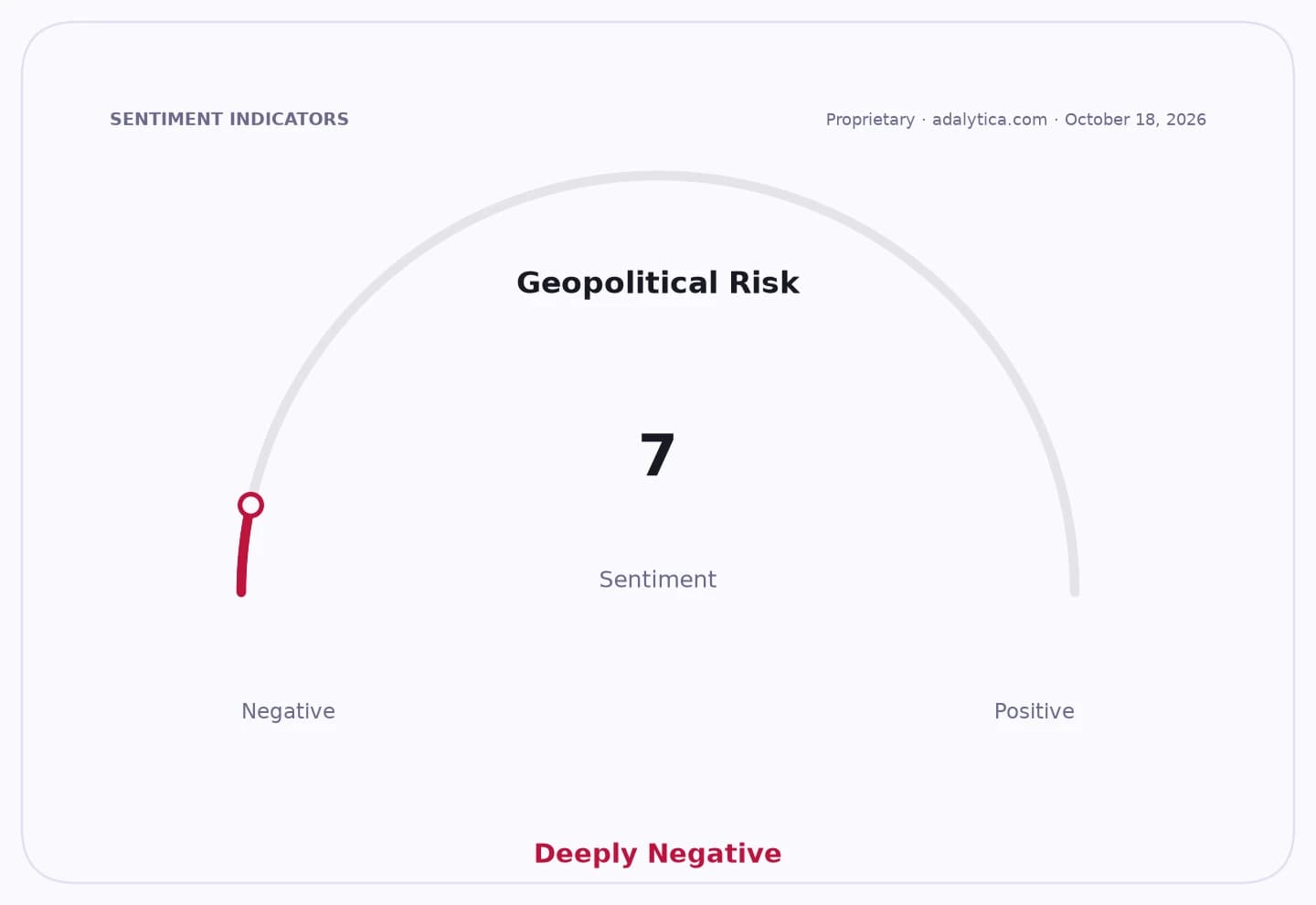
Sentiment IndicatorsⓘProprietary · adalytica.com · October 17, 2026
This is a snapshot — live sentiment, awareness and momentum for 130+ markets update continuously in the dashboard.Open AlphaPulse
The central bank said the current list of allowed crypto dealings is set out in federal law No. 282-FZ, but the section covering P2P transfers between citizens will lapse on that date. The clarification follows President Vladimir Putin’s signing in August of a law that created the legal basis for crypto circulation in Russia, recognized digital currencies as property and extended court protection to crypto rights whether or not they were previously declared.
That combination of legalization and restriction is the key message for the market. Russia is moving from gray-zone tolerance to formal recognition, but with a narrow lane for use cases and a clear timetable for informal trading to be pushed out of the system.
For crypto users and exchanges, the change could mean more demand for intermediated services, custody and compliance products, while reducing the role of cash-like bilateral transfers that have helped support liquidity in less regulated markets. For global investors, it adds to a broader pattern of governments trying to domesticate crypto rather than ban it outright, with policy increasingly shaping where volume and fees migrate.
The next focus will be how Moscow writes the operational rules around the new framework before the 2027 cutoff, and whether banks, exchanges and payment providers are positioned to capture activity that now sits on the margins of the system.
| Entity | Gains | Losses |
|---|---|---|
| Russian regulators | ▲More oversight | ▼Less informal trading |
| Licensed exchanges and banks | ▲New compliant flow | ▼Peer-to-peer platforms |
| Crypto users seeking legal clarity | ▲Court protection | ▼Direct bilateral transfers |
| Unregulated traders | ▲Temporary window | ▼2027 deadline |