The European Union is tightening sanctions on Russia even as one of its own top envoys acknowledges the bloc cannot count on most countries to enforce them, a weakness that blunts the economic reach of Europe’s Ukraine policy and complicates the outlook for trade, supply chains and investors.
EU sanctions on Russia face enforcement gaps
David O’Sullivan, the EU’s sanctions envoy, said in Warsaw on Oct. 13 that the core problem with the bloc’s restrictions is that they were not mandated by the United Nations, meaning “most countries in the world” do not feel obliged to comply. He also conceded that under those conditions the EU cannot fully stop sanctioned goods from moving through third countries, a reality that underscores the widening gap between European policy ambition and practical enforcement.
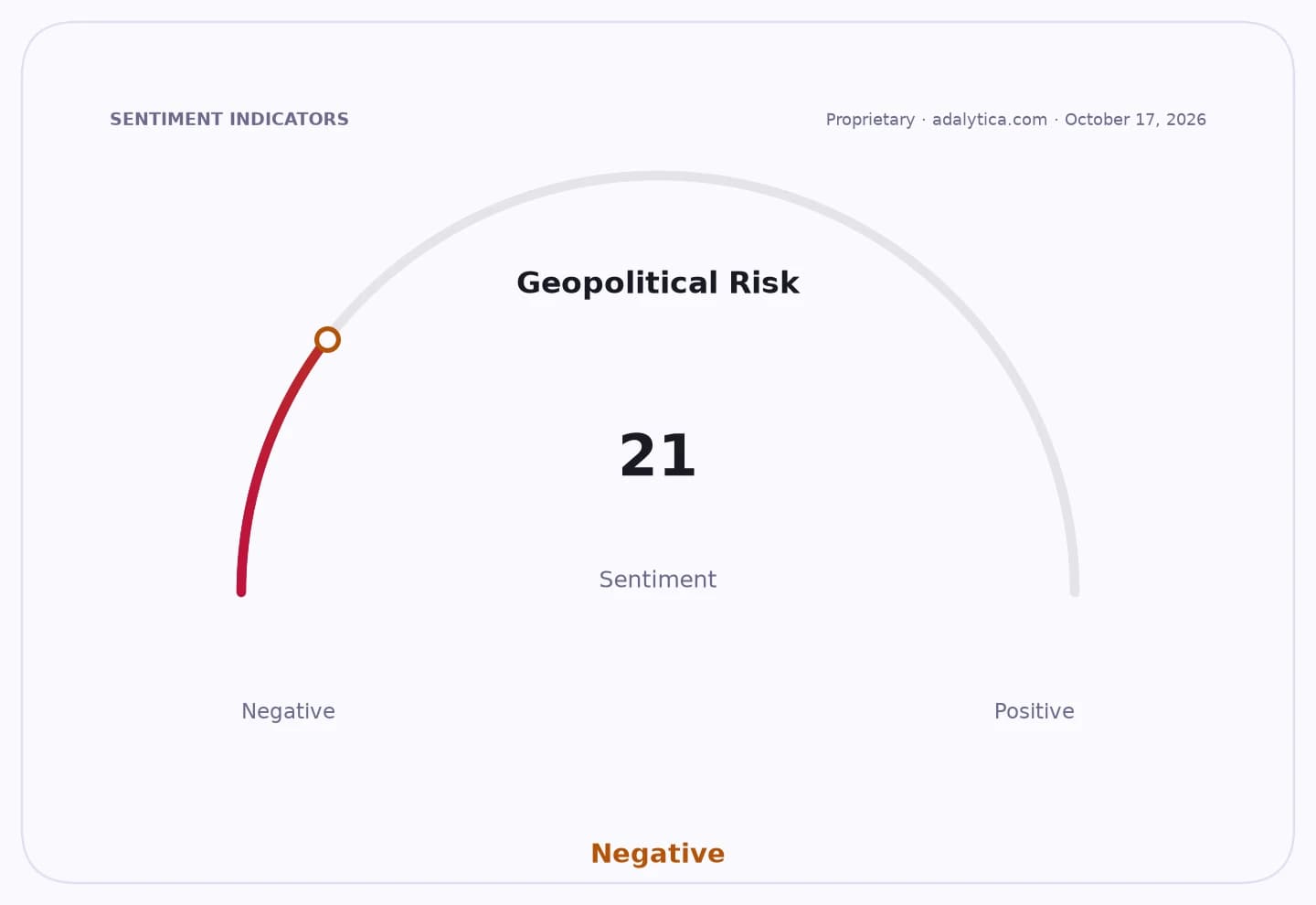
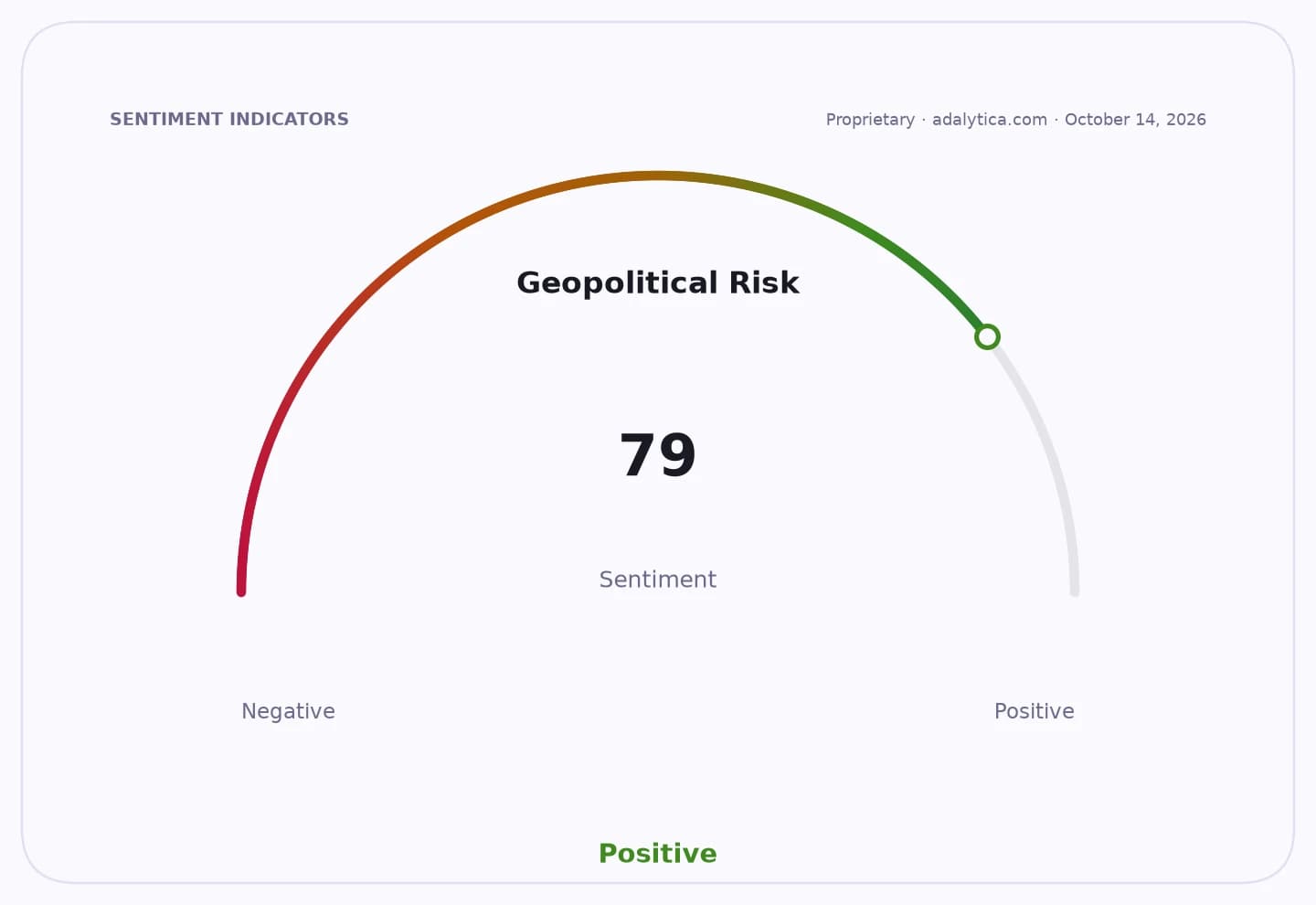
Sentiment IndicatorsⓘProprietary · adalytica.com · October 14, 2026
This is a snapshot — live sentiment, awareness and momentum for 130+ markets update continuously in the dashboard.Open AlphaPulse
That gap matters economically because sanctions only work when the network around them holds. If trans-shipment hubs, intermediaries and non-EU jurisdictions do not cooperate, Russian import channels can be rerouted, compliance costs rise for European firms and the bloc risks imposing more friction on its own producers than on Moscow’s war economy. O’Sullivan pointed specifically to the difficulty European manufacturers face in tracking their products after resale, a recurring challenge in sanctions regimes that rely on downstream monitoring rather than direct control.
For investors, the message is that sanctions are likely to remain a long-duration market variable rather than a one-off policy event. European industrial groups with exposure to dual-use goods, chemicals, machinery and precision components may face continued documentation burdens and counterparty risk, while commodity traders and freight operators must keep pricing in regulatory whiplash, diversion routes and enforcement gaps. The latest EU move to add about 1,600 more names to the blacklist only reinforces the direction of travel: tighter paper restrictions, but uncertain real-world leakage.
The news also fits a broader pattern in the war economy. The EU approved its 22nd sanctions package on Oct. 12, with a particular focus on Russia’s military-industrial supply chain and ballistic-missile inputs, showing Brussels is still willing to expand pressure even as diplomatic maneuvering continues. That hardens the division between a Europe intent on sustaining economic punishment and a global trading system where many countries, especially outside the West, see little legal or political basis to help police it.
Markets have already learned to distinguish between sanctions headlines and sanctions effectiveness. The former can move energy, metals and freight prices quickly; the latter determines whether the pressure translates into lasting changes in Russian production costs, European export performance and the shadow routes that keep sanctioned trade alive. With the compliance gap openly acknowledged, the next test is whether the EU can close it through secondary enforcement, partner coordination or tighter controls on re-export channels.
| Entity | Gains | Losses |
|---|---|---|
| EU policymakers | ▲tougher enforcement posture | ▼credibility if compliance stays weak |
| Russian import networks | ▲rerouting opportunities | ▼direct access to EU goods |
| European manufacturers | ▲fewer illicit competitors in theory | ▼higher tracking and compliance costs |
| Sanctions-resistant third countries | ▲trade leverage | ▼pressure to police re-exports |