Russia’s parliament passing a law to set rules for the crypto market matters less as a formal endorsement of digital assets than as a sign the state is moving to bring a fast-growing, strategically useful sector under tighter control.
Russia Tightens Crypto Rules, Balancing Control and Growth
The legislation suggests Moscow is no longer willing to leave crypto activity in a legal grey zone. For policymakers, that has two economic purposes: limiting the use of digital assets for sanctions evasion, capital flight and illicit finance, while also creating a framework that can channel activity into monitored rails. For investors, the significance is that legal clarity can expand the market’s institutional layer even as it narrows the freedom that made crypto attractive to traders operating outside traditional banking systems.
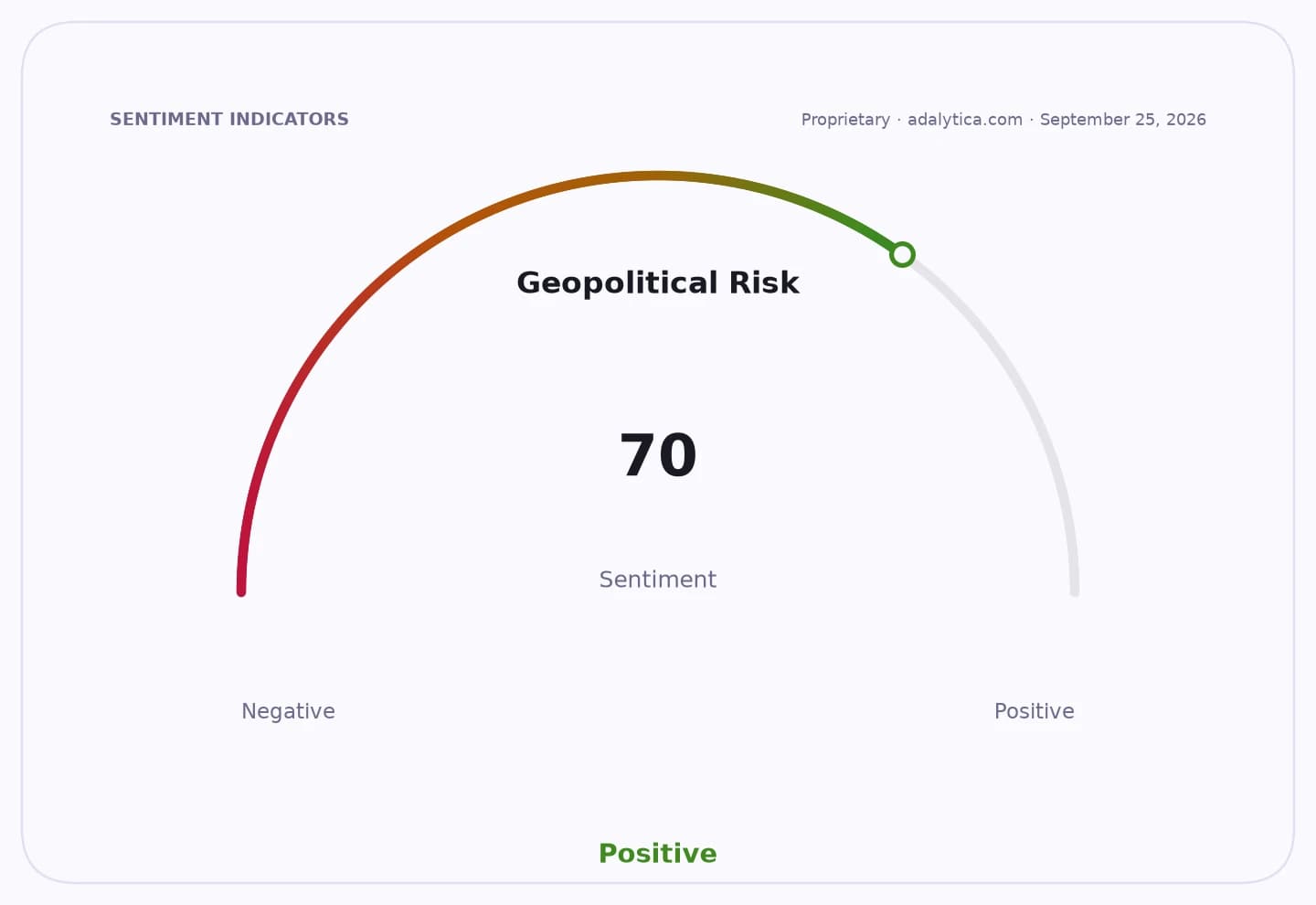
Sentiment IndicatorsⓘProprietary · adalytica.com · July 22, 2026
This is a snapshot — live sentiment, awareness and momentum for 130+ markets update continuously in the dashboard.Open AlphaPulse
That balancing act has become more important as Russia tries to manage the economic fallout from Western sanctions and the constraints on cross-border payments. Crypto cannot replace the banking system, but it can serve as an alternative settlement tool, particularly in niche or higher-risk transactions. A formal rulebook gives the authorities more leverage over who can participate, how trades are reported and which platforms can operate, while potentially making it easier for compliant firms to build businesses around custody, brokerage and payment services.
The move also fits a broader global pattern. Governments have been tightening oversight of crypto not only to protect retail investors but to reduce fraud, money laundering and opaque flows that can move quickly across borders. In that sense, Russia’s law is part market development and part enforcement tool. It signals that the state sees crypto as too important to ban outright, but too risky to leave unregulated.
For the market, the immediate question is whether the framework is permissive enough to attract liquidity or restrictive enough to push activity further offshore. A looser regime could help domestic exchanges, brokers and stablecoin-related businesses gain legitimacy. A harder line could squeeze smaller players and reinforce the dominance of larger, state-tolerated venues. Either way, the regulatory backdrop is changing from ambiguity to supervision, and that is usually where valuation, volumes and business models start to reprice.
Bitcoin’s resilience and the strong positioning in listed crypto-linked names such as Coinbase and PayPal underscore how much investors continue to reward signs of regulatory clarity, even in jurisdictions with political and geopolitical risk. But the bull case — more formal adoption and deeper liquidity — sits alongside the bear case: heavier compliance costs, tighter surveillance and less room for the kind of capital movements that have long supported offshore crypto activity.
The key test now is implementation. If Russia uses the new regime to professionalize the market, it could deepen domestic usage and improve transparency. If it uses it mainly as a control mechanism, the law may do more to constrain than to catalyze growth. For investors, that distinction will determine whether Russia becomes a regulated crypto market or simply a more orderly one.
| Entity | Gains | Losses |
|---|---|---|
| Russian state | ▲More oversight | ▼Less market freedom |
| Compliant crypto firms | ▲Legal clarity | ▼Higher compliance burden |
| Offshore operators | ▲Short-term activity | ▼Domestic access |
| Investors | ▲Better transparency | ▼Fewer arbitrage channels |