Russia's latest diplomatic push underscores a familiar market message: Moscow is trying to widen its room for maneuver abroad even as sanctions, UN friction and security tensions keep global risk premia elevated.
Russia Pushes New Diplomatic Alignment
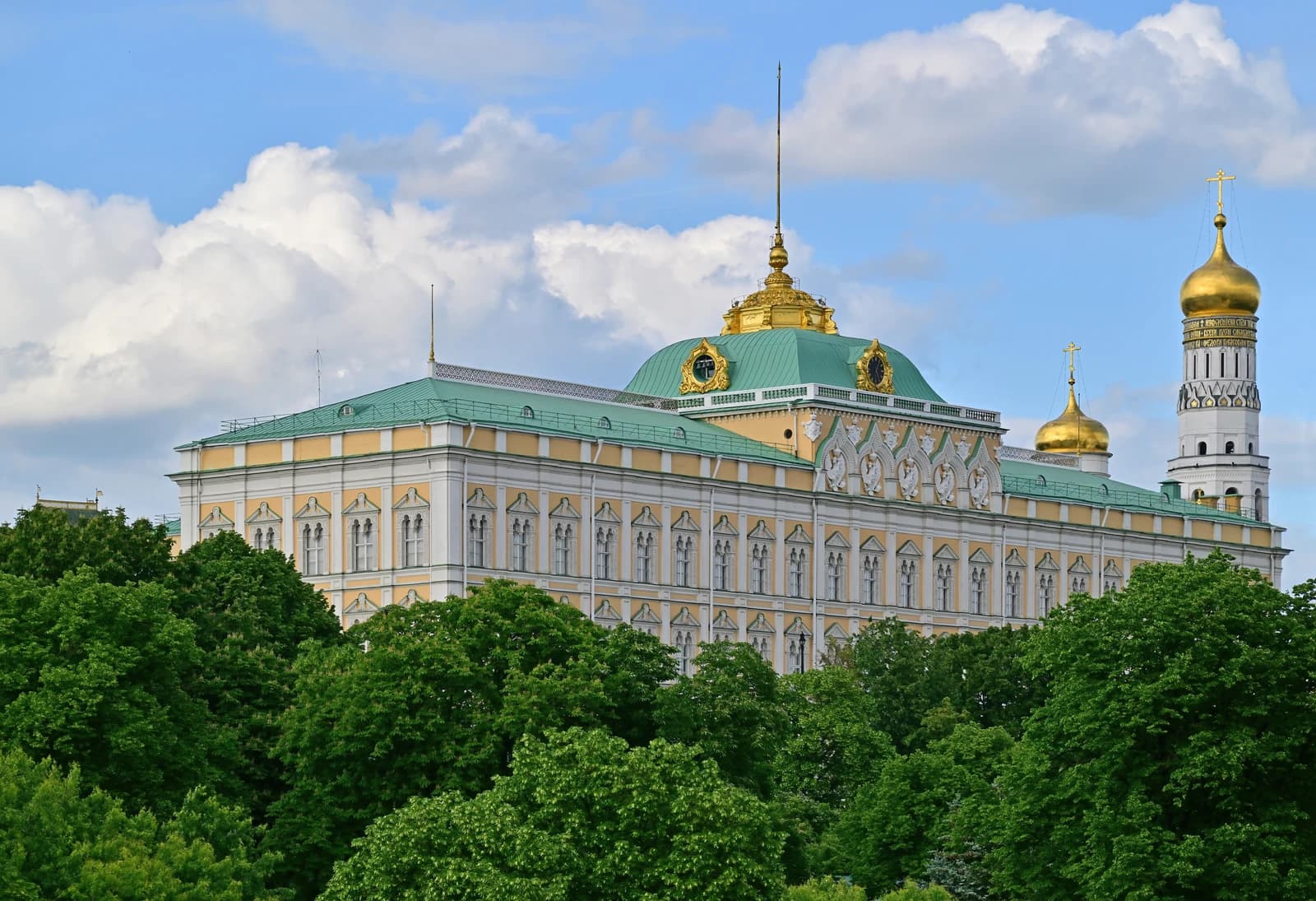
Foreign Minister Sergei Lavrov said Russia proposes to "harmonize interstate relations," a framing that points to Moscow's effort to present itself as a defender of a new, less Western-centered diplomatic order. The statement lands as Russia continues to clash with the United States and its allies at the United Nations, while deepening military and strategic ties with China. For investors, that combination matters because it keeps energy, commodities, defense and FX markets exposed to headline risk and lowers the odds of a near-term easing in geopolitical pressure.
Sentiment Indicators
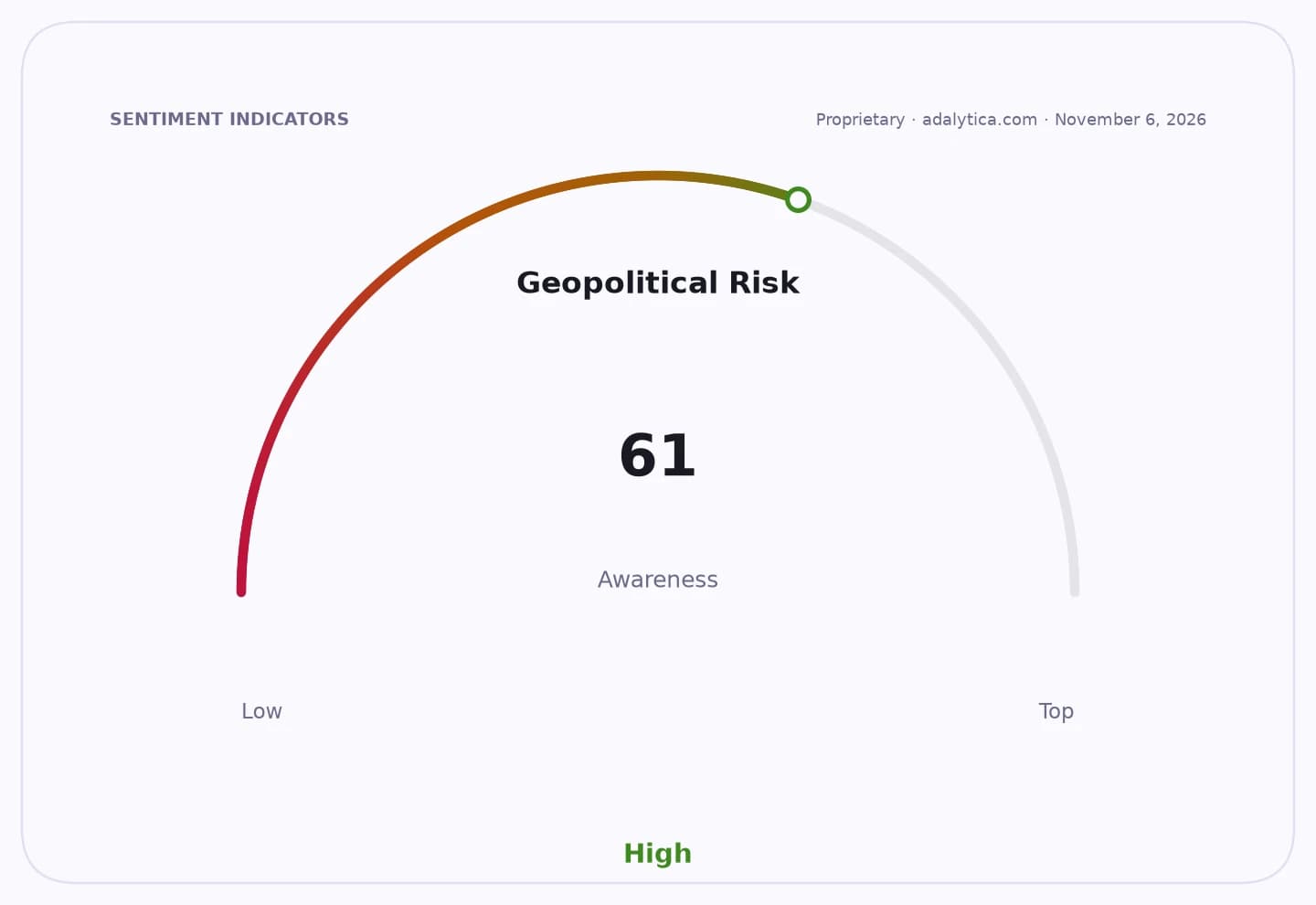
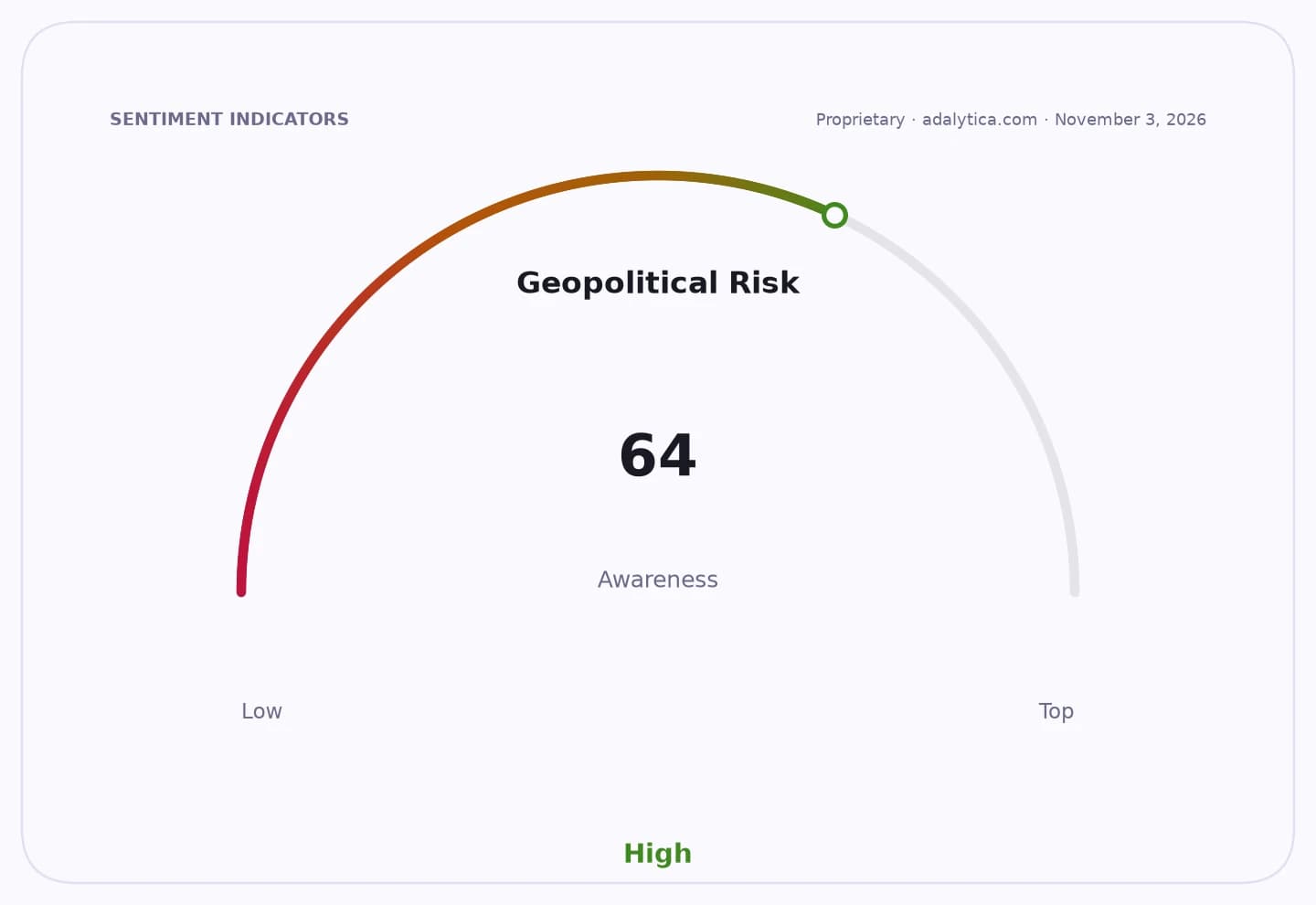
Geopolitical Risk
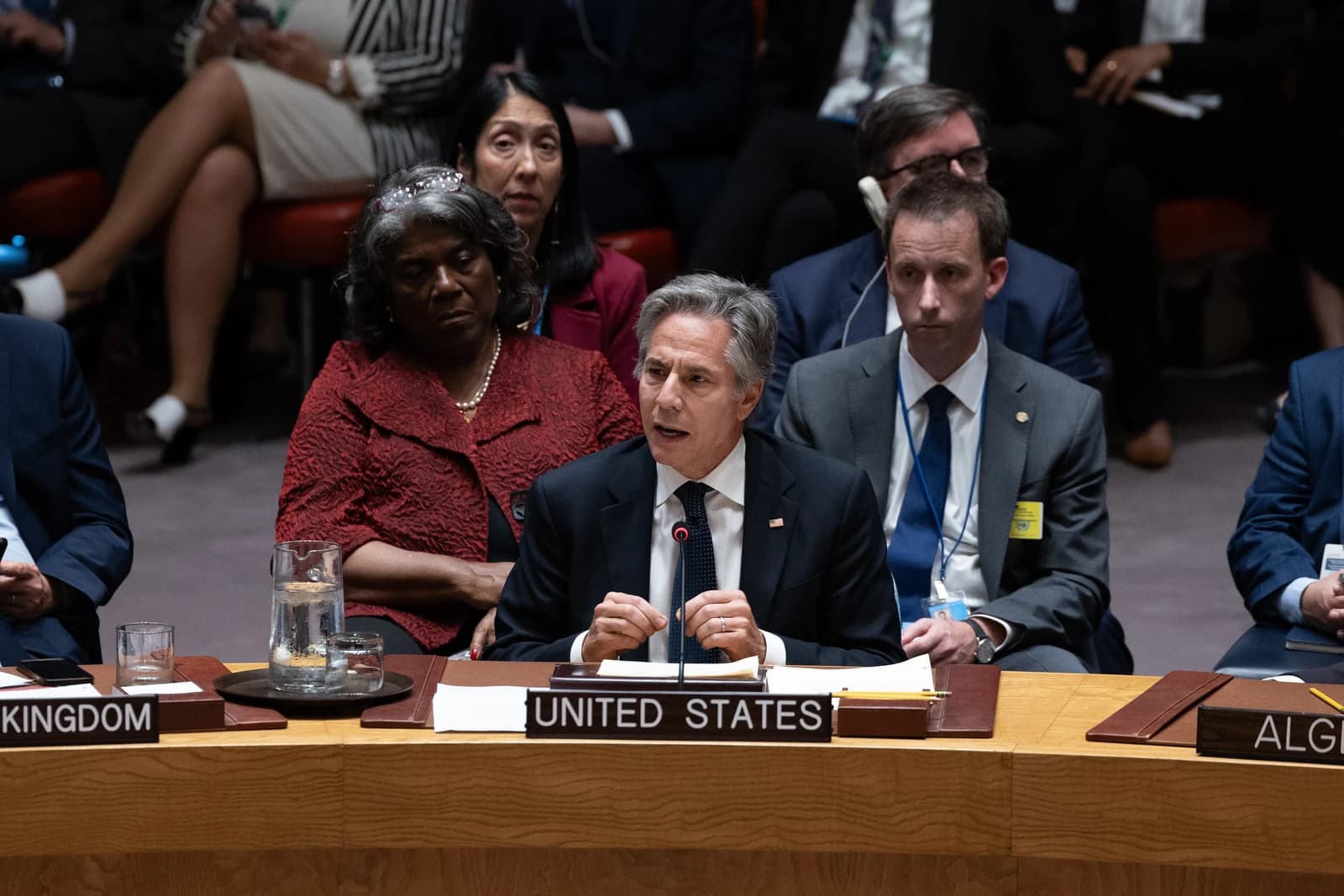
The broader context is a diplomatic environment that remains structurally hostile. Russia recently used its veto at the UN Security Council to block a US-backed Western Sahara resolution and then advanced its own competing draft, which was also rejected. At the same time, Chinese military leaders have signaled closer cooperation with Moscow on shared security interests. That reinforces the view that Russia is not seeking accommodation with the West so much as trying to institutionalize an alternative alignment with Beijing and other non-Western partners.
That matters economically because prolonged confrontation keeps sanctions risk embedded in trade flows, payments and investment access. It also supports elevated volatility in European assets and commodities whenever rhetoric turns sharper or diplomacy stalls. The Adalytica Global Stability Sentiment gauge is still in "Extreme Greed" at 93, even after a one-day drop, suggesting markets have become more comfortable with geopolitical headlines in the near term. But that calm can reverse quickly if any new sanctions, energy restrictions or security incidents hit supply chains.
Geopolitical Risk — 30-day sentimentadalytica.com
Explore this data interactively — full history, time series and cross-market comparisons.
European assets are also sensitive to that backdrop. The euro trade signal snapshot remains in "Extreme Greed" at 100, indicating strong risk appetite around the currency bloc despite the geopolitical overhang. Britain’s EWU ETF, which tracks UK equities, closed at 48.93 on Nov. 4, above both its 50-day and 200-day moving averages, while RSI readings near 60.5 and a positive MACD point to constructive near-term momentum. China-focused FXI rose sharply to 34.59 after heavy volume, but it still sits below its 200-day average, reflecting a more fragile trend even as traders position for policy and geopolitical developments that could aid Chinese equities.
For investors, the key issue is not whether Lavrov's language changes policy immediately, but whether it signals another round of bloc-building that hardens global supply chains and keeps defense spending, energy security and sanctions compliance at the center of portfolio construction. The bull case is that diplomatic posturing eventually stabilizes into managed confrontation, allowing markets to look through the noise. The bear case is that Moscow's push to redefine interstate relations reflects a more durable split in the international system, one that preserves a higher geopolitical risk premium for longer.
That leaves the near-term watch list focused on UN voting dynamics, Russia-China military coordination and any escalation that could spill into energy or European risk assets. Until those tests ease, Lavrov's message is likely to be read less as détente than as confirmation that geopolitics remains a live market variable.
| Entity | Gains | Losses |
|---|---|---|
| Russia | ▲diplomatic leverage | ▼Western trust |
| China | ▲strategic alignment | ▼policy flexibility |
| European assets | ▲relative calm if tensions fade | ▼risk-premium spikes |
| Defense sector | ▲higher security spending | ▼broader market complacency |