Russia’s decision to stage a large military exercise with troops from China, Belarus and Pakistan in the South Urals underscores how the war in Ukraine is accelerating Moscow’s pivot toward a looser but more visible security bloc outside the West.
Russia holds drill with China, Belarus and Pakistan
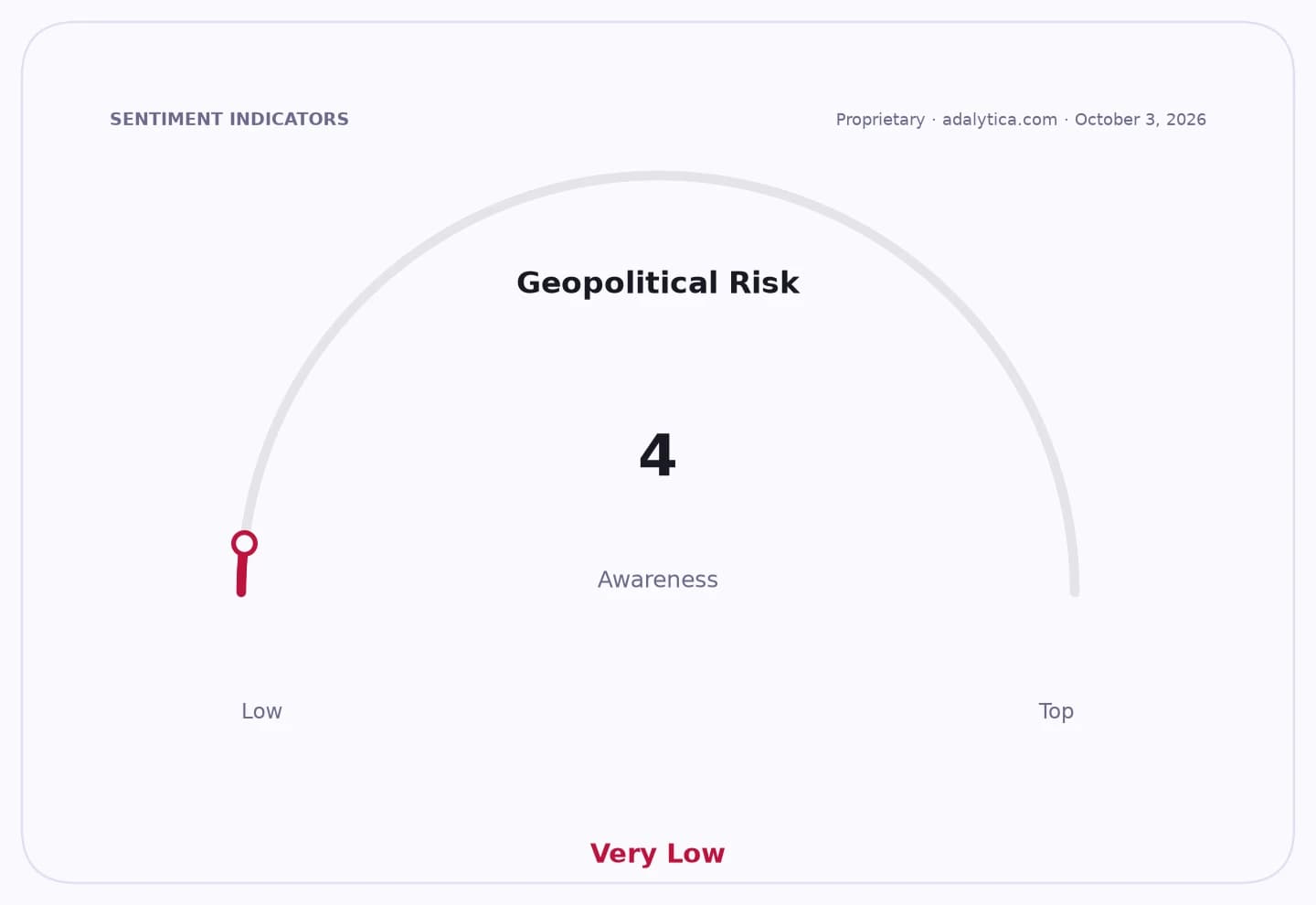
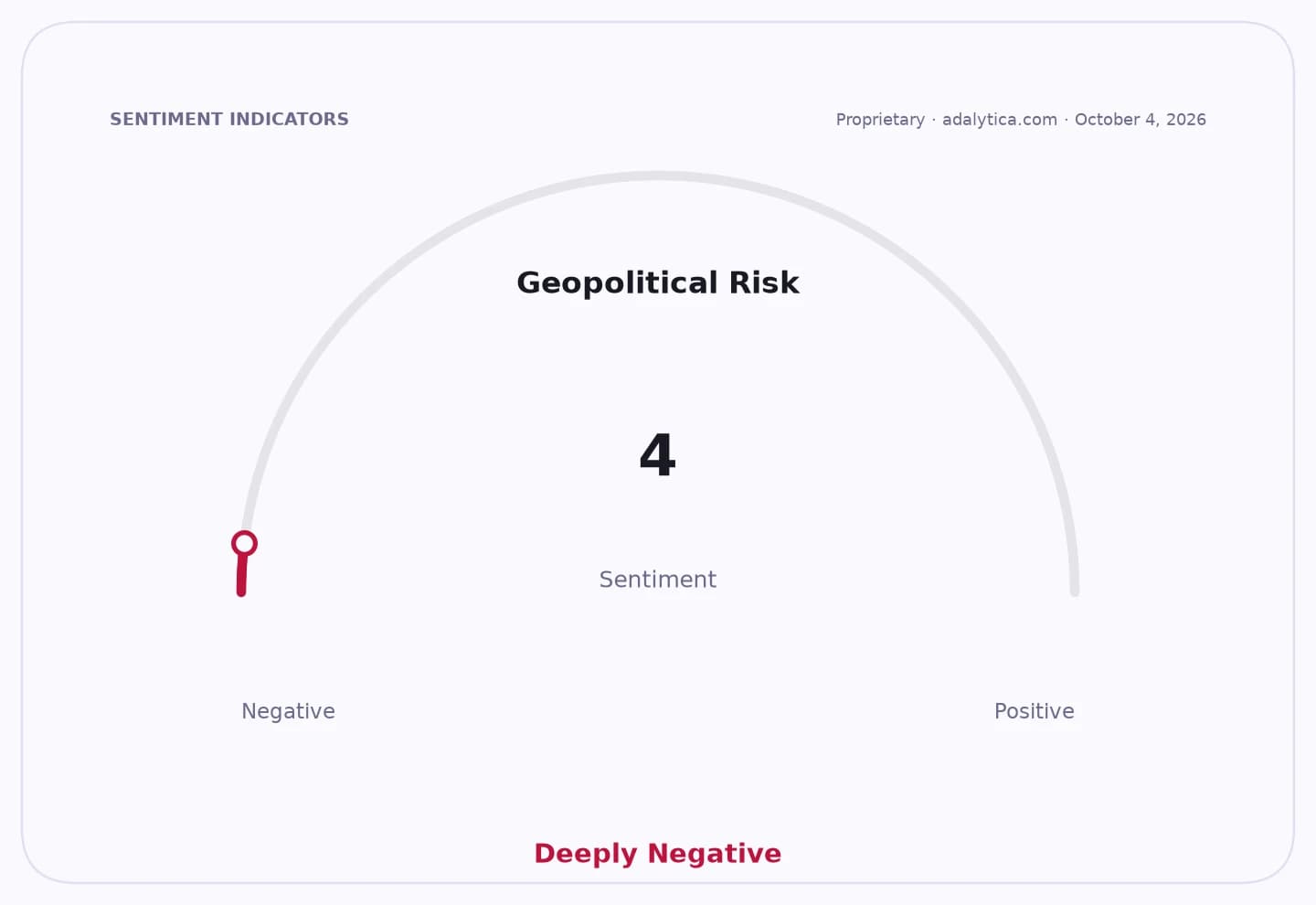
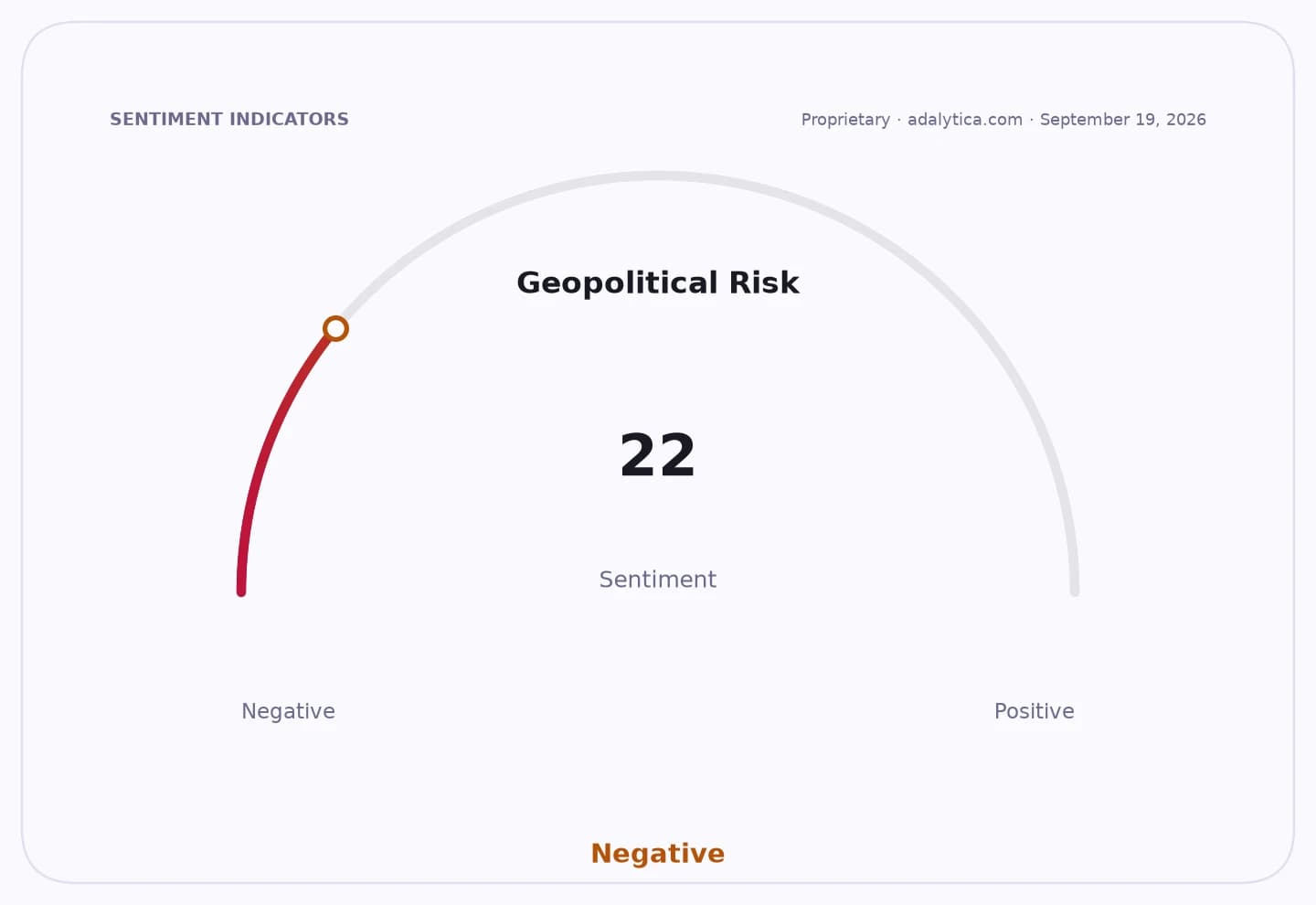
The drill matters economically and strategically because it shows Russia is still able to mobilize large forces, test new weapons and present itself as a hub for military cooperation even as it remains isolated from much of Europe and the US. For investors, that combination keeps geopolitical risk elevated across energy, defense and grain markets, while reinforcing the case that sanctions pressure is unlikely to force a near-term easing in Russia’s war posture.
Sentiment IndicatorsⓘProprietary · adalytica.com · October 3, 2026
This is a snapshot — live sentiment, awareness and momentum for 130+ markets update continuously in the dashboard.Open AlphaPulse
Ukrainska Prawda, citing Russian sources, said about 47,000 soldiers took part in the maneuvers in the Chelyabinsk region and in Caspian Sea waters, practicing responses to “external aggression” and the creation of a security zone on the territory of a neighboring Central Asian state. The exercise, which began with a speech by President Vladimir Putin on Sept. 28 and is due to run until Oct. 3, also included the use of strategic bombers, according to Interfax.
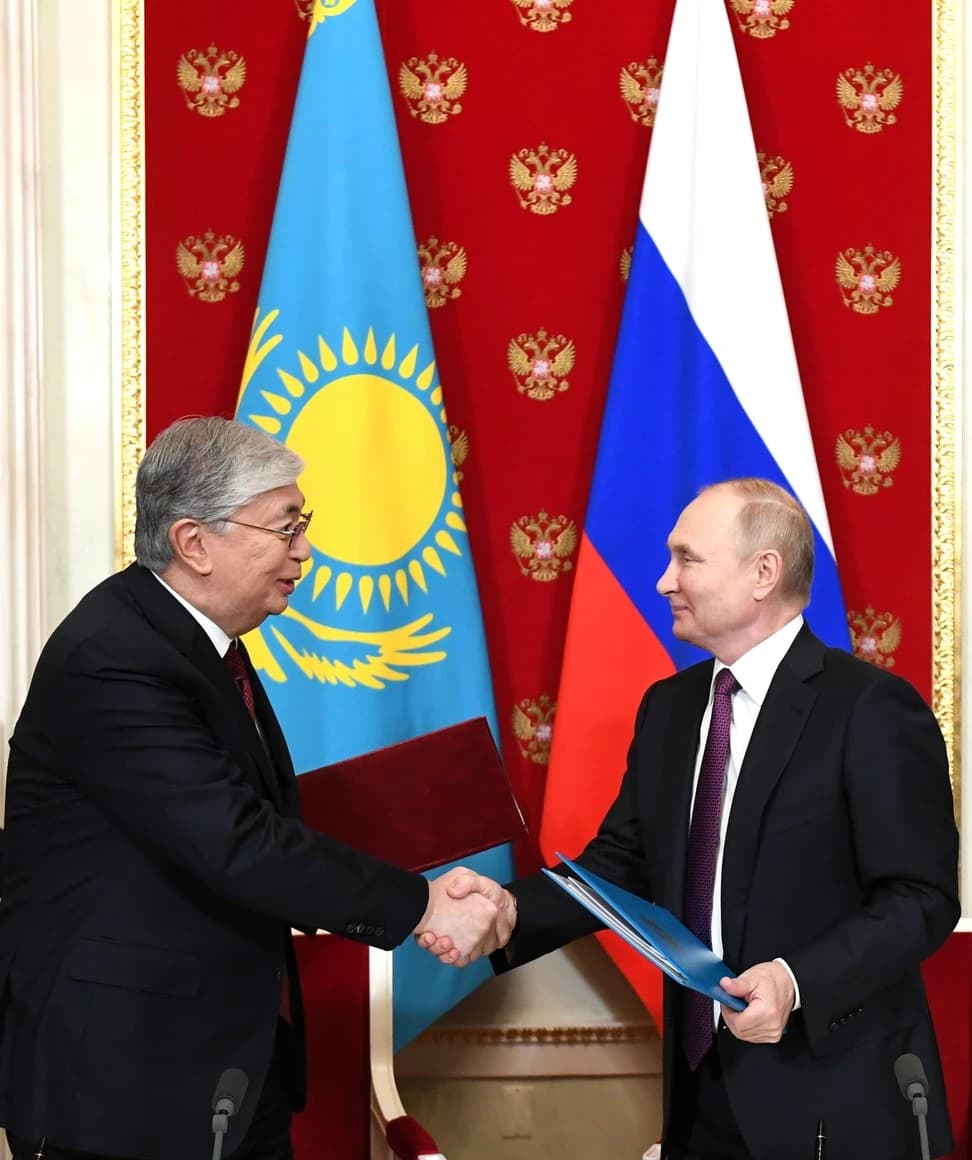
The presence of Chinese, Belarusian and Pakistani personnel is the more important takeaway than the drill itself. Belarus remains Moscow’s closest military partner and staging ground for the Ukraine war, but China’s involvement is a further sign that Russia is normalizing defense ties with major non-Western powers. Pakistan’s participation, meanwhile, broadens the diplomatic signal: Moscow is trying to frame itself not as a pariah state, but as a security partner for countries that are either non-aligned or wary of deep dependence on Washington.
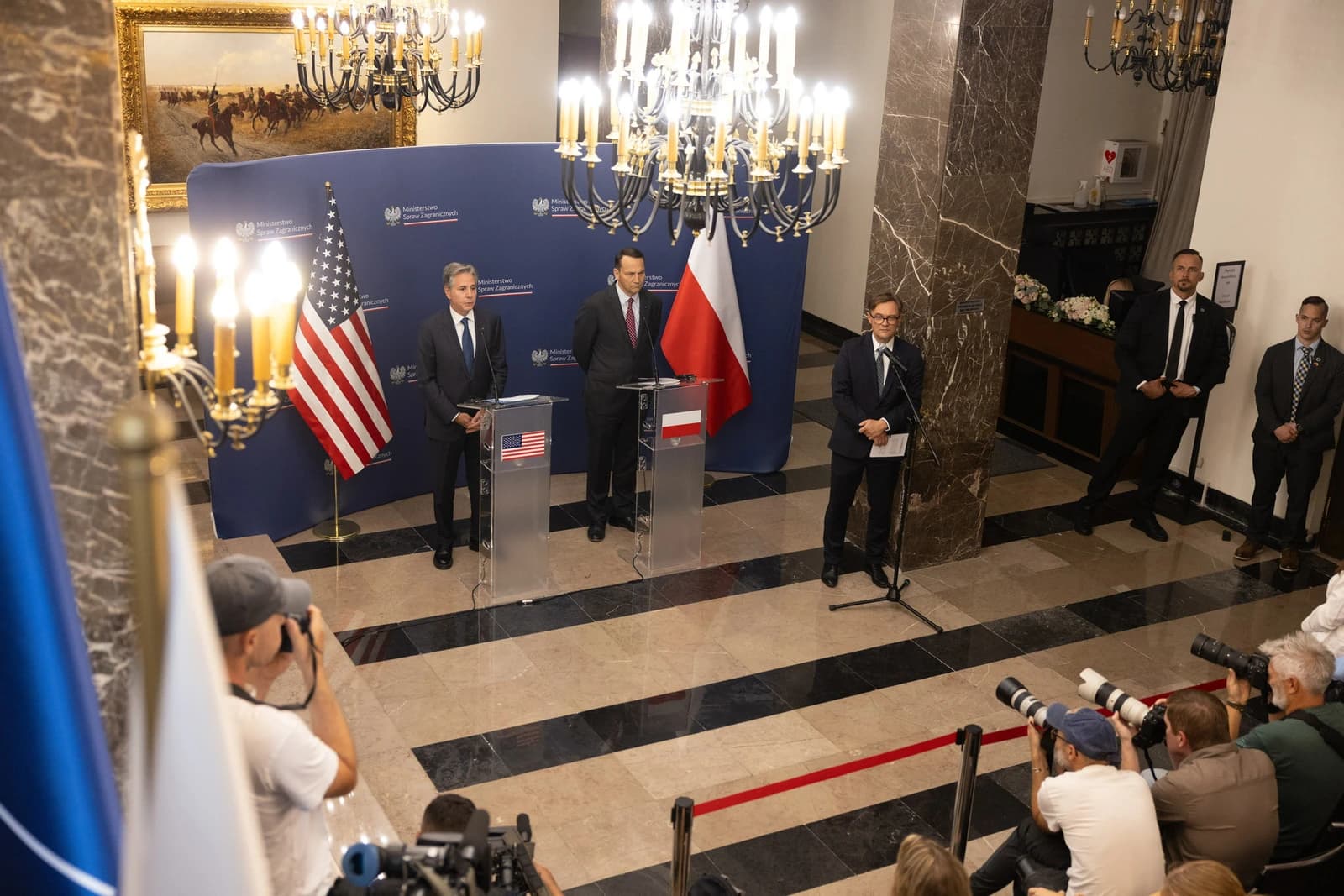
That message lands against a backdrop of persistent combat pressure in Ukraine and growing concern over spillovers into Europe. Ukrainian intelligence has warned of intensified Russian hybrid activity in the EU and NATO states, while Kyiv says Russia is preparing to keep escalating attacks ahead of the US midterm cycle. At the same time, the EU has just released another 2.9 billion euros in aid to Ukraine, highlighting how the conflict continues to draw in Western fiscal support even as the battlefield remains unresolved.
For markets, the direct read-through is not a single trade but a broad risk premium. Energy traders will continue to watch for disruptions linked to the Black Sea war theatre, where Ukrainian agricultural exports have more than halved because of blocked ports. Defense investors are likely to view the exercises as another argument for sustained procurement spending in Europe and the US. And for sovereign-credit and macro investors, the drills reinforce the view that the security landscape around the war is hardening rather than thawing.
The bear case for Russia’s partners is that these exercises are mostly symbolic, with limited evidence of a formal alliance that could deter Western policy. The bull case for Moscow is that repeated multinational drills normalize its isolation, strengthen interoperability with select partners and help project resilience at home. For investors, the practical conclusion is that Russia’s war economy and military diplomacy remain intertwined, and both are likely to keep shaping regional risk pricing into year-end.
| Entity | Gains | Losses |
|---|---|---|
| Russia | ▲Military signaling; partner outreach | ▼Isolation from West |
| China, Belarus, Pakistan | ▲Security ties; interoperability | ▼Association risk |
| Ukraine | ▲Western aid support | ▼Battlefield pressure; export losses |
| Defense contractors | ▲Higher procurement demand | ▼— |