Artificial intelligence is emerging as a practical cost-cutting tool in Russia’s fuel supply chain, with one technology executive saying it can reduce delivery costs to gas stations by as much as 8% and slash manual route-planning time by up to 80%.
Russia fuel logistics AI cuts delivery costs
That matters because the fuel business is not just about refining and selling gasoline — it is about moving product efficiently through a strained logistics network, where every percentage point of cost saved can flow straight to margins. In an environment of changing routes, labor shortages and rising operational complexity, even modest automation gains can reshape economics for refiners, distributors and station operators.
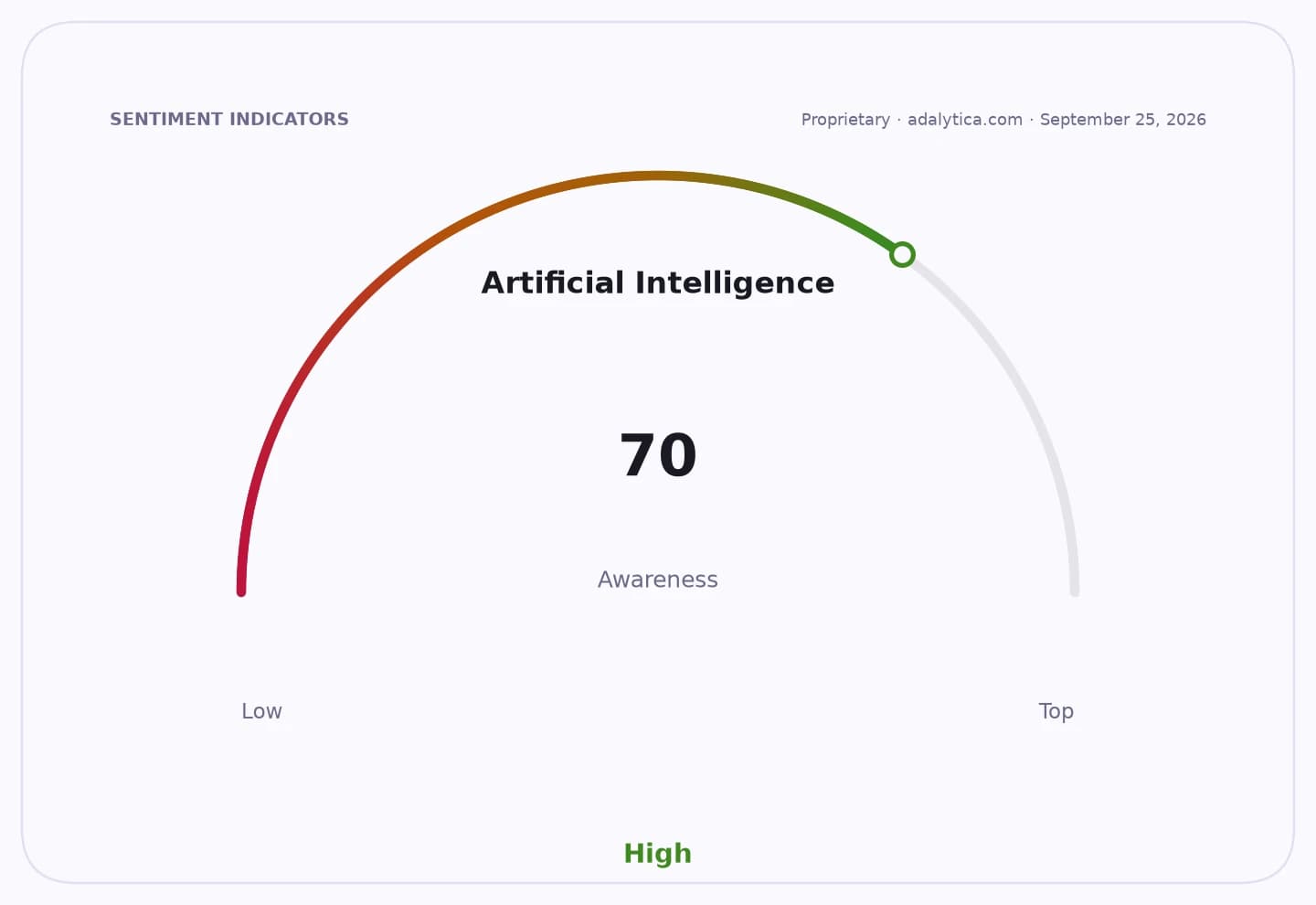
Sentiment IndicatorsⓘProprietary · adalytica.com · September 25, 2026
This is a snapshot — live sentiment, awareness and momentum for 130+ markets update continuously in the dashboard.Open AlphaPulse
The pitch from T1 AI, part of IT holding T1, is that its mathematical optimization model can process delivery windows, tanker fleets and depot geography far faster than human planners or standard ERP systems. The company says its “Orsima” module is the only fully import-substituted solution of its kind in Russia because it uses no open-source components, a point that matters in a market increasingly sensitive to software sovereignty and supply-chain resilience.
For investors, the bigger story is that AI adoption is moving beyond headline-grabbing chatbots and into the unglamorous infrastructure that actually protects cash flow. Logistics is one of the clearest “picks-and-shovels” opportunities in enterprise software: if an algorithm can cut fuel-delivery costs by 8% and free planners from repetitive work, the payoff is immediate, measurable and repeatable across thousands of routes.
The backdrop is a Russian energy sector under pressure to do more with less. Companies are trying to optimize deliveries to gas stations amid volatile logistics and labor shortages, while broader government efforts to stabilize fuel markets underscore how sensitive the system has become. Even before any new shipment, price-cap or discount measures, the economics of getting fuel from depot to pump are now a competitive battleground.
That is why the most important implication is not just lower costs, but a wider shift in capex priorities. Money that once went into brute-force staffing and manual planning can be redirected toward automation, dispatch optimization and operational resilience — the kind of spending that tends to compound over time. In a market like Russia, where imported software can be harder to justify and replace, domestic AI vendors may also gain a structural edge.
The investable takeaway is clear: the market underestimates the value of industrial AI in logistics-heavy sectors. The near-term winners are the software and systems providers that can prove hard savings, not hype. The losers are businesses that keep treating route planning as a back-office function instead of a margin lever.
| Entity | Gains | Losses |
|---|---|---|
| T1 AI / Orsima | ▲Higher demand for domestic AI tools | ▼Legacy planning software |
| Russian fuel distributors | ▲Lower logistics costs | ▼Manual dispatch teams |
| Gas stations | ▲More reliable deliveries | ▼Inefficient supply chains |
| Fuel consumers | ▲Better availability | ▼Higher transport inefficiency |