Russia’s assertion that it has no aggressive intentions toward Europe is a reminder that the biggest market risk in the region remains diplomacy, not just tanks and troop movements.
Russia says it does not intend to attack Europe

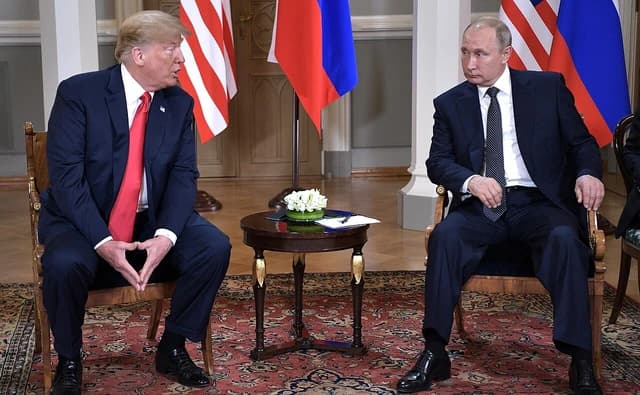
The Kremlin said Vladimir Putin told Donald Trump that Moscow did not intend to attack Europe, a message aimed squarely at calming one of the most important geopolitical fears hanging over global markets. For investors, that matters because any broadening of the war beyond Ukraine would threaten energy flows, trade, defense spending, sanctions policy and risk appetite across Europe and beyond.
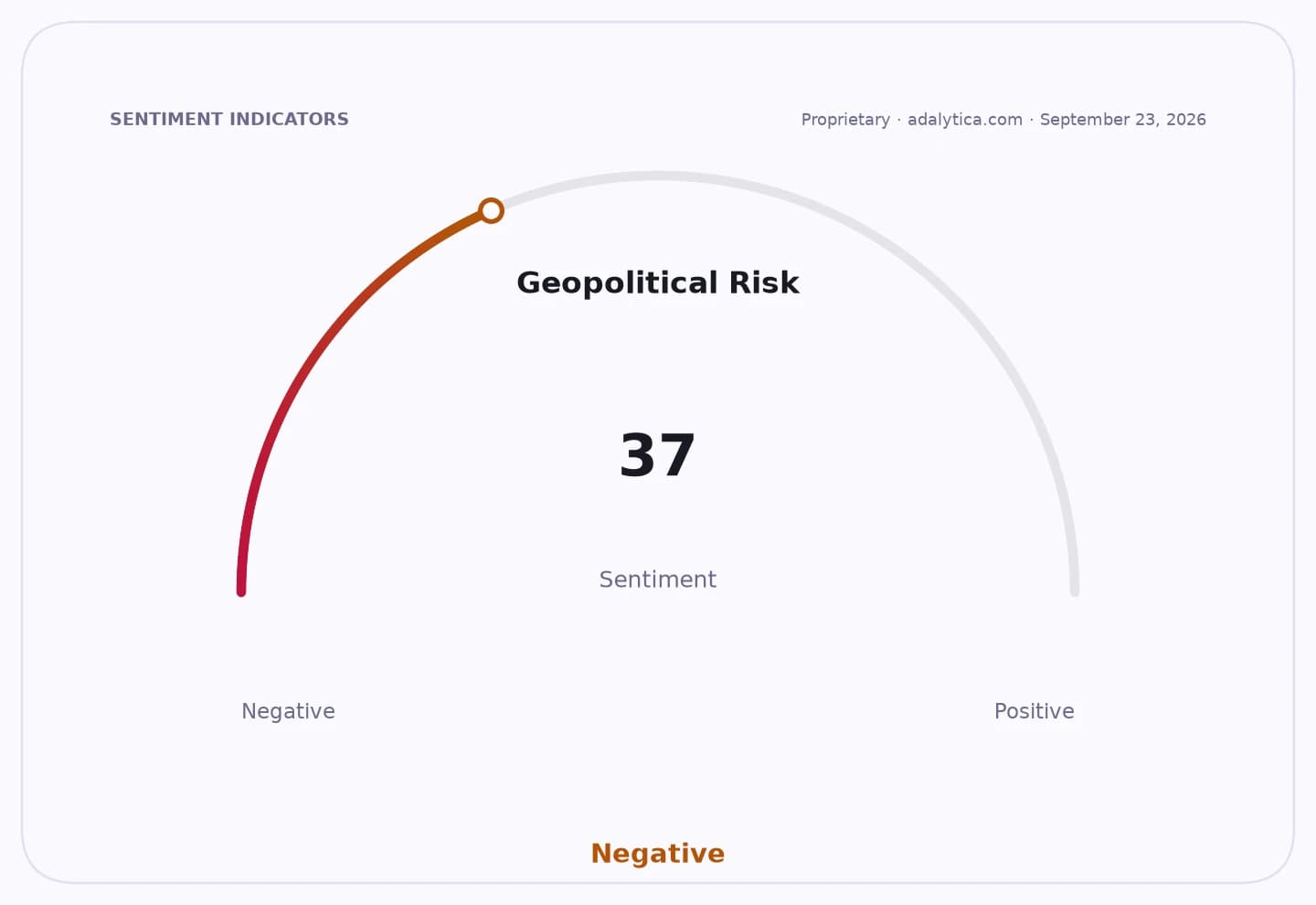
Sentiment IndicatorsⓘProprietary · adalytica.com · September 10, 2026
This is a snapshot — live sentiment, awareness and momentum for 130+ markets update continuously in the dashboard.Open AlphaPulse
The stakes are especially high because markets have spent years pricing the conflict less as a localized war and more as a persistent source of tail risk. Even without a new battlefield escalation, the diplomatic backdrop is still brittle. Hungary’s expulsion of 10 Russian diplomats shows how quickly tensions can spill over into the wider European theater, while Ukraine’s warnings about airspace underline how volatile the security environment remains. Against that backdrop, every statement from Moscow or Washington is more than rhetoric — it can move expectations for sanctions, NATO posture and commodity prices.
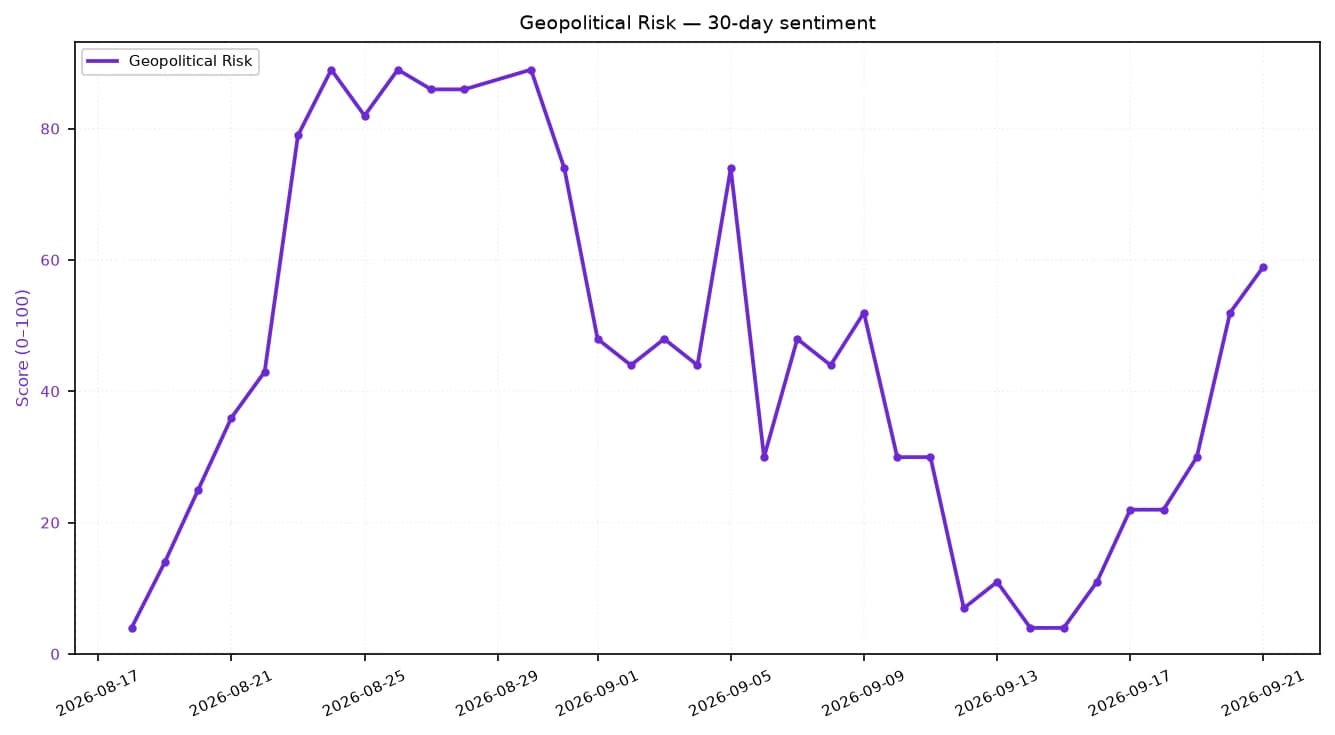
That is why safe-haven assets remain the clearest beneficiaries. Gold-linked exposure, which has already been firm, tends to draw support when geopolitical anxiety rises, while the euro is more vulnerable whenever investors fear a deeper energy shock or a broader confrontation on Europe’s doorstep. The latest read on global stability from Adalytica also sits in neutral territory, with heightened awareness but not outright panic, suggesting markets are still treating the situation as serious but contained for now.
For long-term investors, the key lesson is that geopolitical headlines rarely create durable value by themselves, but they do reinforce the case for diversification. A Europe-wide escalation would favor defense, energy and precious metals, while pressure would fall on cyclical assets, importers and companies tied closely to continental confidence. If the Kremlin’s message helps lower the temperature, that could ease some of the risk premium across European assets; if not, investors should expect more volatility, not less.
The story is not that peace has arrived. It is that markets are still trading on the possibility that the conflict stays contained — and that possibility remains one of the most important variables in global portfolios. For investors, this is a watchlist issue, not a timing signal: stay diversified, keep a long horizon, and pay attention to how quickly diplomacy can change the market backdrop.
| Entity | Gains | Losses |
|---|---|---|
| European risk assets | ▲Lower war premium | ▼Geopolitical stress |
| Safe-haven assets | ▲More defensive demand | ▼Less urgency if tensions ease |
| Russia | ▲Room to calm markets | ▼Credibility if tensions rise again |
| Europe’s importers | ▲More stability | ▼Energy and trade shock risk |