Russia’s decision to push pig iron exports through Murmansk for the first time in 30 years shows how Ukraine’s strikes on Black Sea shipping are forcing Moscow’s metals trade into slower, costlier and far less efficient routes.
Russia reroutes pig iron exports through Murmansk
That matters because pig iron is not a niche cargo: it is a core steelmaking input, and Russia is one of the world’s biggest exporters alongside Brazil and Ukraine. When a commodity this heavy gets rerouted thousands of kilometers north, the extra rail haul, longer sea leg and port bottlenecks become an economic tax on every ton shipped.
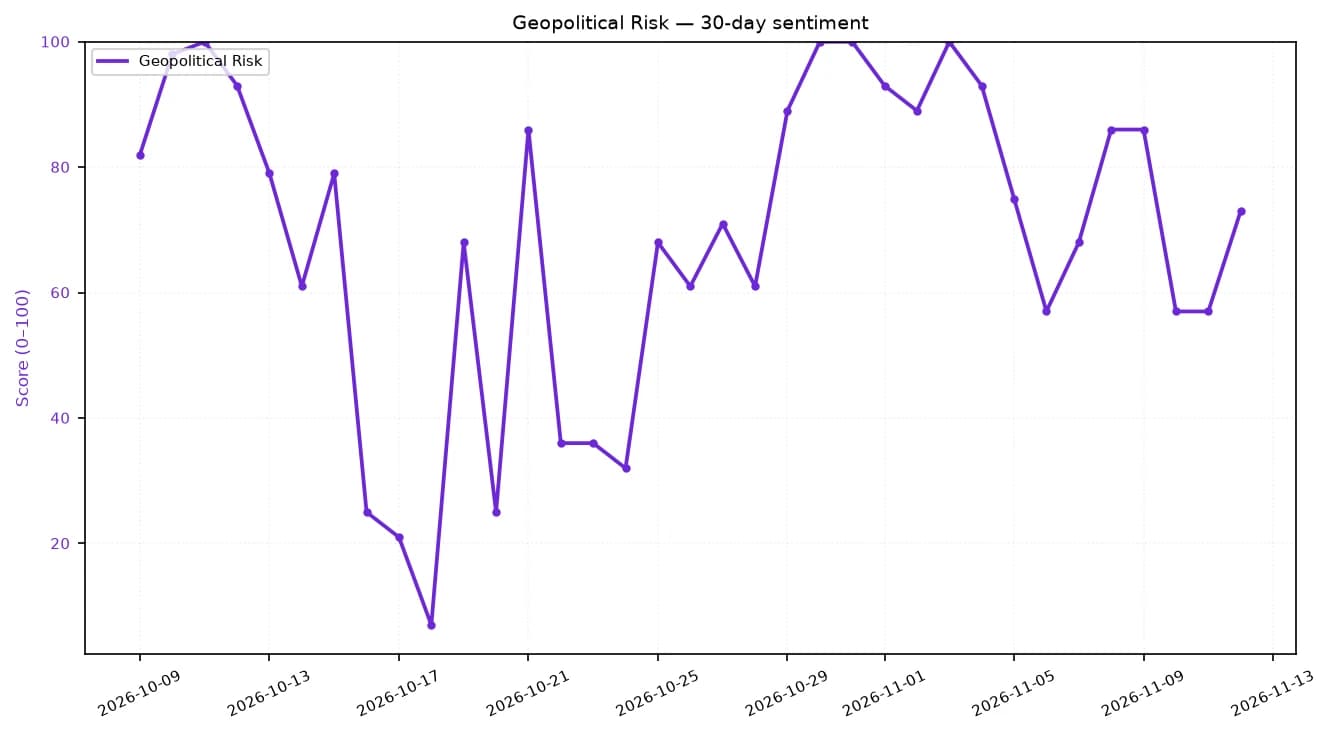
Sentiment Indicators
The first test cargo was 65,000 metric tons, and it reportedly needed more than 180 railcars to move from Ural smelters to Murmansk. Maritime transit to Mediterranean buyers adds about 10 days versus traditional Black Sea routes, while freight from Murmansk to Turkey is nearly double the Black Sea cost, according to Argus. Some producers are now paying as much as $100 more per ton just to keep export volumes moving.
For investors, that price shock cuts both ways. Higher logistics costs squeeze Russian producers and make sanctioned supply chains less competitive, but they can also support pricing for non-Russian suppliers of pig iron, scrap, iron ore and steelmaking inputs. The market is already telling the same story: the Iron proxy ETF has climbed sharply this year and still sits well above its 50-day and 200-day moving averages, while the broader dollar complex has strengthened as traders price in geopolitical stress and disrupted trade flows.
Murmansk’s revival as a metals outlet is also a reminder that sanctions do not stop trade — they raise friction. Russia initially shifted cargoes to Baltic terminals, only to run into congestion there as well, forcing the state logistics system farther north into Arctic conditions that are harder to sustain in winter and more vulnerable to rail shortages. That makes this reroute look less like a durable solution than a costly workaround.
The bigger takeaway is that the war is increasingly being fought through infrastructure as much as through missiles. Black Sea interdictions are reshaping commodity logistics, exposing the limits of Russia’s transport network and creating opportunity for rivals with cleaner, shorter and cheaper supply chains. The next beneficiary may be less about Russia’s volume and more about everyone positioned to replace it.
| Entity | Gains | Losses |
|---|---|---|
| Russian steelmakers | ▲Keep exports moving | ▼Higher freight costs |
| Murmansk port | ▲New bulk cargo business | ▼Operational strain |
| Non-Russian pig iron suppliers | ▲Better pricing power | ▼Competition from rerouted cargo |
| Russian Railways | ▲Additional freight demand | ▼Congestion and equipment pressure |