Russia has outlined a long-term model to formalize platform-based employment through 2036, betting that digital labour marketplaces can ease structural worker shortages, shorten hiring times and pull millions of people out of the grey economy without rewriting the basic employment contract.
Russia plans platform labor rules through 2036
The proposal matters because Russia’s labour market has little spare capacity left. The number of employed people is about 74.5 million, unemployment fell to 2.2% by late 2025 and demographic constraints are expected to weigh on labour supply for at least another decade. In that environment, the issue is no longer how to create more jobs, but how to make existing labour move faster, more transparently and at lower administrative cost.
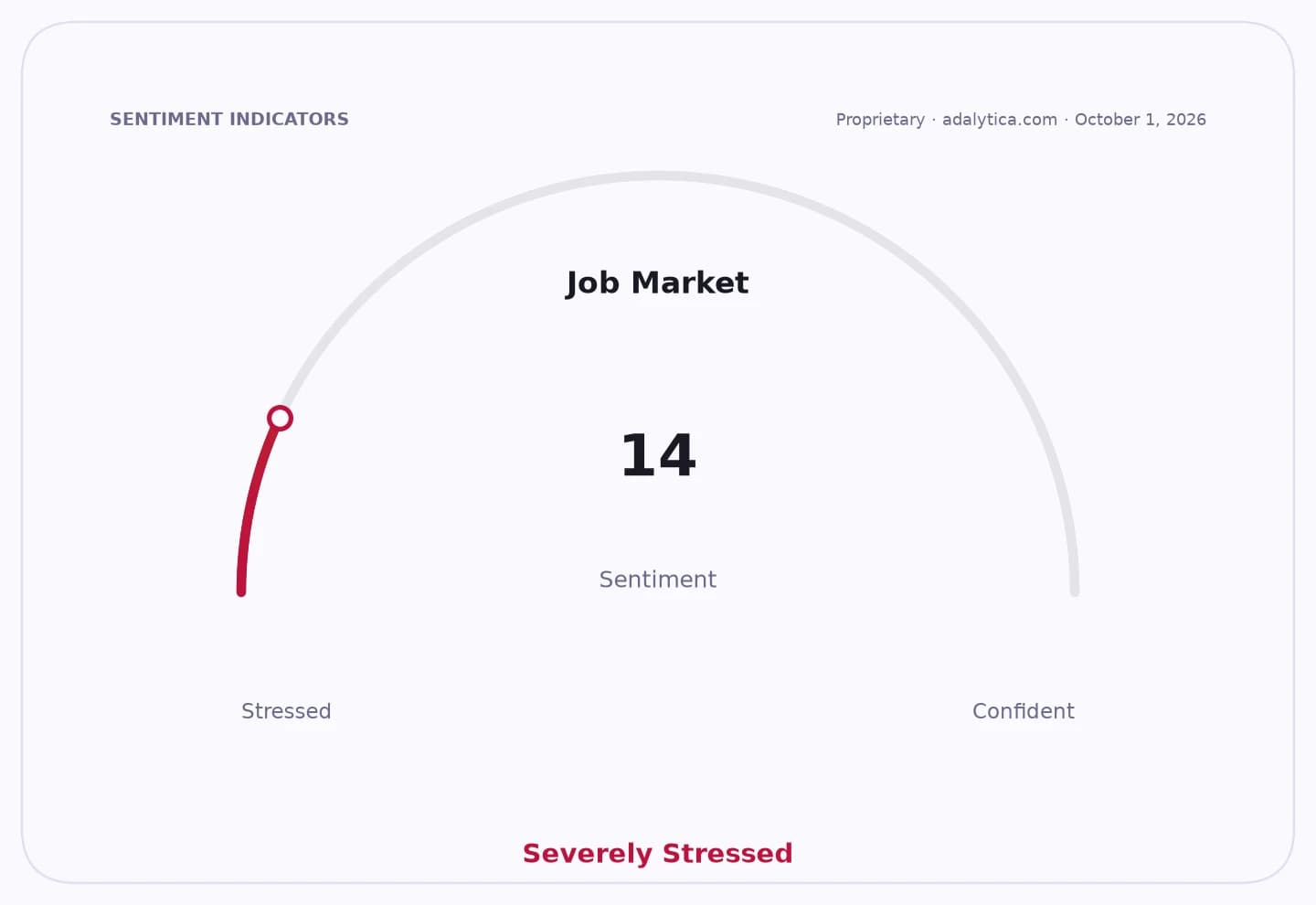
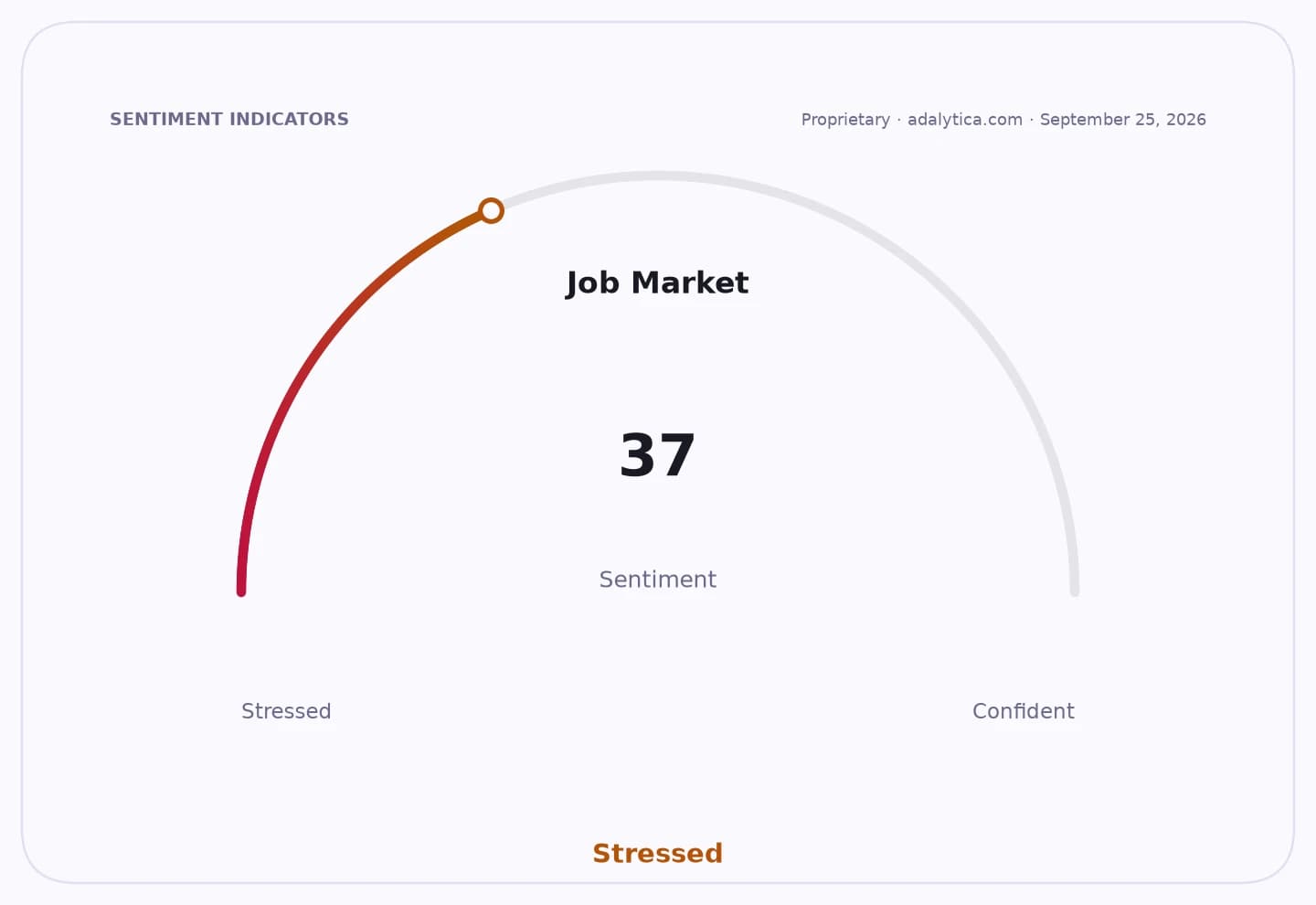
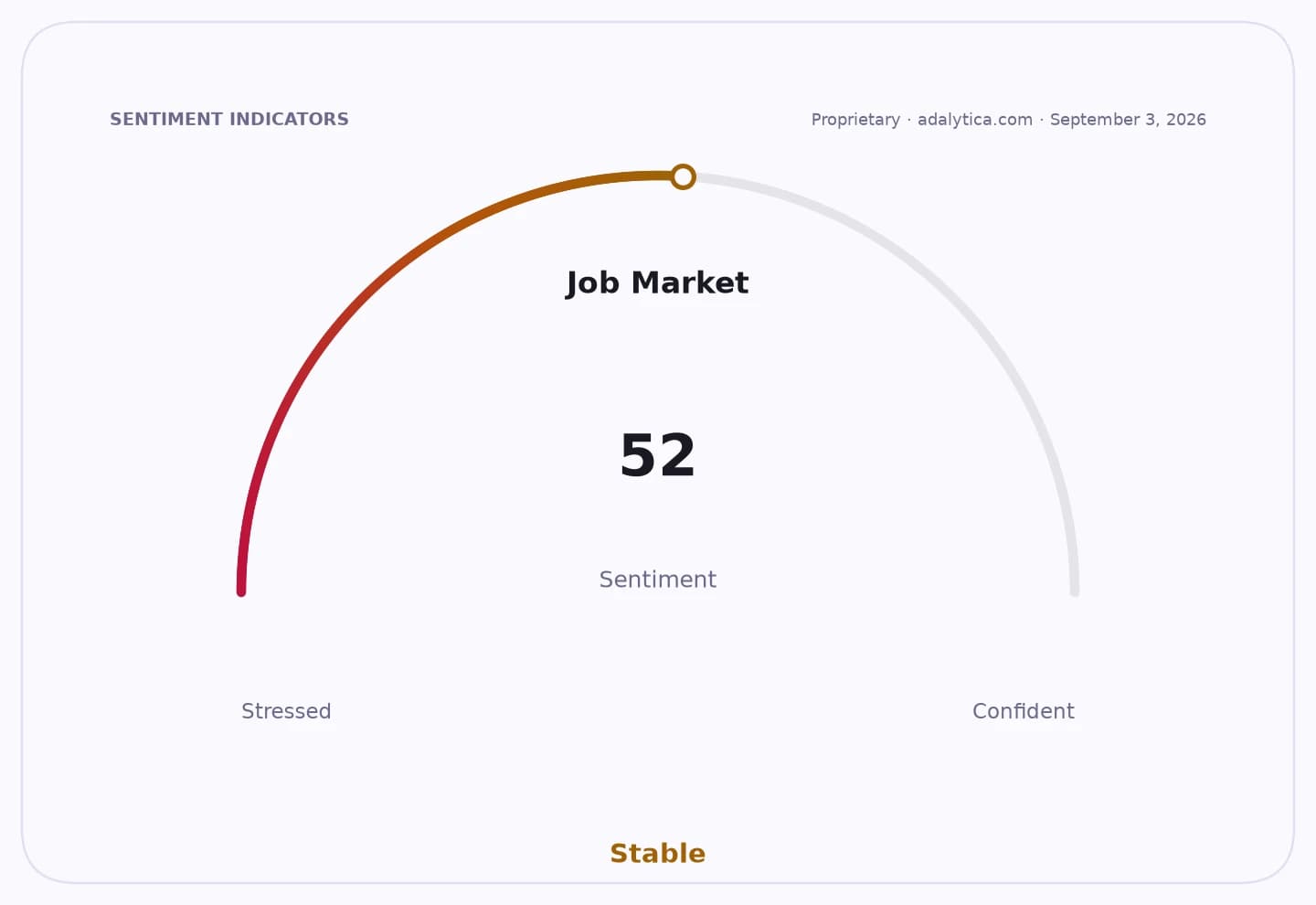
Sentiment IndicatorsⓘProprietary · adalytica.com · October 1, 2026
This is a snapshot — live sentiment, awareness and momentum for 130+ markets update continuously in the dashboard.Open AlphaPulse
The report, prepared by co-heads of the expert group — Avito managing director Vlad Fedulov and Delovaya Rossiya deputy chairman Anton Danilov-Danilyan — argues that the labour market is already digital in practice but fragmented in execution. It says about 90% of employee-related processes and 99% of contractor-related processes are already done in digital form, yet platforms are used in only about a quarter of completed hires and around 19% of external work. In other words, the infrastructure exists, but the workflow remains disjointed.
That gap is commercially important. The report estimates that around 4.36 million completed hires a year already run through platforms, while platform-based shift work is equivalent to about 360,000 full-time positions and 3.79 million people earn income through service platforms without algorithmic task allocation. It also says filling a vacancy through a platform takes 25 days on average versus 64 days across the market. For employers facing labour scarcity, those are not incremental gains; they are a competitive advantage.
The model is designed to reduce those frictions by linking recruitment, documentation, payments and verification into one route, while keeping platforms as infrastructure rather than a new legal form of employment. That distinction is central to the policy pitch. Fedulov said the model preserves the labour contract as the base for stable work, keeps control of personal data with the individual and avoids creating a universal citizen rating. Data exchange would rely on consent and state systems, with confirmed experience and qualifications portable across services by the worker’s initiative.
That approach reflects a broader regulatory balancing act. On one side is the business case for flexibility in a tight labour market. On the other is the government’s desire to prevent platforms from becoming shadow employers with weak social protections and opaque data practices. The proposal therefore calls for legal certainty, portability of verified experience, competition among platforms under common state rules and social insurance that reflects a person’s total work activity and income.
For investors and companies, the most immediate implication is that platform labour in Russia is moving from a convenience layer to labour-market infrastructure. That would favour the largest platforms, recruitment technology providers and digital payment and compliance services, while increasing pressure on traditional intermediaries that rely on slow, manual hiring processes. It also creates room for B2B expansion, especially in skilled work and regional labour markets, where the model’s second phase, from 2029 to 2036, is supposed to scale.
The macro case is equally clear. Officials and experts see the platform model as a way to offset the shortage of workers as the economy will need an additional 3.1 million employees by 2030 versus 2022, according to the labour ministry. It could also help formalize income for part of the grey sector: the report says 5.5 million to 20.3 million people may be working informally depending on the definition, and about 7.5 million of them are willing to move into the formal sector. Lower compliance costs and automatic documentation could make that transition easier.
Still, the proposal leaves open the biggest question: whether Russia can build a framework that expands flexibility without creating a de facto class of under-protected gig workers. Labour advocates want a hybrid status between self-employment and an employment contract, with pension contributions, sick pay and protection from arbitrary blocking. Business groups, meanwhile, want the model aligned with rules already adopted for platform work and broad enough to include small operators, not just the biggest marketplace firms.
The plan’s timeline suggests this is not an immediate overhaul but a staged policy build: 2026-28 to create the legal and technological base, then 2029-36 for wider deployment. If implemented, it would reshape how employers access labour, how workers prove credentials and how the state supervises a growing share of economic activity. If it stalls, Russia will still face the same binding constraint — a labour market with too few people and too little time.
| Entity | Gains | Losses |
|---|---|---|
| Large platforms | ▲More hires and data flow | ▼Greater regulatory scrutiny |
| Employers | ▲Faster vacancy filling | ▼Higher compliance demands |
| Workers in grey economy | ▲Easier formalization | ▼Less informal flexibility |
| Traditional recruiters | ▲Slower, fragmented model weakens | ▼Platform-based hiring gains share |