Russia said it struck a railway locomotive near the town of Merefa in Ukraine’s Kharkiv region, part of a broader campaign aimed at choking off military logistics and raising the cost of sustaining Kyiv’s war effort.
Russia says it struck rail and ship targets in Ukraine
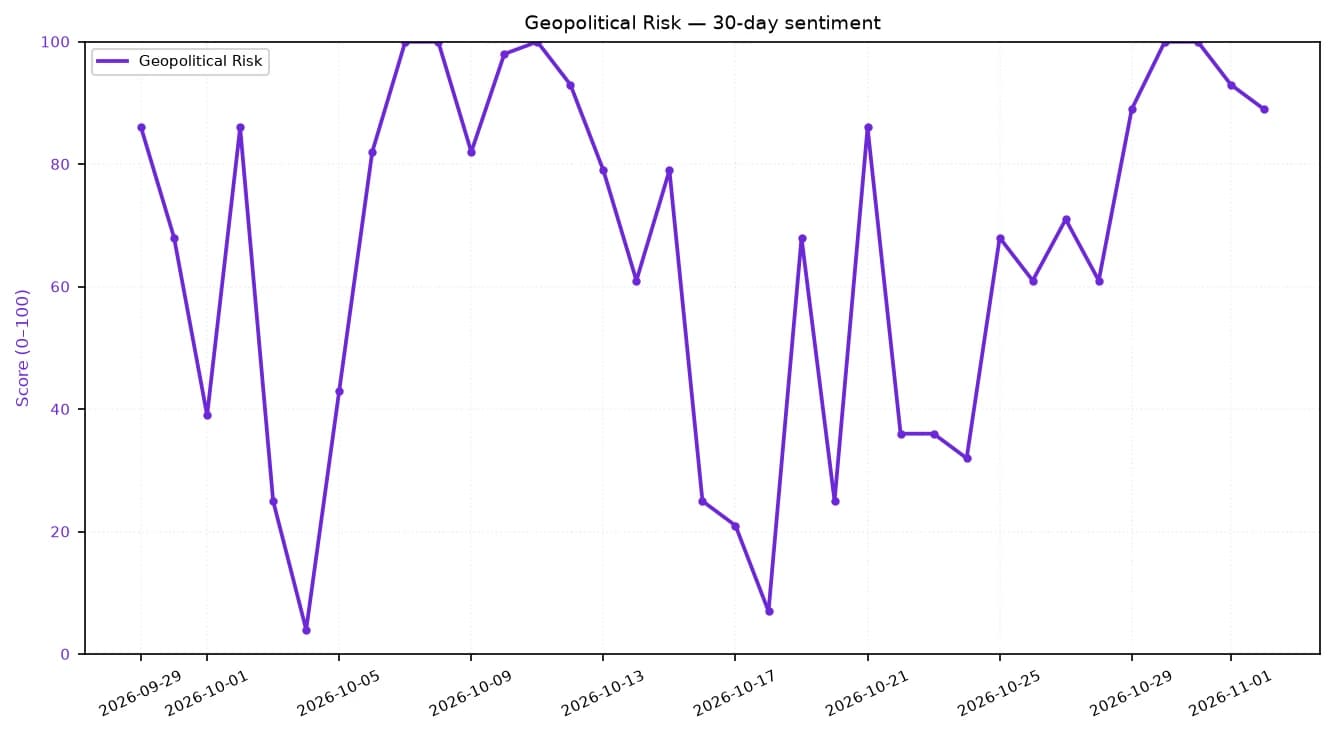
Geopolitical Risk
The attack matters because rail remains one of Ukraine’s main channels for moving troops, weapons and heavy equipment from the interior to the front. Disruptions at Merefa, a key rail suburb of Kharkiv, can slow the flow of armor and ammunition even if the physical damage is limited, forcing Ukraine to reroute cargo and spend more resources protecting transport nodes.
Sentiment Indicators
Russia’s Defense Ministry also said it hit a dry cargo vessel east of Odesa in the Black Sea that was carrying dual-use goods for the Ukrainian military. If confirmed, the strike would widen pressure on both land and sea corridors, underscoring how the conflict is increasingly targeting supply chains rather than only battlefield positions.
The strikes fit with Moscow’s stated plan to continue large-scale attacks on Ukraine’s military-industrial complex and logistics centers in retaliation for Ukrainian strikes on Russian energy and industrial sites. That keeps infrastructure risk elevated across the region and raises the odds of further damage to rail, port and warehouse capacity.
Geopolitical Risk vs UCOadalytica.com
Explore this data interactively — full history, time series and cross-market comparisons.
For investors, the immediate implication is a tighter geopolitical risk premium across energy, shipping and grain markets. A renewed threat to Black Sea traffic can lift volatility in crude-linked products and freight rates, while prolonged disruption to Ukrainian logistics can complicate exports and regional trade flows.
Adalytica’s Global Stability Sentiment gauge sits at 4.0, an “Extreme Fear” reading, while awareness remains elevated at 82.0, a sign that markets are highly attentive even as confidence deteriorates. In oil, WTI trade signals remain neutral, but the sharp drop in stability sentiment suggests the market is still vulnerable to any escalation that could hit shipping lanes or energy infrastructure.
Ukraine’s transport network has repeatedly come under attack as both sides try to degrade the other’s military supply lines. Any sustained campaign against rail junctions, ports and bridge links would keep pressure on logistics costs, force military rerouting and prolong uncertainty for traders watching the war’s spillover into commodities and regional risk assets.
| Entity | Gains | Losses |
|---|---|---|
| Russia | ▲Disrupts Ukrainian logistics | ▼Faces retaliation risk |
| Ukraine military | ▲Harder supply routing | ▼Rail and port vulnerability |
| Oil and freight traders | ▲Higher volatility opportunities | ▼Unpredictable shipping risk |
| Black Sea exporters | ▲— | ▼More transport disruption |