Russia’s economic reorientation away from the West is accelerating, with Prime Minister Mikhail Mishustin saying “friendly countries” now account for 85% of the country’s trade — a shift that underscores how sanctions have reshaped one of the world’s largest commodity exporters and altered the investment case for Eastern Europe-linked assets.
Russia trade shifts to friendly countries
The headline number matters because it suggests the Kremlin has, at least in aggregate trade terms, reduced its exposure to Western markets more than many investors expected. That does not make Russia sanction-proof. It does mean the sanctions regime is increasingly working by redirecting commerce rather than halting it, with China, Kazakhstan and other non-Western partners absorbing a larger share of Russian imports, exports and transit flows.
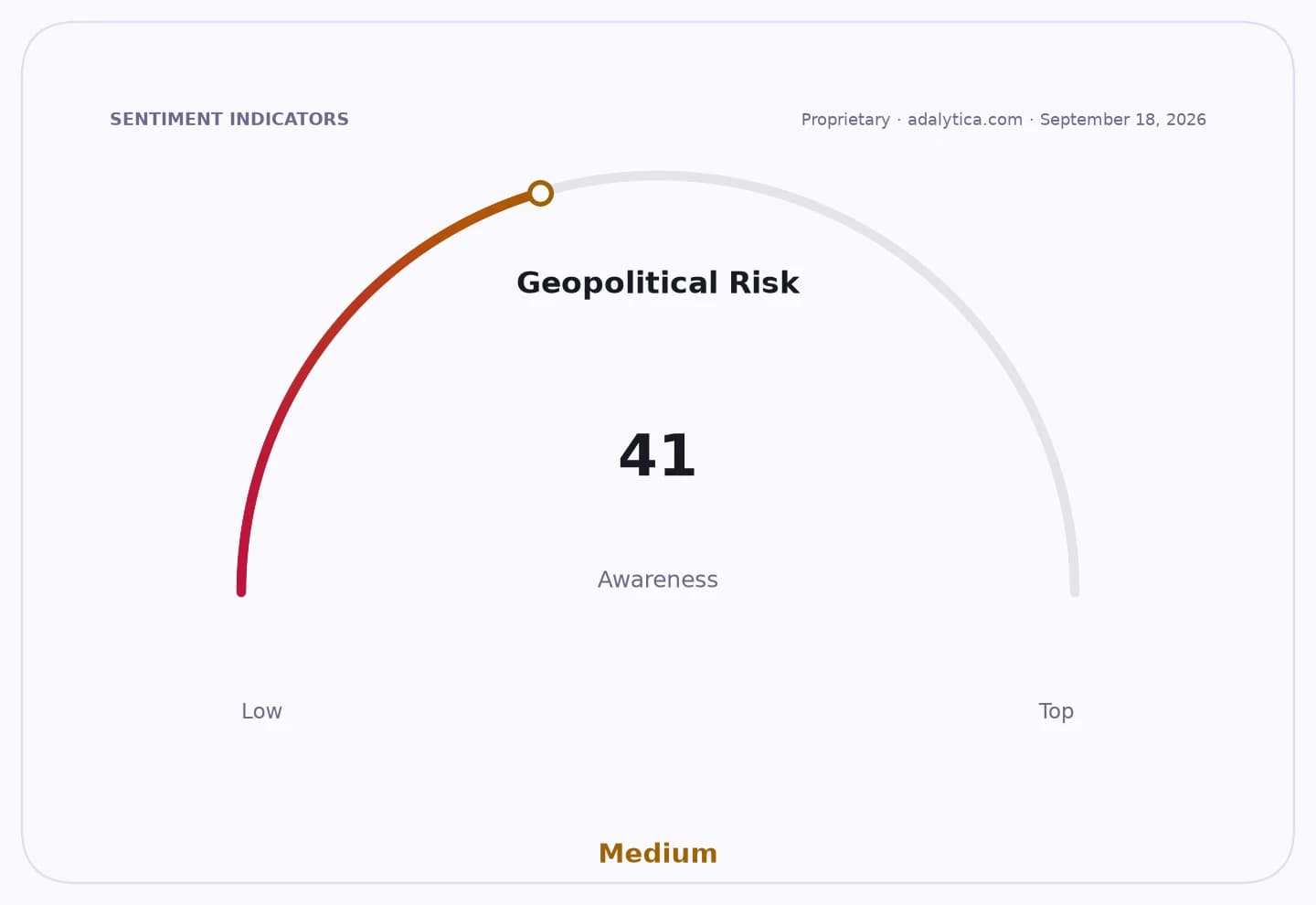
Sentiment IndicatorsⓘProprietary · adalytica.com · September 27, 2026
This is a snapshot — live sentiment, awareness and momentum for 130+ markets update continuously in the dashboard.Open AlphaPulse
For the Russian economy, the pivot provides a partial buffer against isolation. Trade with China has reached $240 billion, according to President Vladimir Putin, giving Moscow a deeper external anchor as it contends with restricted access to finance, technology and parts of the global logistics system. The shift also helps explain why Russia has been able to sustain war spending and keep critical export channels open despite broad Western pressure.
For investors, the implications are more mixed. The move reinforces the view that Russia’s economy can remain functional for longer than sanctions-only models implied, but it also confirms that the country is becoming more dependent on a smaller set of counterparties, especially China. That concentration raises bargaining-power risks for Moscow and limits the upside for any eventual normalization trade. It also keeps Russian-linked assets largely uninvestable for most global managers, given legal, compliance and reputational constraints.
The broader narrative is one of economic decoupling with asymmetrical consequences. Western sanctions have not collapsed Russia’s trade system; they have rerouted it. That is supportive for Russian state finances in the near term, but it also locks in a more regional, less diversified economy and deepens its reliance on geopolitical allies. The result is a trade structure that may be more resilient in wartime, yet more fragile strategically if relations with China or other partners weaken.
For Eastern Europe, the shift matters because it hardens the region’s role as a geopolitical fault line rather than a bridge between blocs. Countries that sit between Russia and the European Union face more pressure on trade, transit, security and energy, while firms exposed to the region must price in a longer period of sanctions, disruption and policy fragmentation. The war in Ukraine remains the central catalyst: any ceasefire or diplomatic thaw could alter trade routes and market pricing quickly, but for now the sanctions-driven realignment looks entrenched.
| Entity | Gains | Losses |
|---|---|---|
| Russia | ▲Trade rerouting | ▼Western market access |
| China | ▲Cheaper leverage | ▼Greater Russia exposure |
| Eastern Europe importers | ▲Alternative supply routes | ▼Higher geopolitical risk |
| Western investors | ▲Sanctions clarity | ▼Russian asset access |