Moscow said the European Union’s latest sanctions moves against Russia will not go unanswered, underscoring a widening standoff that is increasing the risk of further tit-for-tat restrictions just as Europe tries to harden its defenses against Russian hybrid threats.
EU Russia Sanctions Retaliation Risk Rises
The warning came after the EU extended individual sanctions on Russian citizens, with Russia’s permanent mission to the bloc saying Brussels’ “unfriendly measures” would meet a “similar response.” Moscow also said EU efforts to tighten or modernize sanctions were being slowed by internal disagreements among member states, a sign that the bloc’s Russia policy remains politically fragile even as security concerns intensify.
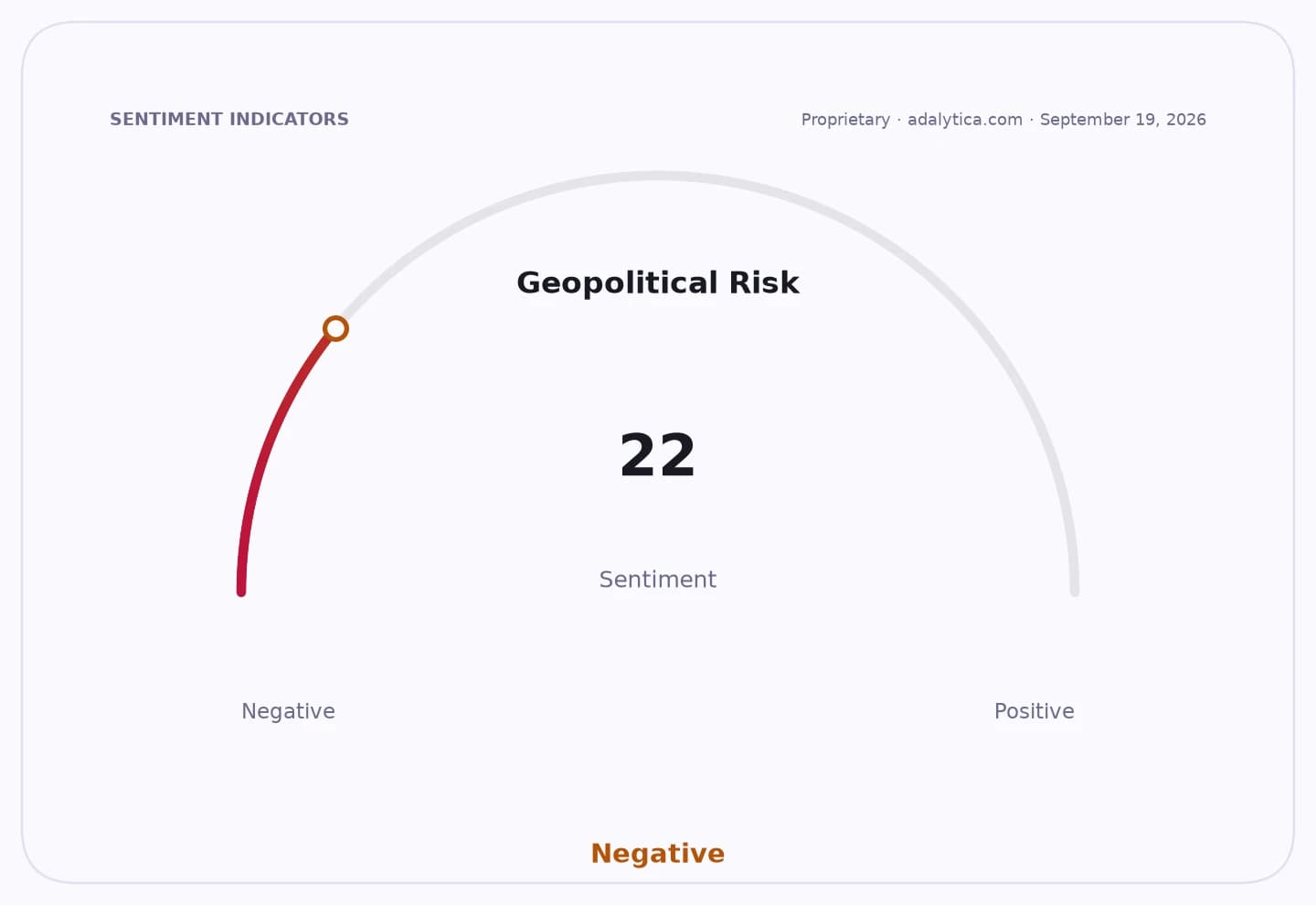
Sentiment IndicatorsⓘProprietary · adalytica.com · September 28, 2026
This is a snapshot — live sentiment, awareness and momentum for 130+ markets update continuously in the dashboard.Open AlphaPulse
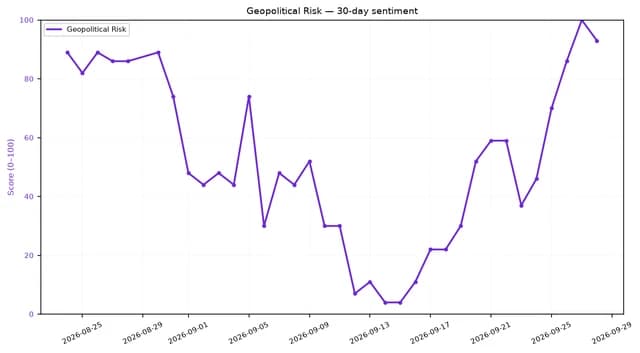
The economic stakes go beyond diplomatic symbolism. Sanctions have already reshaped trade flows, capital access and corporate risk management across Europe and Russia, and another round of retaliation could widen those distortions. For the EU, the challenge is not only preserving pressure on Moscow but also maintaining a united front as member states argue over enforcement, asset seizures and how far to go in financing support for Ukraine. For Russia, the immediate objective is to show resilience and deter any assumption that sanctions can be escalated without cost.
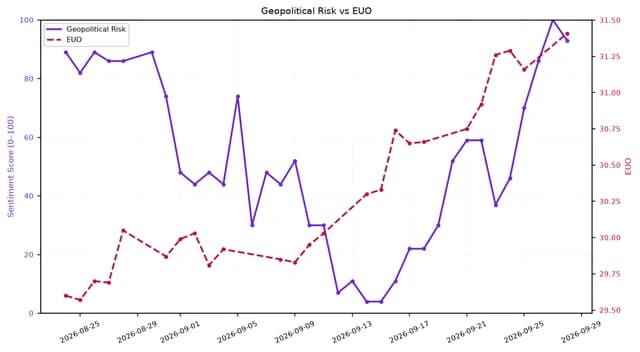
Investors have reason to pay attention because every new sanctions cycle affects energy markets, transport routes, payment channels and the cost of doing business in Europe-linked sectors. Oil remains vulnerable to geopolitical shocks, with U.S. crude prices still in the mid-$90s range in the data context and large energy funds reflecting the market’s sensitivity to supply risk. European risk proxies have also moved sharply, with the Europe-focused dollar fund EUO trading near 31.41, while energy stocks, tracked by XLE, have held firm around 62.36 after a strong run this year. Those moves suggest markets remain alert to any escalation that could tighten supply or revive inflation pressure.
The latest exchange also comes as Brussels weighs tougher responses to what EU officials describe as Russian sabotage and disinformation campaigns. That broader confrontation matters because it raises the chance that sanctions policy will increasingly overlap with internal security policy, making compromise harder and retaliation more likely. Moscow has already widened its list of EU representatives barred from entering Russia, a reminder that the response is not limited to economics and can quickly spill into travel, diplomacy and corporate operations.
The bull case for Europe is that pressure on Moscow, combined with tighter coordination on hybrid defense, could eventually reduce Russia’s room to maneuver. The bear case is that sanctions fatigue inside the bloc, along with divergent national interests, leaves the EU more divided than it appears and encourages Moscow to test its cohesion further. For investors, that means the geopolitical risk premium tied to Russia remains alive and could reprice quickly if sanctions broaden to new sectors or if retaliation hits energy and industrial supply chains.
| Entity | Gains | Losses |
|---|---|---|
| Russia | ▲Retaliation leverage | ▼Sanctions pressure |
| European Union | ▲Unified security stance | ▼Policy cohesion |
| Energy stocks | ▲Geopolitical support | ▼Trade disruption risk |
| European importers | ▲None | ▼Higher costs, tighter supply |