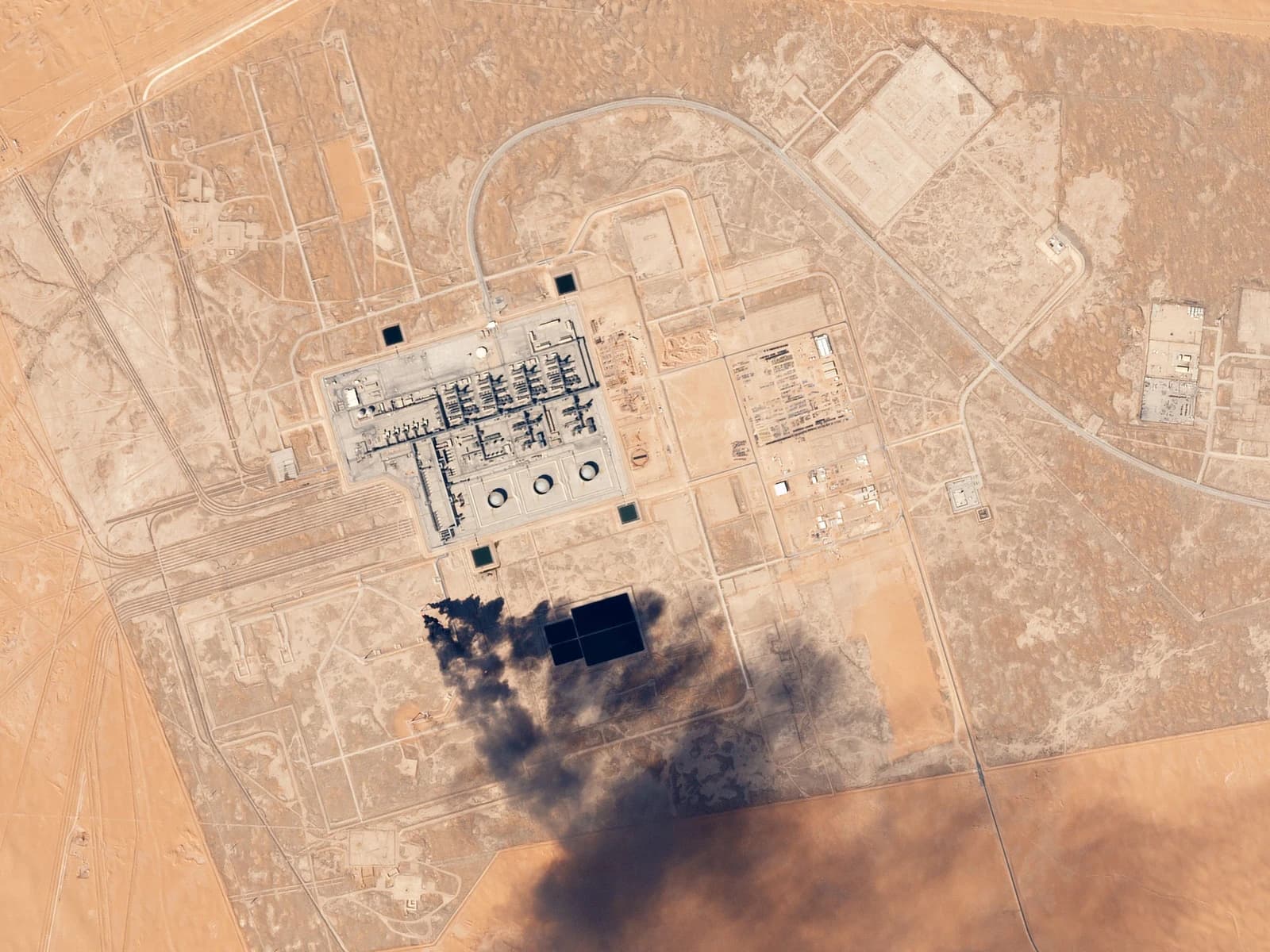
Saudi Aramco has offered additional crude cargoes for immediate delivery to European refiners, a move that should ease a tightening spot market just as geopolitical risks have kept benchmark prices elevated and shipping flows fragile.
Saudi Aramco offers extra crude to Europe
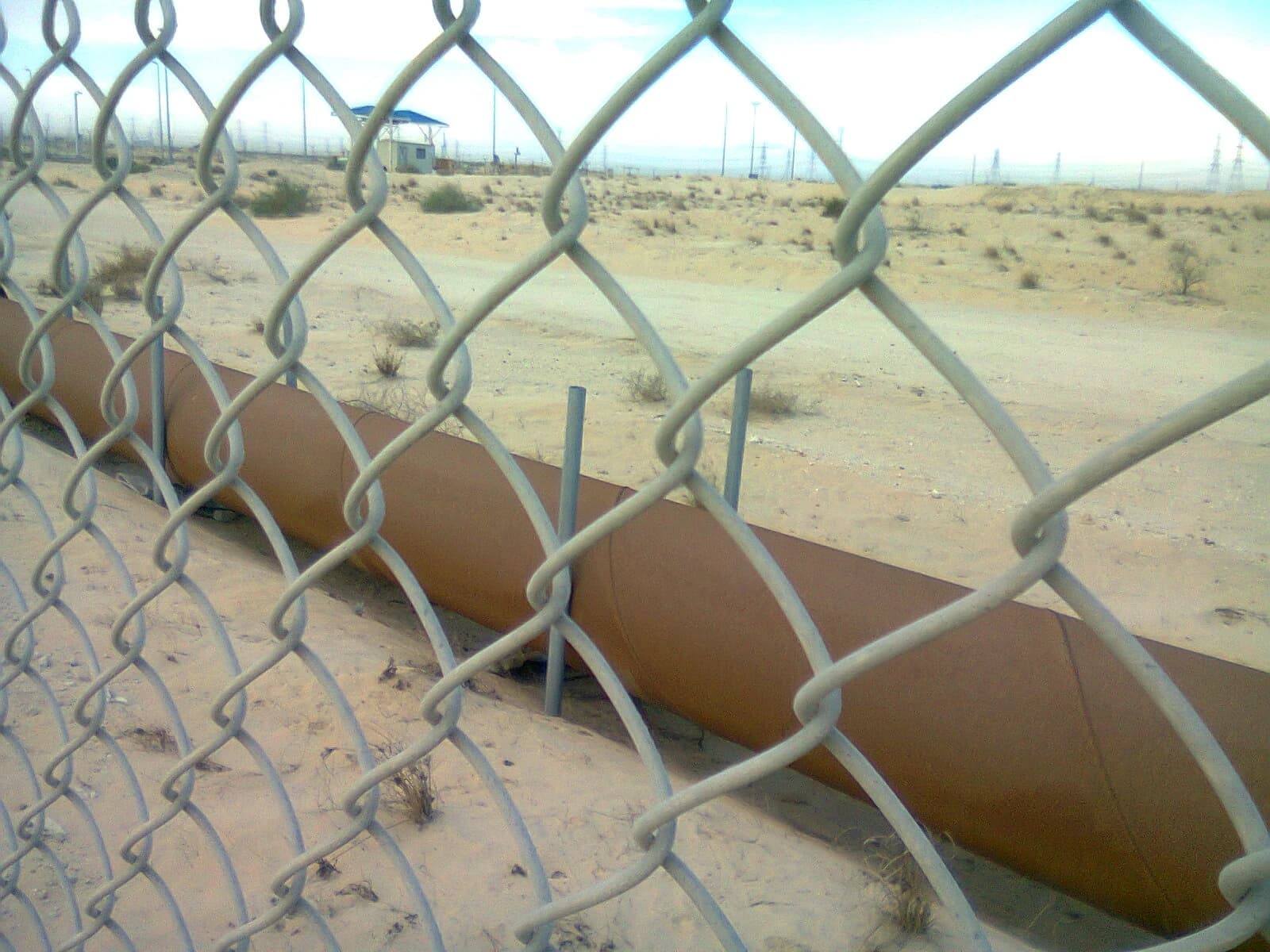
The extra barrels, set for arrival from late October through mid-November, underscore how quickly Saudi Arabia can act as a swing supplier when regional disruptions leave refiners short of prompt crude. For Europe, where supply tightness has been aggravated by wider shipping and security concerns, the offer is important less for its size than for its timing: nearby physical barrels are the fastest way to relieve pressure in a market that has been leaning on scarce prompt cargoes.
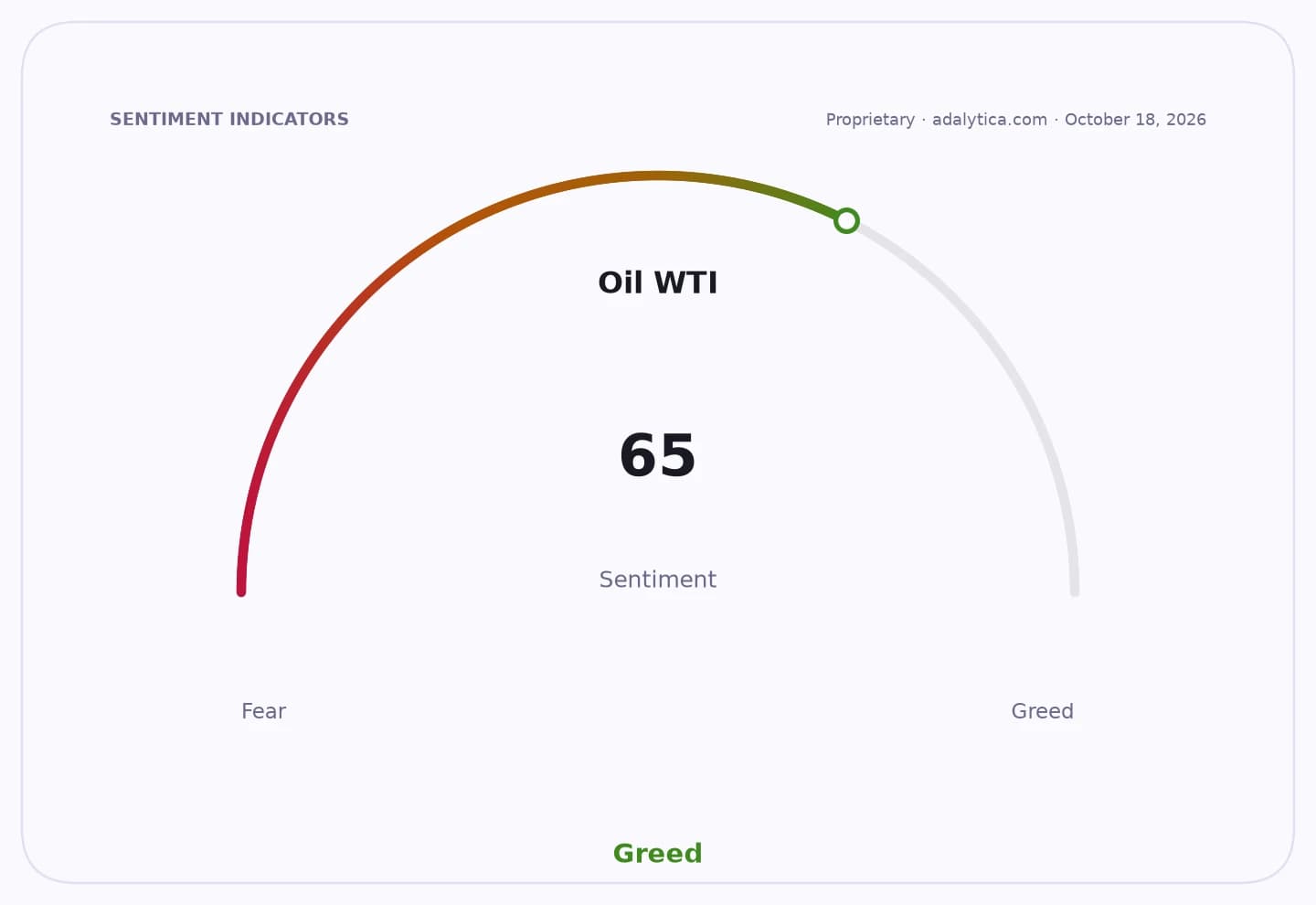
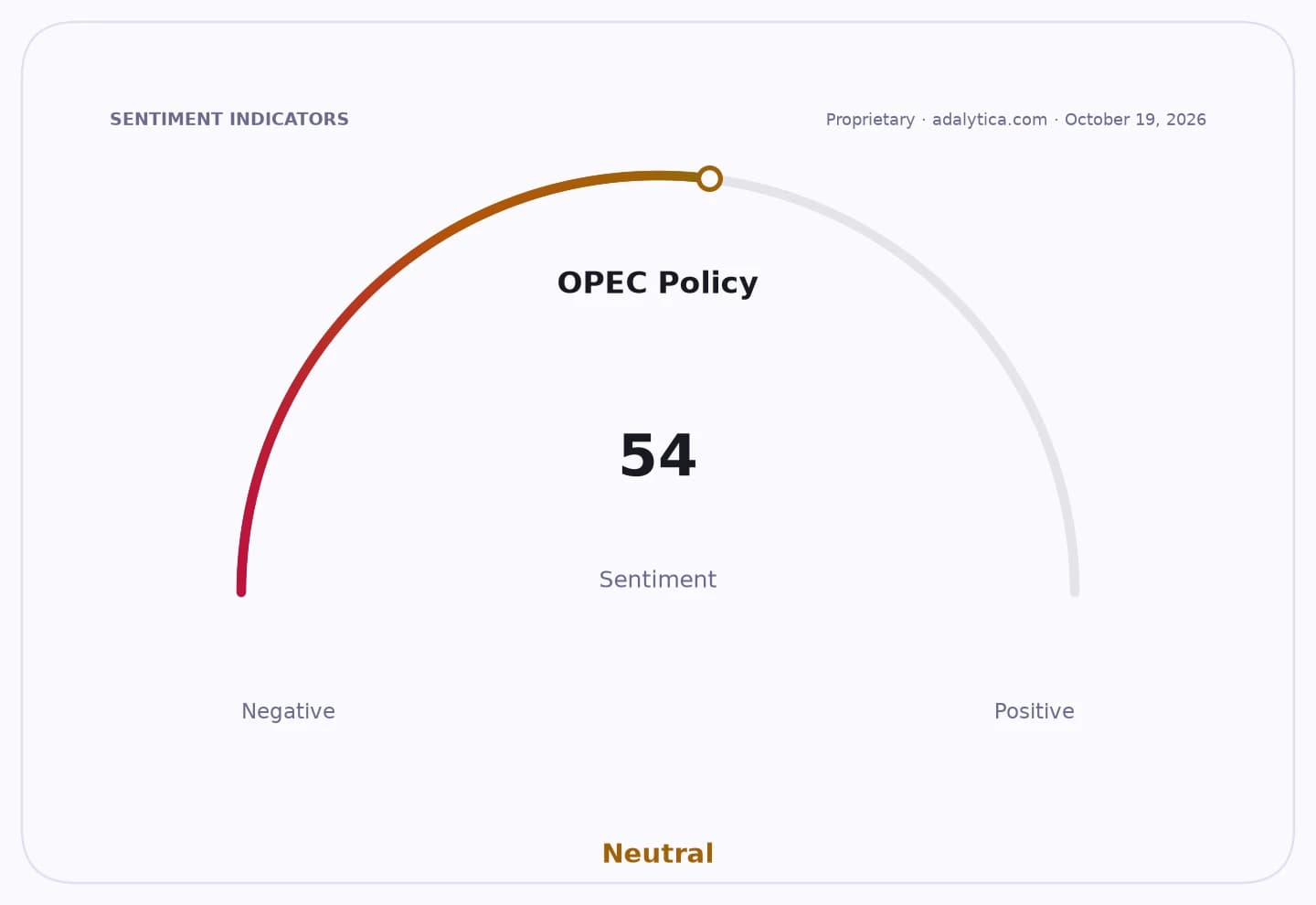
Sentiment IndicatorsⓘProprietary · adalytica.com · October 18, 2026
This is a snapshot — live sentiment, awareness and momentum for 130+ markets update continuously in the dashboard.Open AlphaPulse
Reuters, citing trade sources, said at least three European refiners are expected to receive the full volumes they requested from the state oil producer next month. Bloomberg reported that Aramco told European buyers late last week it would supply all the crude they had asked for in November after the reopening of the main pipeline linking Saudi Arabia’s eastern and western regions, which had previously been attacked.
The development also fits a broader Saudi strategy of reinforcing the kingdom’s role as a security backstop for global oil markets. Energy minister Prince Abdulaziz bin Salman recently said Saudi Arabia was expanding alternative transport routes and plans to raise pipeline capacity to about 10 million barrels a day over the next two to three years. That message matters because spare logistics capacity, not just headline production, determines how quickly Saudi crude can reach Europe when the market is under stress.
For investors, the immediate effect is a modest bearish signal for prompt European crude differentials and refinery margins, even if it is unlikely to alter the broader oil price trend on its own. Brent has been trading above $106 a barrel amid attacks on tankers in the Strait of Hormuz and other supply and shipping disruptions, while U.S. WTI has remained elevated around the high-$90s to low-$100s range. The extra Saudi cargoes may therefore temper near-term scarcity in Europe without resolving the larger geopolitical risk premium embedded in global prices.
Energy equities and oil-sensitive funds have already reflected that tension. U.S. oil benchmarks and sector ETFs such as USO and XLE have held up strongly on the back of tight supply expectations, while technical indicators on crude futures remain constructive even after recent volatility, with prices holding above their 50-day and 200-day moving averages. That suggests the market still expects disruptions to persist, but also that any added prompt supply from Saudi Arabia can quickly pressure the most squeezed regional grades.
The bull case for Aramco’s move is that it shows the company can defend market share and support buyers without sacrificing pricing power in a structurally tight market. The bear case for crude is that every incremental prompt cargo reduces the immediacy of the supply shock traders have been pricing in, especially if other producers follow suit or if shipping disruptions ease.
For Europe, the risk is not that one Saudi tender fixes the market, but that shortages stay concentrated in the prompt window. For oil investors, the key question is whether Aramco’s extra barrels are a temporary release valve or the first sign that the most acute stage of the squeeze is passing.
| Entity | Gains | Losses |
|---|---|---|
| Saudi Aramco | ▲Market share in Europe | ▼Some prompt pricing leverage |
| European refiners | ▲Near-term crude availability | ▼Scarcity premium relief |
| Oil consumers | ▲Lower supply stress | ▼Less upside from tightness |
| Oil bulls | ▲— | ▼Prompt market pressure |