China’s foreign minister meeting his Tajik counterpart on the sidelines of the Shanghai Cooperation Organization summit underscores a broader push by Beijing to lock in political, security and economic influence across Eurasia just as global risk appetite collapses around China-related trade and geopolitics.
SCO Ties Point to Fragmentation Trades

That matters because the Shanghai bloc is becoming more than a diplomatic stage: it is a channel for China to deepen ties with Central Asian states that sit on critical energy, transit and infrastructure routes linking China, Russia and the Middle East. For investors, that points to a world where Beijing keeps widening its strategic footprint even as US–China relations deteriorate, forcing capital to price in more fragmentation, more bloc-based trade and more demand for the infrastructure that connects friendly partners.
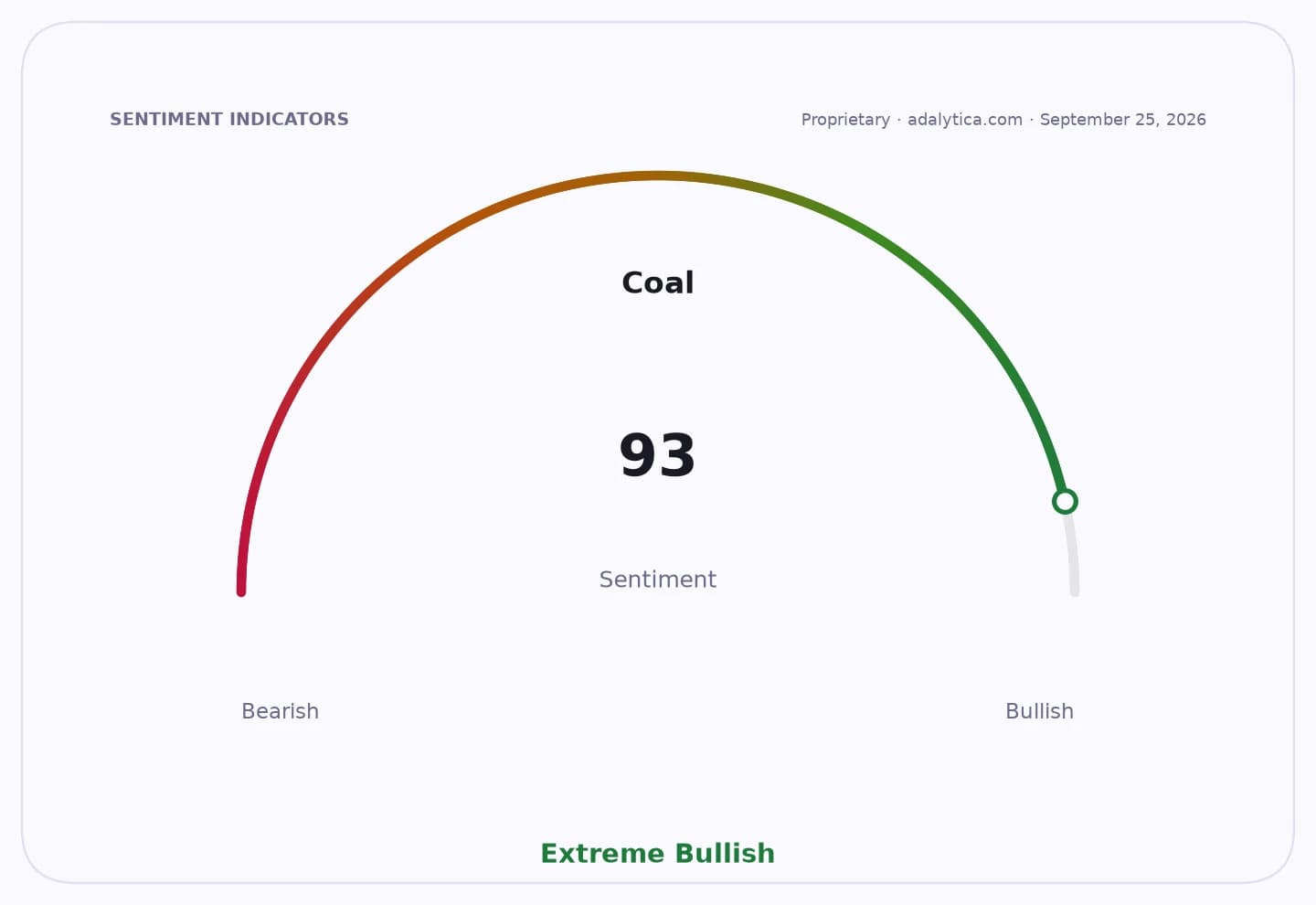
The timing is telling. Adalytica’s US–China Relations Sentiment gauge sits at 7, deep in “Extreme Fear,” after a 68% drop over the past 30 days, while its Global Stability Sentiment is also at 11, another “Extreme Fear” reading. In other words, the market is not just nervous about bilateral tensions; it is increasingly convinced that geopolitics is becoming a structural investment factor again. In that kind of environment, meetings like Wang Yi’s with Tajikistan are less about protocol than about supply chains, corridor security and long-term access.
Tajikistan is not a giant economy, but it sits in a strategically important neighborhood. Beijing has every reason to reinforce relationships there through lending, trade, minerals, transport links and security cooperation, especially as it seeks to reduce vulnerability to choke points and Western pressure. The Shanghai Cooperation Organization gives China a ready-made platform to do that with minimal headline friction and maximum regional coordination.
The investment implication is straightforward: the market underestimates the second-order winners of Eurasian realignment. Defense contractors, border-security suppliers, rail and logistics firms, power-grid and telecom infrastructure names, and commodities tied to corridor buildout all stand to benefit as China keeps financing and knitting together alternative trade routes. The losers are obvious too: companies and countries exposed to a more divided global trading system, where capital, shipping and technology increasingly move inside geopolitical fences rather than across them.
This is why the China-Tajikistan meeting matters beyond the bilateral headline. It fits a larger thesis: Beijing is not retreating under pressure from the US; it is adapting by expanding its regional architecture. That raises the odds of more infrastructure spending, more digital and security cooperation, and more competition over influence in Central Asia. For investors, the play is to own the picks-and-shovels of fragmentation now, before the market fully recognizes that the next capex cycle may be driven as much by geopolitics as by growth.
| Entity | Gains | Losses |
|---|---|---|
| China and SCO partners | ▲Regional influence, corridor access | ▼None immediately |
| Tajikistan and Central Asia | ▲Investment, security ties | ▼Leverage to West |
| Defense and infrastructure firms | ▲More state-backed spending | ▼Cyclical exporters |
| US-China risk assets | ▲— | ▼Higher geopolitical discount |