Students from SENATI’s higher technical school posted standout results at Peru’s CONEIMERA 2026 engineering congress, underscoring how AI and robotics are moving from classroom theory into practical, industry-facing applications.
SENATI students win at Peru's CONEIMERA 2026
The most economically relevant part of the story is not just the awards themselves, but the kind of projects that won. Luis Miguel Gómez Moreyra took second place in the graduates category with an AI-based multi-tenant system designed to lift business productivity through predictive analytics, while Darikso Daniel Quispe Vargas finished third with “Find a Pet,” an AI platform for locating lost pets. Their success points to a talent pipeline increasingly oriented toward deployable tools that can improve efficiency, automate routine tasks and solve niche but commercially relevant problems.
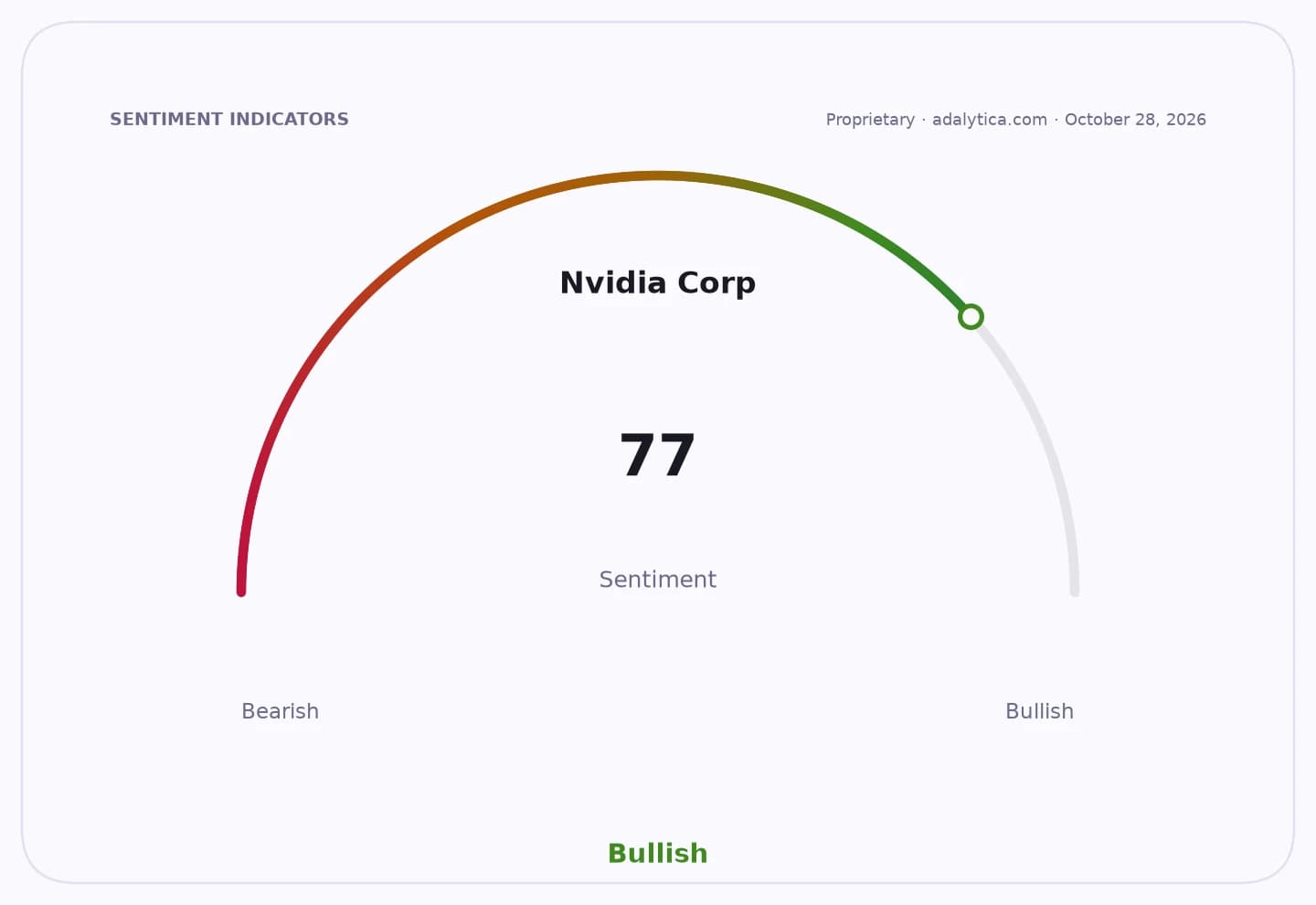
Sentiment Indicators
That matters because engineering education is becoming a feeder for the same AI and robotics themes attracting capital globally. Investors have been looking beyond pure software into applied AI, including industrial automation, service robotics and smart systems, a trend reinforced by new product launches such as BlackRock’s robotics ETF. The practical emphasis of the SENATI projects — from predictive business software to rescue robotics, adaptive learning platforms and autonomous waste management — suggests that the next wave of AI adoption will be shaped as much by implementation skills as by model development.
The broader participation list shows that this was not an isolated win. In pregrado, Leodan Merino placed fifth with a generative AI analysis of airline reviews, Marco Lúcar was 11th with an adaptive AI education platform, William Mogollón placed 13th with a teleoperation system for a quadruped robot in search-and-rescue operations, and Sandro Cutire finished 14th with an autonomous robot for waste management using machine vision. Taken together, the projects map directly onto sectors where AI can cut costs, improve decision-making and extend automation into hard-to-reach environments.
For SENATI, the result is also a signal about employability and industry relevance. A school that can field students capable of defending AI and robotics work before specialists is helping build the technical workforce companies will need as AI shifts from experimentation to deployment. For employers, that means a deeper pool of graduates who can bridge engineering, software and real-world operations. For investors, it is a reminder that the AI trade is increasingly about the ecosystem around the technology — education, industrial adoption, robotics hardware and applied software — not just headline-generating chipmakers.
The near-term catalyst will be whether these student projects remain academic exercises or become prototypes that attract partnerships with industry, local government or startups. If they do, the story moves from academic recognition to workforce development and commercialization, which is where the economic payoff of AI and robotics will increasingly be judged.
| Entity | Gains | Losses |
|---|---|---|
| SENATI students | ▲Recognition and career visibility | ▼Time and resources to compete |
| Employers and industry | ▲Better-trained technical talent | ▼Slower hiring of ready-made specialists |
| AI and robotics sector | ▲Broader adoption pipeline | ▼Purely speculative AI narratives |
| Traditional classroom-only models | ▲— | ▼Less relevance versus applied research |