Seoul’s apartment market is flashing a classic late-cycle warning: prices are still climbing, but the line of buyers is disappearing. That gap matters because the biggest risk to Korea’s housing boom is not an immediate collapse, but a widening disconnect between sticky asking prices and rapidly weakening transaction demand.
Seoul Apartment Prices Rise as Buyer Demand Slows
A local property professor said the recent surge has entered its “final stretch,” pointing to a sharp drop in visits from would-be buyers after the Chuseok holiday and to falling sales, jeonse and monthly-rent activity. Seoul apartment prices have risen for 87 straight weeks, but the pace of actual buying has slowed enough to suggest the rally is becoming increasingly fragile.
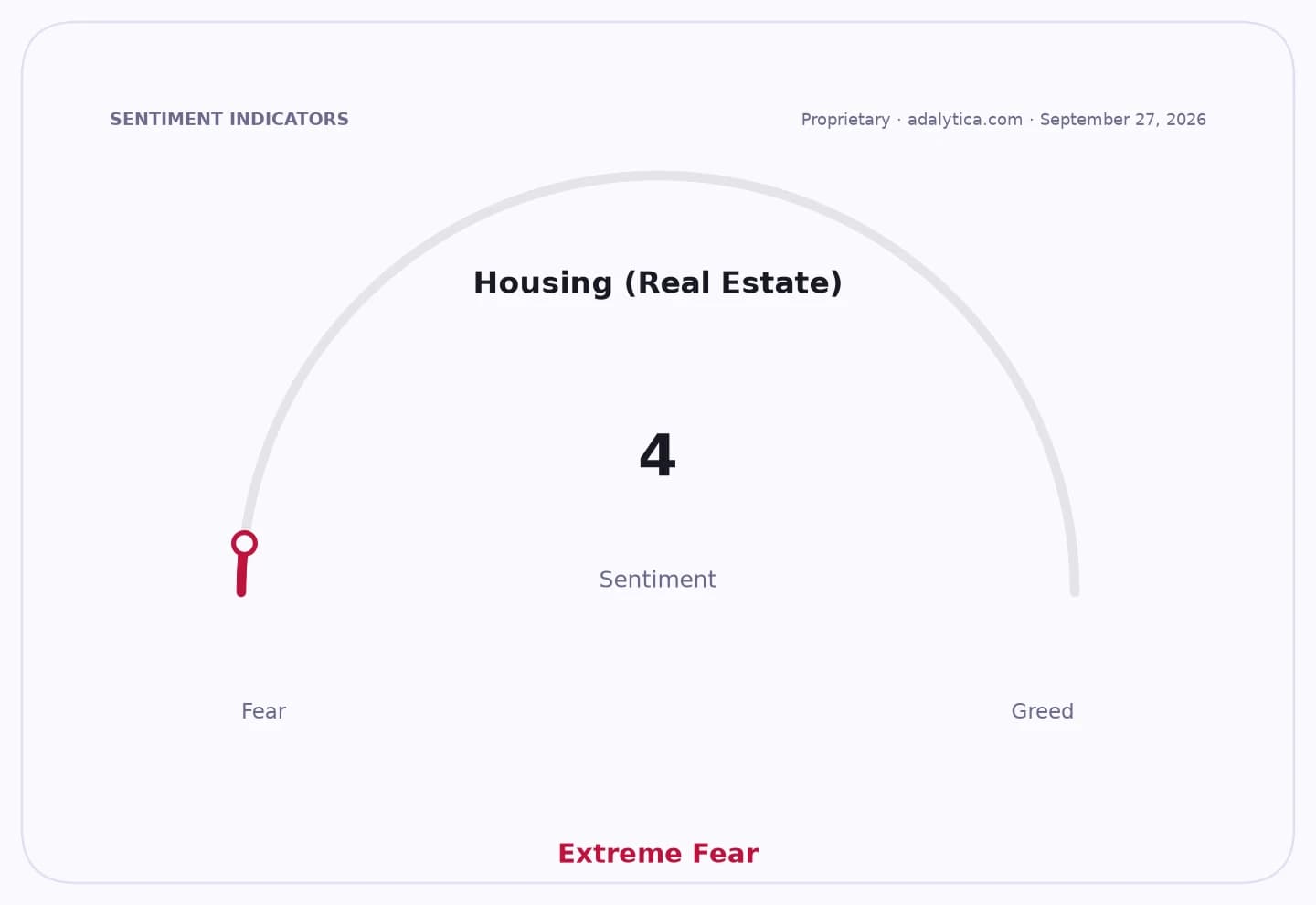
Sentiment IndicatorsⓘProprietary · adalytica.com · October 22, 2026
This is a snapshot — live sentiment, awareness and momentum for 130+ markets update continuously in the dashboard.Open AlphaPulse
That matters economically because Seoul real estate is not just a household asset class — it is a transmission channel for credit, consumption and confidence. When prices rise faster than incomes and financing capacity, the market can keep levitating for a while on fear of missing out. But once mortgage burdens bite, marginal buyers step back, liquidity dries up and price discovery becomes more erratic.
The professor blamed tighter affordability on borrowing costs and debt limits, especially in outer Seoul districts where prices have jumped from a lower base. He cited the 15 billion won threshold, high loan availability for first-time buyers and the strain from rising bond yields, arguing that households, small businesses and firms are all facing a cash squeeze. In his view, that is already curbing the chase into neighborhoods such as Nowon and even the pricier “MAYONGSEONG” cluster of Mapo, Yongsan and Seongdong, where listings are rising as transactions fade.
For investors, the key issue is whether the Seoul market is transitioning from a broad-based upswing into a narrower, policy-sensitive trade. If demand continues to weaken while prices remain elevated, the beneficiaries shift from sellers and leveraged owners to cash-rich buyers and policymakers trying to engineer a soft landing. It also raises the odds that the government’s push to accelerate housing supply in the greater Seoul area becomes more urgent, even as city hall resists some plans.
That supply fight matters beyond real estate. Seoul housing is a barometer for Korean financial conditions, and any sustained slowdown in transactions would ripple into banks, builders and consumer sentiment. On the other hand, if the market keeps rising despite weaker foot traffic, it reinforces the view that Korea’s housing shortage and liquidity conditions are still overpowering restraint.
For now, the investable takeaway is straightforward: the market underestimates how quickly sentiment can turn once the “must-buy-now” crowd steps away. Keep watching transaction volumes, mortgage stress and policy response — they will tell you whether Seoul’s housing boom is pausing or setting up for a harder reset.
| Entity | Gains | Losses |
|---|---|---|
| Cash buyers | ▲Better negotiating power | ▼Less urgency to act |
| Existing homeowners | ▲Higher paper valuations | ▼Worse liquidity |
| Seoul policymakers | ▲Stronger case for supply action | ▼Pressure to prove control |
| Buyers on leverage | ▲Earlier gains if rates ease | ▼Mortgage strain and missed timing |