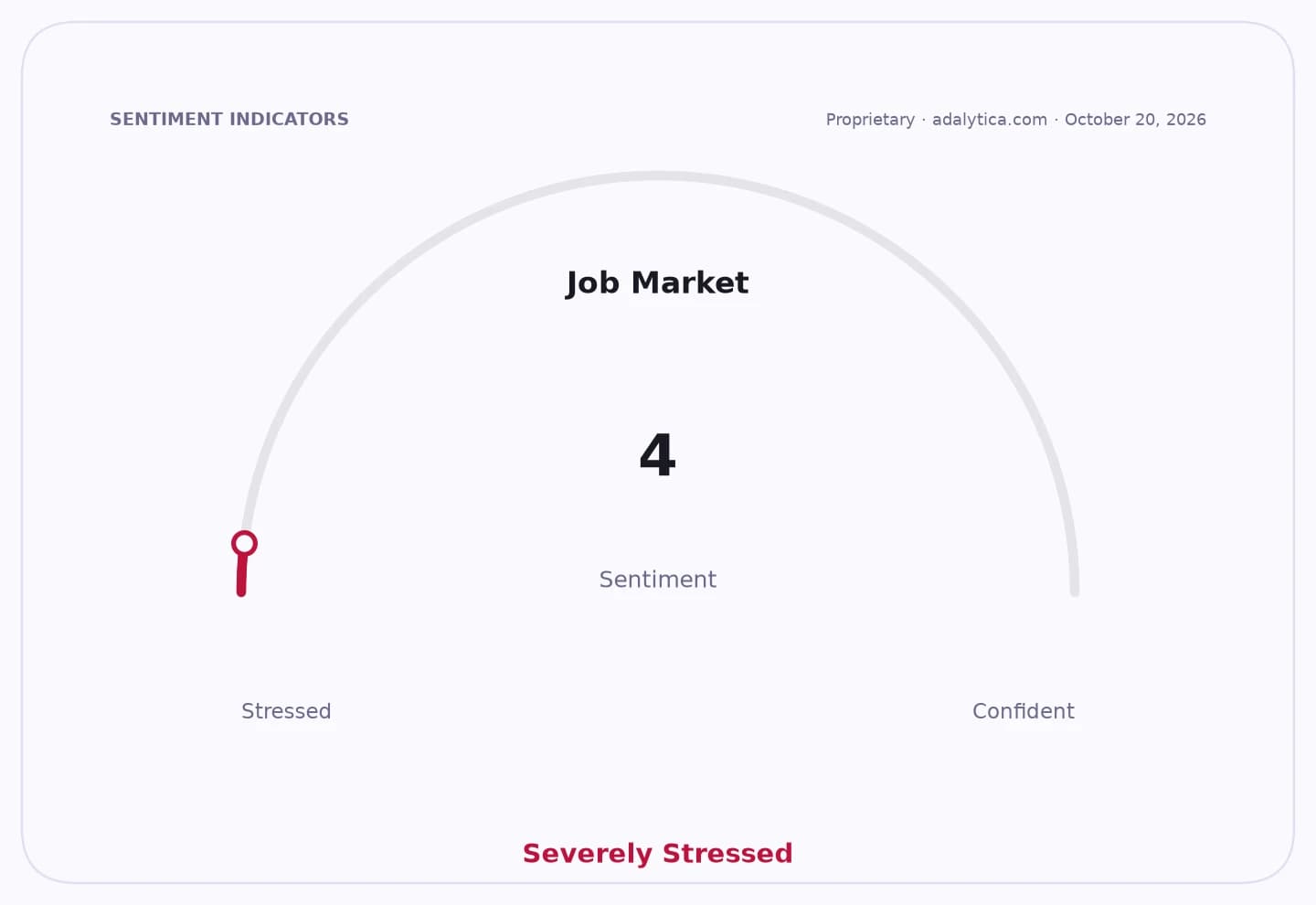
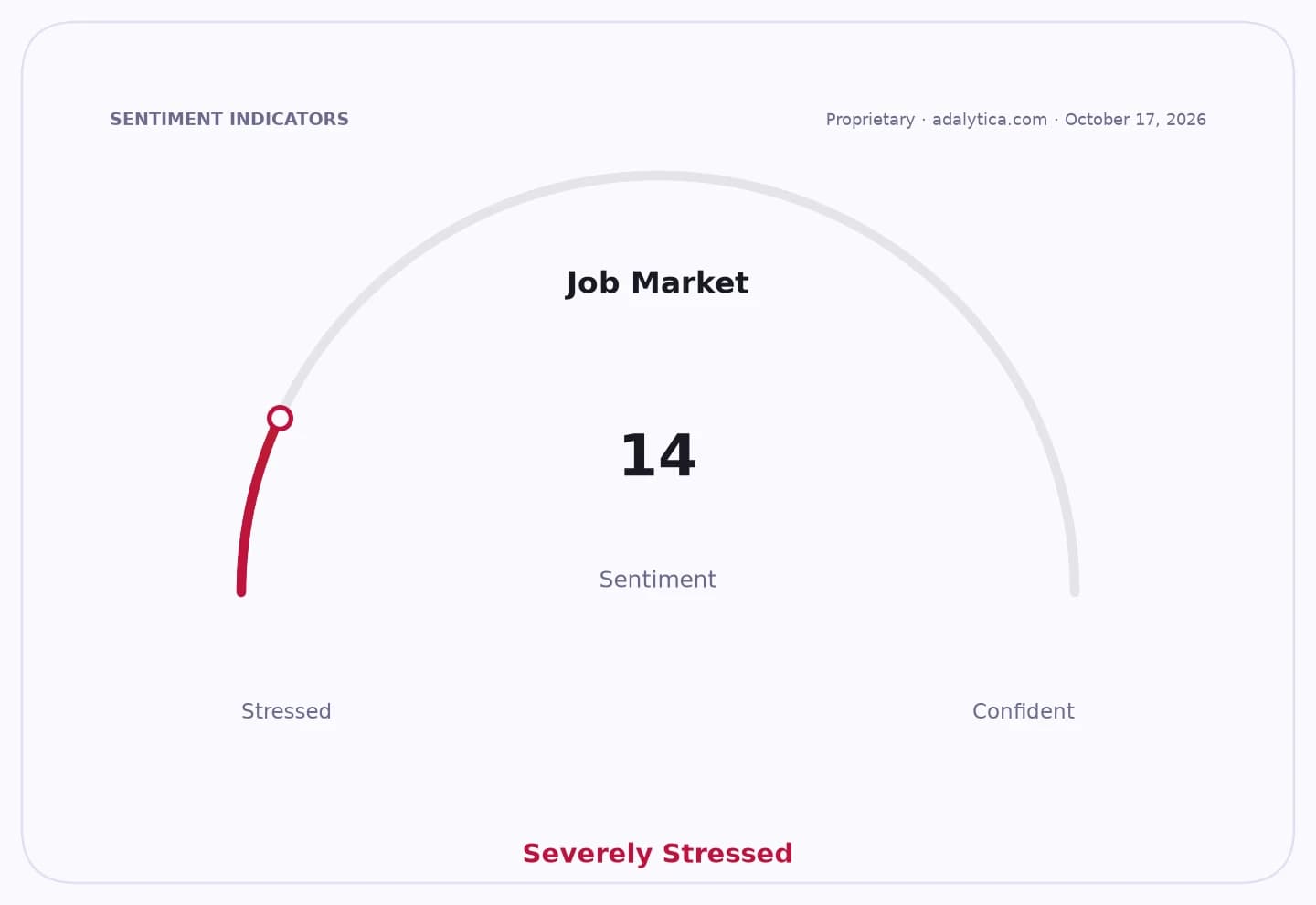
Thousands of workers in Serbia are facing renewed job fears after a string of foreign-owned factories said they are closing plants or cutting staff, a blow that underscores how political uncertainty is rippling through the country’s manufacturing base.
Serbia factory closures raise job fears
Consumer Confidence
The immediate concern is employment, but the broader risk is to Serbia’s role as a low-cost production hub for European manufacturers. If investors decide the business climate has turned less predictable, the damage goes beyond the factories already earmarked for closure and could hit new investment, export output and household spending.
Sentiment Indicators
Consumer Confidence
Among the most prominent cases is Italian hosiery and underwear maker Golden Lady, whose Vali factory in Valjevo is set to shut in mid-December, according to local reports cited in Serbian media. The plant employs 737 workers, mostly women, and has operated since 2001.
Other companies are also said to be under pressure. Local reports cited by Serbian officials point to Aster Textil, with 396 employees, Eurotay in Kraljevo with 507 workers, Magna in Odžaci, Johnson Electric in Niš, and Kula Fiorano among firms either planning reductions or facing uncertain outlooks. Former president Aleksandar Vučić said Drexlmaier in Zrenjanin employs 1,242 people, while Leoni’s operations in Niš, Prokuplje and Kraljevo remain a major employment anchor.
The warnings come as Serbia’s political transition after the October 25 elections has added to business uncertainty, with the new government expected to reset policy direction. That matters for investors because Serbia has long depended on foreign direct investment and export-oriented assembly plants to support growth, jobs and foreign-currency inflows.
The banking and retail sector is also in focus after regulators revoked Alta Banka’s license, a move that has fueled concern over wider spillovers across companies linked to the Alta group. Serbian media and officials have warned that the number of jobs at risk across related businesses could run into the thousands, though that figure includes multiple affiliates and is not limited to the bank itself.
For markets, the story is less about one factory than about whether Serbia can keep its manufacturing base intact at a time when workers, local governments and suppliers are already reacting to shutdown talk. The next test is whether more multinationals confirm closures or whether the new administration can stabilize sentiment and stop the exodus narrative from spreading.
| Entity | Gains | Losses |
|---|---|---|
| Foreign factory owners | ▲Lower exposure, exit flexibility | ▼Serbia-based operations |
| Serbian workers | ▲None immediate | ▼Jobs and wages |
| New Serbian government | ▲Chance to reset policy | ▼Pressure over investment climate |
| Export-dependent regions | ▲Possible future reinvestment | ▼Output and local spending |