Serbia’s main labor-market problem is no longer the lack of jobs but the mismatch between what employers need and what candidates can do, according to the National Employment Service.
Serbia labor market mismatch shifts hiring challenge
That shift matters because it changes the policy and investment challenge from job creation to workforce upgrading. A labor market can post relatively low unemployment and still underperform if firms cannot fill open roles with qualified workers, a friction that can slow output, raise wage pressures in scarce occupations and leave pockets of unemployment persistent even when vacancies remain elevated.
National Employment Service director Milan Bosnić said demand for workers varies sharply by city depending on industrial structure, the presence of factories and whether a location is a university center. But some occupations remain in demand across most of Serbia, underscoring that the problem is broad-based rather than limited to one region or sector.
The data backdrop reinforces that tension. The unemployment rate is projected at 4.09% for October after readings of 4.1% in July and August and 4.2% in September, near levels that traditionally indicate a tight market. At the same time, employer demand remains firm: job openings were at 7,079 in August, following 7,335 in July and 7,182 in June, while total nonfarm payroll employment is projected at 159,085.5 million in October, little changed from 159,044 million in September.
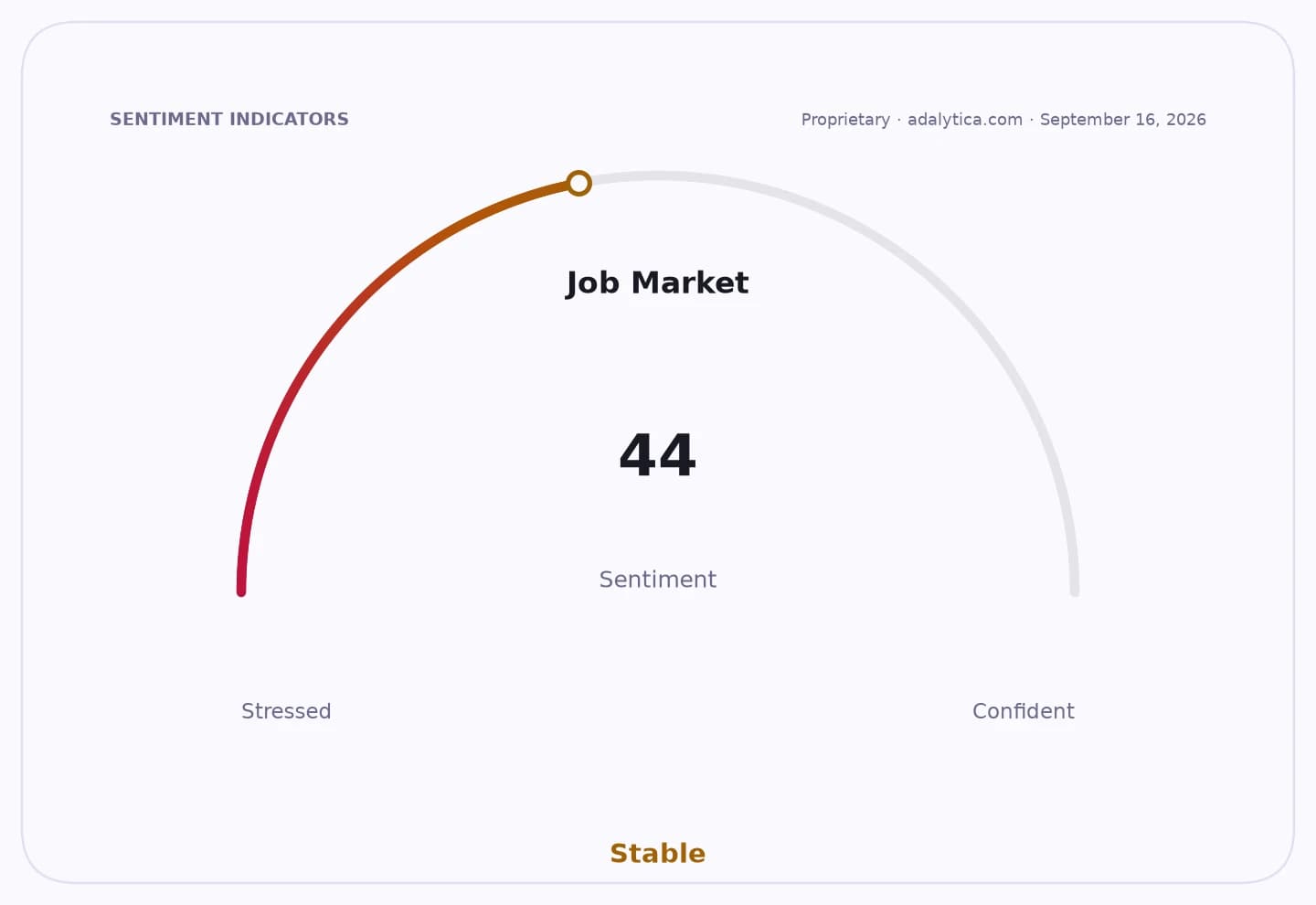
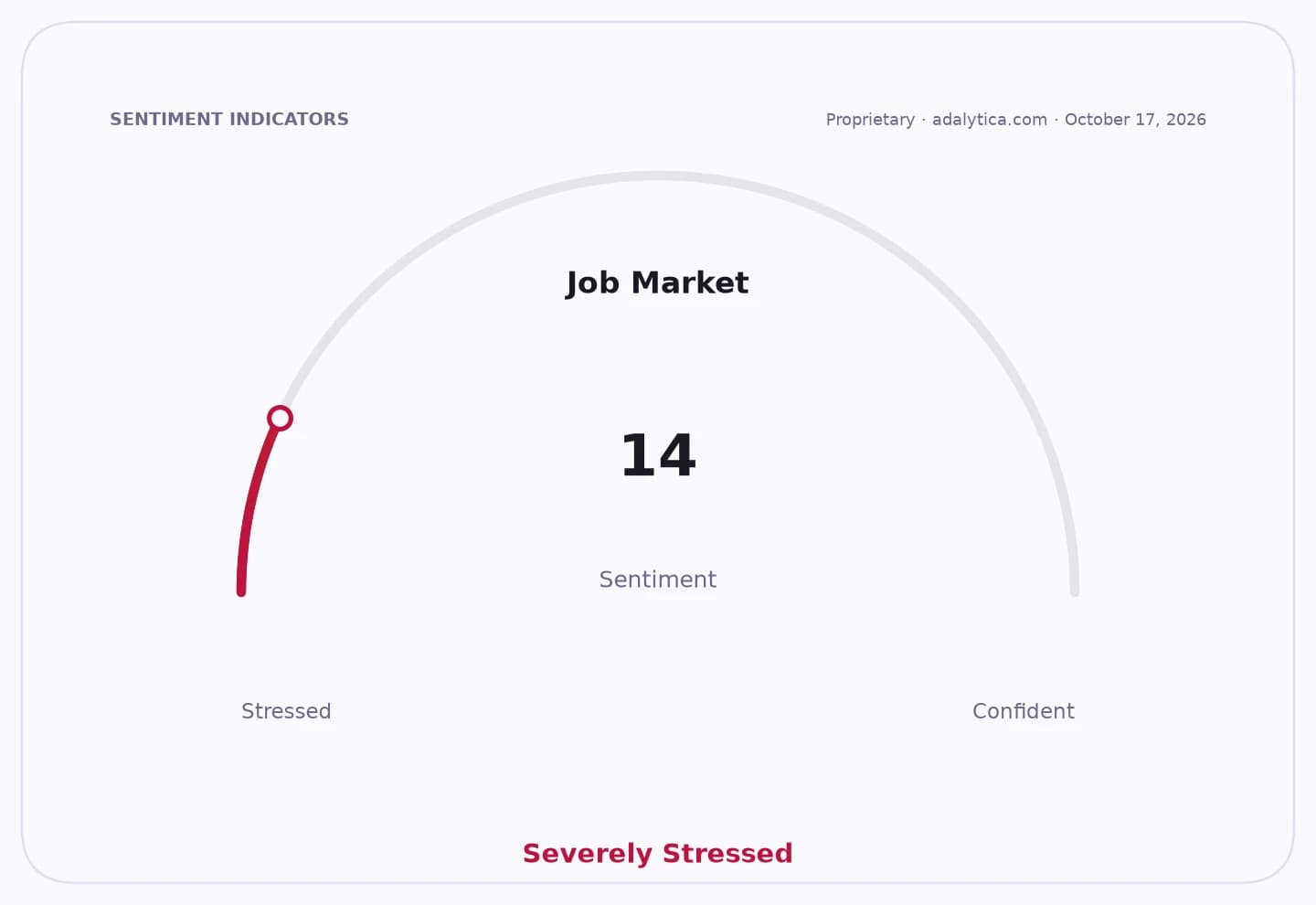
Job Market — 30-day sentimentadalytica.com
Explore this data interactively — full history, time series and cross-market comparisons.Open AlphaPulse
In other words, Serbia is not dealing with a simple labor surplus. It is dealing with a coordination failure. Employers appear to be hiring, but they are struggling to find workers with the right mix of technical, practical and digital skills. For businesses, that can mean longer hiring cycles, higher recruitment costs and delayed expansion. For workers, it means unemployment can coexist with vacancy-rich industries because the available labor pool does not match the openings.
That has implications for wages and inflation as well. In occupations where skills are scarce, employers may have to bid up pay or offer training incentives, while in lower-demand fields wage growth can stay weak. Over time, that kind of mismatch can reduce potential growth by limiting how quickly firms can scale production, especially in manufacturing, services and export-oriented industries that depend on specialized labor.
The policy response is likely to be more important than headline employment numbers. The next phase of labor-market management will depend on retraining, vocational education, employer-linked curricula and better matching between schools and industry. Without that, Serbia risks keeping unemployment low on paper while leaving a meaningful share of labor underutilized.
For investors, the story cuts both ways. Companies with strong training pipelines, in-house upskilling programs or access to university talent may gain a hiring advantage. Firms that rely on scarce skilled labor could face margin pressure, slower delivery times and weaker capacity utilization. The broader market takeaway is that labor availability is not the binding constraint anymore — labor quality is.
| Entity | Gains | Losses |
|---|---|---|
| Employers with training programs | ▲Easier hiring, better retention | ▼Lower short-term flexibility |
| Workers with in-demand skills | ▲Higher wages, more offers | ▼Less-skilled job seekers |
| Serbia’s policymakers | ▲Clearer reform agenda | ▼Pressure to fix education pipeline |
| Skill-hungry firms | ▲Stronger productivity if staffed | ▼Delays, higher labor costs |