Sharqia province has begun harvesting rice on 100,000 acres, a major step in one of Egypt’s most important grain-producing areas and a test of how far authorities can curb the costly practice of burning rice straw.
Sharqia rice harvest starts, straw burning crackdown
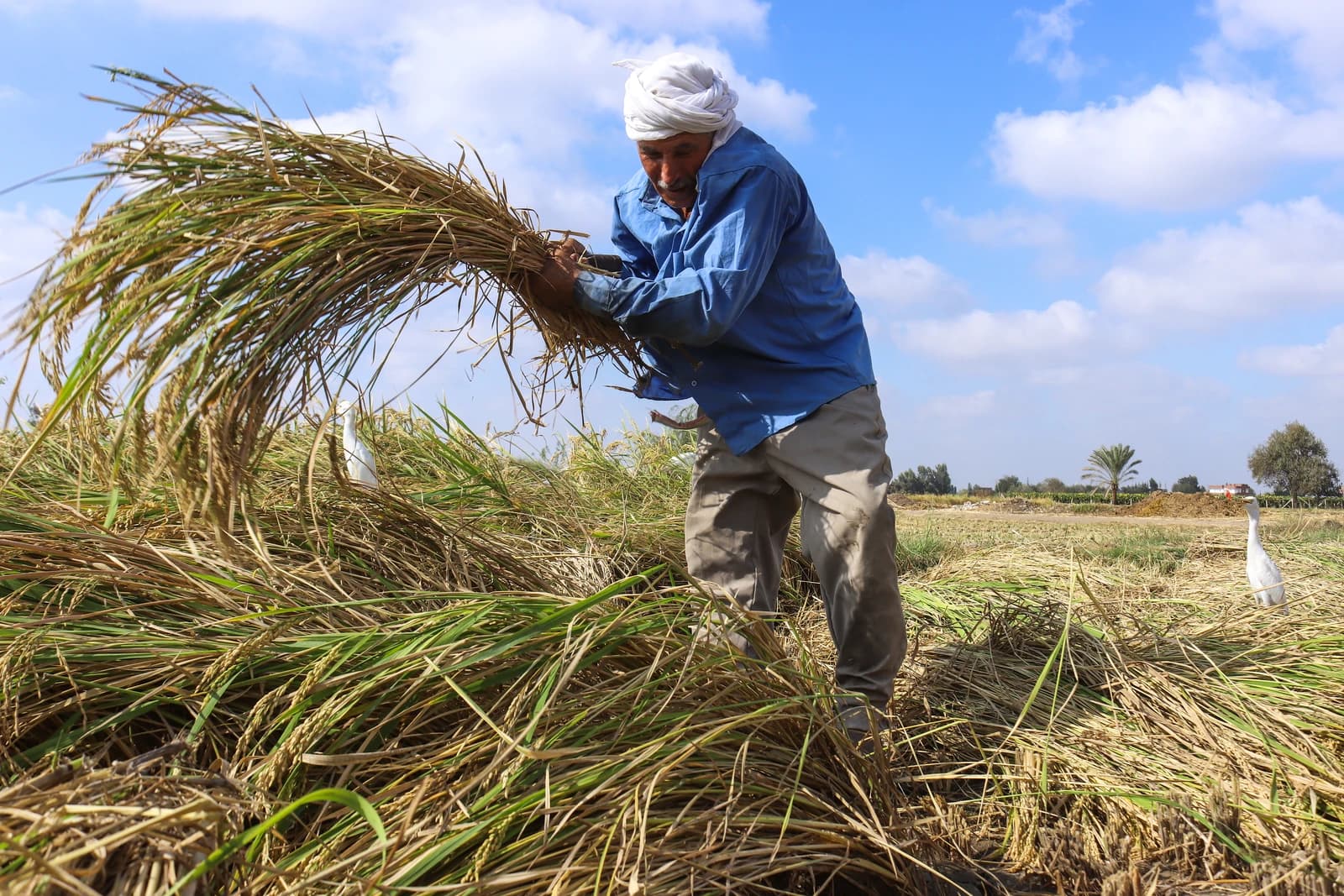
The harvest matters economically because rice remains a profitable crop for farmers, while the byproduct handling can determine whether the season adds income or pollution costs. Local officials said the province has planted more than 290,000 acres of rice this year, with harvesting now underway across broad-grain and narrow-grain varieties, including Super 300, 108, 104, 101, 178 and 177.
Authorities are treating straw management as a parallel campaign to the harvest itself. Agricultural, environmental and police teams are patrolling fields around the clock to stop fires, issue violations and refer offenders for prosecution, while crisis rooms have been set up to receive complaints and respond immediately.
That matters for investors and commodity markets because rice output, harvest pace and post-harvest losses can affect local farm income, food supply and broader agricultural pricing in a crop-heavy province. The province has also held 500 extension seminars to push farmers toward collecting and recycling straw rather than burning it.
Officials said machinery such as balers and tractors has been made available to help farmers compress and move straw, clearing land for the next planting cycle and creating a small additional revenue stream. Straw can fetch 500 to 600 Egyptian pounds per feddan, while burning it can bring fines ranging from 50,000 pounds to 1 million pounds per feddan, a penalty regime designed to make disposal economics favor collection over burning.
The next risk is execution: the crackdown will only work if local enforcement, machinery access and farmer buy-in hold through the peak harvest window. For food markets, the key question is whether the crop can move from field to market without weather, logistics or open-burning disruptions.
| Entity | Gains | Losses |
|---|---|---|
| Sharqia rice farmers | ▲Harvest income; straw sales | ▼Fines if straw is burned |
| Egyptian authorities | ▲Lower pollution; better enforcement | ▼Higher monitoring burden |
| Rice buyers | ▲Steadier local supply | ▼Potential disruption from fires or delays |
| Straw recyclers/balers | ▲More business from collection | ▼Less demand if farmers burn straw |