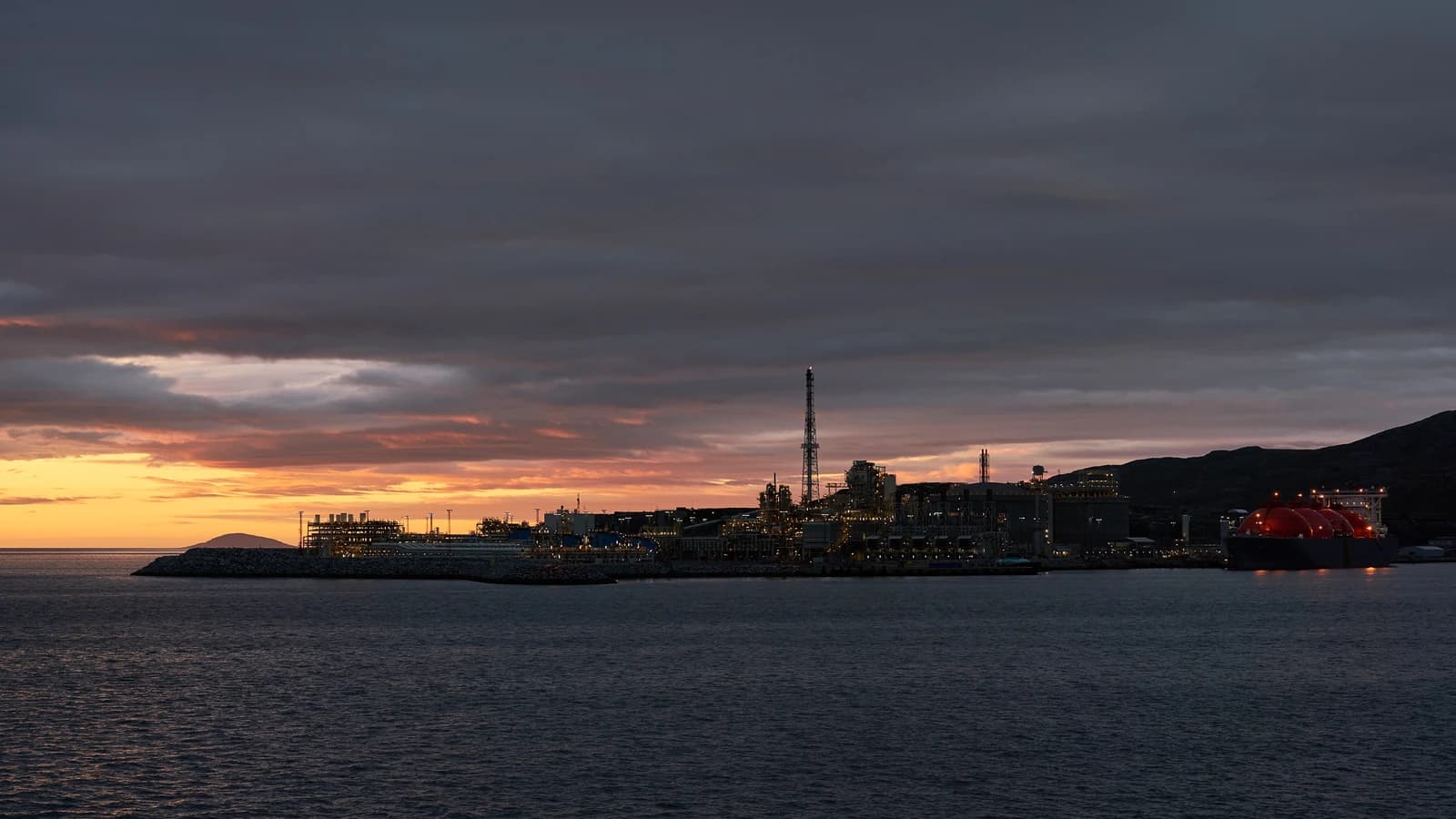
Shell has begun flowing first gas from its Rosmari-Marjoram deepwater project off Sarawak, a timely boost to one of Asia’s most important LNG supply chains and a reminder that large gas developments are still central to energy security even as the market obsesses over renewables and AI power demand.
Shell Rosmari-Marjoram starts first gas in Malaysia
Natural Gas
The start-up matters because this is not a marginal project. Rosmari-Marjoram sits about 220 kilometers offshore Malaysia and is designed to feed a new onshore gas plant in Bintulu before being sent into the Petronas LNG Complex. In other words, Shell is not just bringing on another field — it is adding new molecules into a system that helps support Malaysia’s LNG export role and its domestic gas balance.
Sentiment Indicators
For Shell, the project is part of a broader production ramp that the company says will help lift upstream and integrated gas output into the 2030s. Shell has said the Rosmari-Marjoram development contributes to projects coming on stream between 2025 and 2030 with peak production of more than 1.4 million boe/d, underlining how gas remains a core cash-generating pillar of its portfolio.
That is the investment case here. The market still tends to treat big integrated oil majors as mature yield vehicles, but Shell is quietly extending the life of its gas franchise in one of the world’s tighter LNG regions. New supply from deepwater Malaysia should support volumes, utilization and contract stability, while also reinforcing Shell’s position in Southeast Asia, where gas demand remains resilient and the transition away from coal is still incomplete.
The structure of the project also matters. It includes a subsea tie-back, an unmanned wellhead platform, a 207-kilometer pipeline to shore and an onshore processing plant at Bintulu. Shell said the offshore platform is powered by solar when unmanned, with batteries covering up to three days and diesel as backup, while the onshore plant uses the equivalent of 100% hydropower through a mix of direct grid supply and renewable energy certificates. That gives Shell a cleaner operating profile at a time when upstream emissions intensity is increasingly scrutinized by investors and customers.
The development also strengthens Malaysia’s role as a gas hub. Shell has been operating in the country for more than a century and has been producing gas offshore since 1982. The company still has interests in other Sarawak fields, including Timi and Gorek, and says it is looking for more opportunities in the basin. With Shell as operator on 71% of the venture alongside Petronas Carigali, INPEX Malaysia E&P and Searah, the project also signals that international capital still sees long-life gas as attractive where geology, infrastructure and offtake are aligned.
For investors, the takeaway is straightforward: Shell is adding low-cost, strategic gas supply in a region that remains critical to global LNG flows, and that supports the company’s free-cash-flow durability even as oil prices and energy equities swing with macro sentiment. The shares may not react dramatically to a single first-gas event, but over time projects like this are exactly how Shell protects its production base and defends its valuation multiple.
The next catalyst is ramp-up. If Rosmari-Marjoram reaches steady output efficiently, it should help Shell prove that disciplined upstream spending can still translate into durable production growth. In a market looking for reliable energy cash flows, that is the kind of asset that deserves attention now, not later.
| Entity | Gains | Losses |
|---|---|---|
| Shell | ▲Production growth; LNG feedstock | ▼Upfront capex burden |
| Petronas LNG Complex | ▲New gas supply | ▼Dependence on upstream reliability |
| Malaysia/Sarawak | ▲Energy security; export support | ▼Pressure to manage gas depletion |
| LNG competitors | ▲— | ▼More supply competition |