Singapore’s core inflation cooled to 2% in September, reinforcing the case that domestic price pressures are fading even as imported energy and food costs stay elevated and keep the inflation outlook from fully normalizing.
Singapore core inflation cools to 2% in September
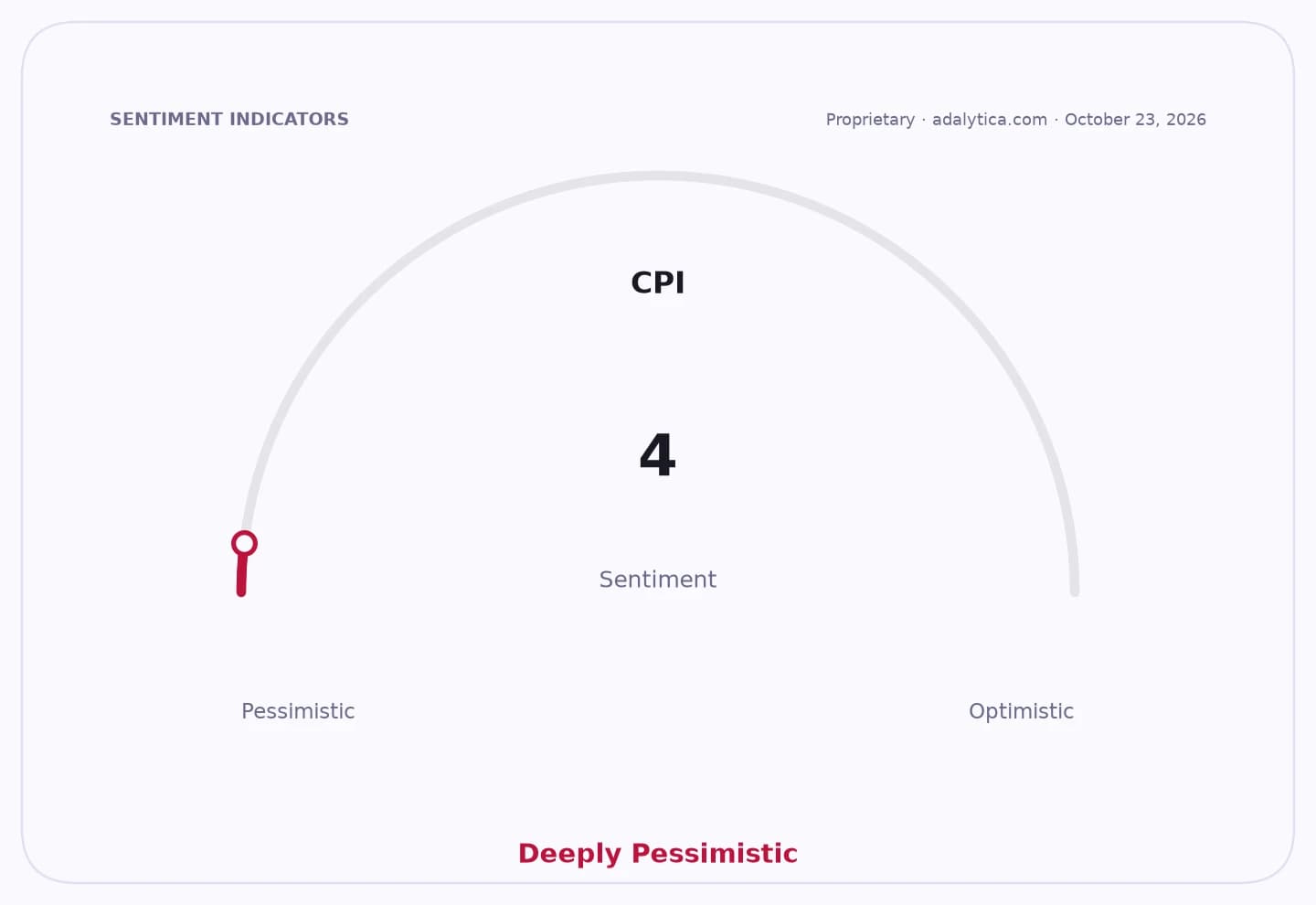
CPI
The slowdown matters because core inflation, which strips out accommodation and private transport, is the measure most closely watched by the Monetary Authority of Singapore when judging underlying price momentum. A reading at 2% from 2.2% in August suggests the pass-through from earlier cost shocks is easing, while the authorities’ guidance that inflation will stay “slightly elevated” for several quarters points to a slower return to pre-pandemic price stability than households and businesses might want.
Sentiment Indicators
The moderation was driven by smaller increases in services and retail goods, two categories that are central to the domestic inflation story. Services inflation eased to 1.7% from 2%, helped by slower rises in private-hire and taxi costs and a larger fall in telecommunications prices. Retail and other goods inflation slowed to 1.2% from 1.8%, with furniture prices declining and apparel inflation decelerating. Private transport inflation also eased to 7.1% from 7.5% as car price increases moderated.
That offset a pickup in some sticky components. Food inflation edged up to 2.4% from 2.3%, accommodation to 0.9% from 0.8%, and electricity and gas stayed high at 8.7%, underscoring how external energy costs continue to filter through the economy. Overall inflation slipped to 2.2% from 2.3%, while consumer prices rose 0.2% month on month.
For policymakers, the split is important. Domestic inflation pressures look contained: labour costs are said to be under control, productivity gains are helping, and subsidies for healthcare and education are helping suppress service-price inflation. But imported inflation remains a live risk. MAS and the Ministry of Trade and Industry said energy and food commodity prices are likely to stay high in the near term, with weather disruptions and stronger input costs keeping food prices firm.
The forecast is for core inflation to average 1.5% to 2% in 2026 and 1.5% to 2.5% in 2027, with headline inflation around 2% next year before easing more noticeably from mid-2027. That path gives the central bank some room to keep policy steady rather than tighten again, but it also means investors should not expect a rapid disinflation story that would sharply boost real incomes or force a more dovish turn.
Markets already appear to be treating Singapore as a relatively stable inflation environment compared with peers exposed to more volatile domestic demand or currency weakness. The iShares MSCI Singapore ETF has held above its 200-day moving average even after recent pullbacks, while the broader risk backdrop remains shaped by high global yields and uneven growth. For consumer-facing companies, the latest data suggest pricing power is easing but not disappearing; for rate-sensitive sectors, the message is that policy support from lower inflation will be gradual rather than immediate.
The key question now is whether the easing in services and retail prices proves durable or whether higher energy, food and labour costs keep core inflation hovering near 2% for longer. If imported price pressures fade and domestic demand remains moderate, Singapore could see a cleaner disinflation path into 2027. If not, the current reading may mark only a pause in a still-uneven inflation decline.
| Entity | Gains | Losses |
|---|---|---|
| Singapore households | ▲Slower price growth | ▼Higher food and utility bills |
| Retailers and service firms | ▲Easier cost pass-through | ▼Weaker pricing power |
| MAS / policymakers | ▲More scope to hold policy steady | ▼Less room if imported inflation persists |
| Importers / consumers | ▲Lower domestic inflation pressure | ▼Exposure to energy and food shocks |