Singapore employers are still playing defense on wages and hiring even as the business outlook brightens modestly, a sign that the city-state’s labor market is easing but not yet loose enough to trigger broad-based pay acceleration.
Singapore Employers Keep Wage Discipline as Outlook Improves

That matters because wages are one of the clearest links between corporate confidence and consumer spending. When employers keep hiring restrained and resist bigger pay raises, they protect margins in the near term but also limit the pace of household income growth and local demand. For investors, that usually means Singapore’s economy may avoid a sharp slowdown, yet the rebound in domestic sectors is likely to remain uneven.
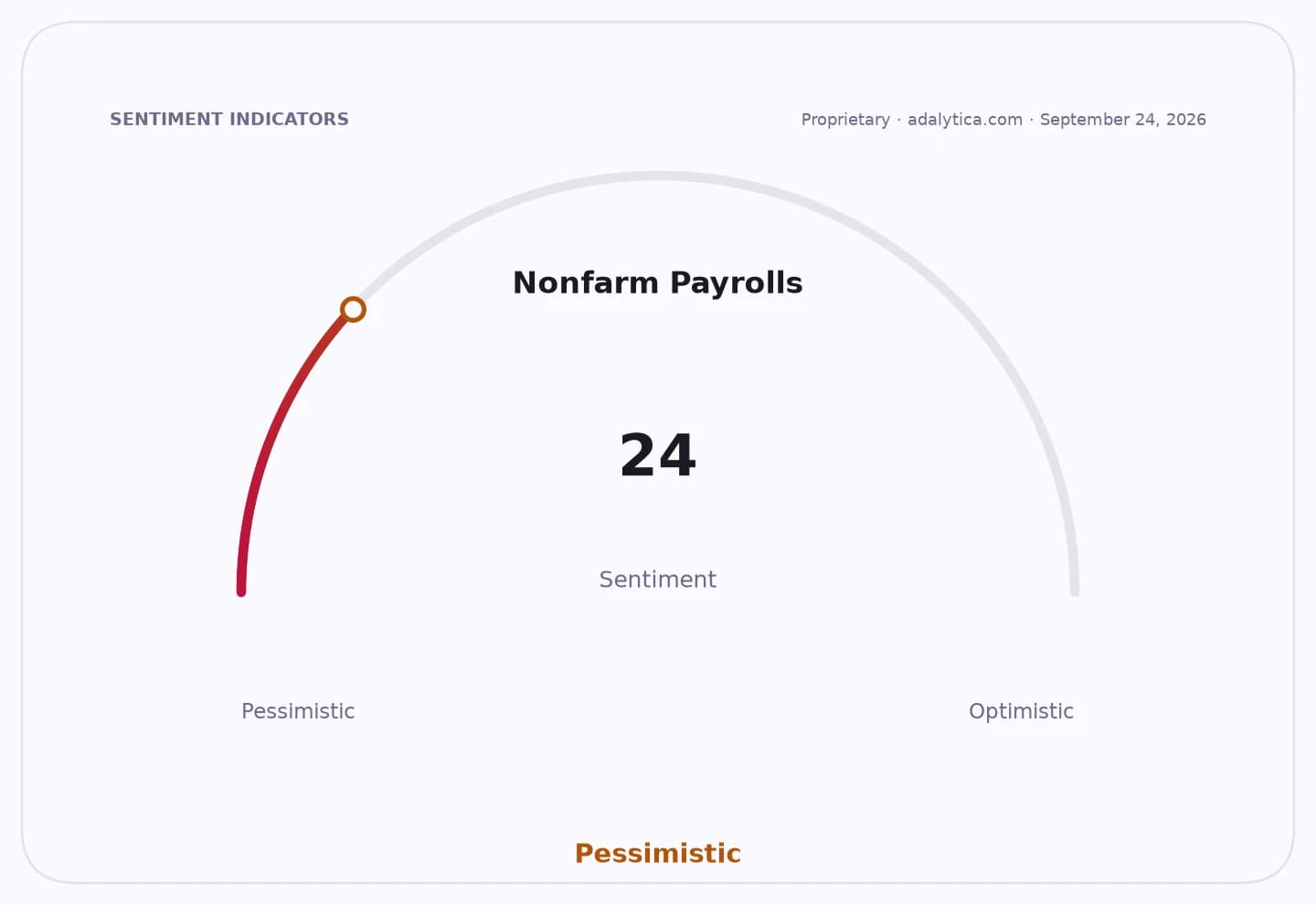
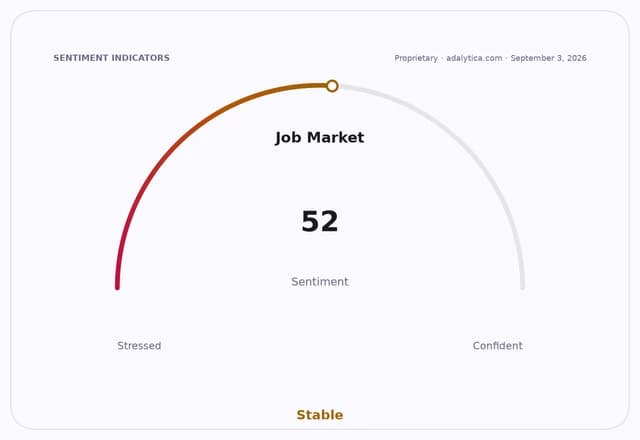
Sentiment IndicatorsⓘProprietary · adalytica.com · September 3, 2026
This is a snapshot — live sentiment, awareness and momentum for 130+ markets update continuously in the dashboard.Open AlphaPulse
A survey by the Singapore National Employers Federation found 83% of respondents still see rising manpower costs as their biggest workforce challenge, up from 79% a year earlier. Concerns about the cost of upskilling and reskilling workers also climbed, with 30% of employers flagging it versus 23% previously. In other words, companies are not suddenly feeling flush enough to pay up freely; they are still managing a cost squeeze while trying to adapt their workforce.
At the same time, the labor market is no longer as tight as it was. The share of firms reporting difficulties attracting and retaining professionals, managers, executives and technicians eased to 41% from 47%, while concerns about shortages of local high-skilled talent fell to 35% from 42%. That is welcome relief for employers, but it does not yet amount to a hiring boom. Attracting suitable talent remained the top human-resource priority, cited by 59% of respondents.
The more constructive part of the survey is that employers are becoming a little more confident about the business backdrop. The proportion expecting uncertain prospects in 2027 fell to 63% from 72% for 2026, while 65% said they expect to perform well, up from 63% a year earlier. That suggests Singapore’s corporate sector is not bracing for recession, just for a slow, selective recovery.
The split across industries is what investors should watch. Export-oriented businesses are getting support from stronger external and technology-driven demand, while domestic sectors such as retail and food and beverage are still squeezed by softer consumer spending and higher operating costs. That divergence matters for listed companies, landlords and service providers because it means the earnings recovery is likely to favor global-facing firms first.
Artificial intelligence is emerging as a key lever in that transition. Forty-eight percent of employers said exploring and adopting AI will be a priority for 2027, up from 39% for 2026, alongside efforts to upskill workers. That is a reminder that the next phase of job creation in Singapore may be less about adding headcount quickly and more about raising productivity. For long-term investors, that can be positive for margins and competitiveness, but it also means labor demand may stay disciplined even as revenue improves.
The broader message is straightforward: Singapore’s employers see a better year ahead, but not enough improvement to loosen wage discipline. For investors, that points to a market where profit margins may stay relatively resilient, domestically sensitive consumption could lag, and companies with strong exposure to technology, automation and exports are better placed to compound over the next few years.
| Entity | Gains | Losses |
|---|---|---|
| Export-oriented firms | ▲Stronger external demand | ▼None immediate |
| Domestic retailers and F&B operators | ▲Mildly better outlook | ▼Softer consumer demand |
| Employers | ▲Easier hiring, lower wage pressure | ▼Continued cost control burden |
| Workers | ▲More AI upskilling opportunities | ▼Slower wage growth |