Singapore’s labor market is turning more defensive, and that matters because wage restraint in Asia’s richest economy is a clear signal that businesses are bracing for slower growth rather than chasing expansion.
Singapore employers plan slower hiring and wage growth
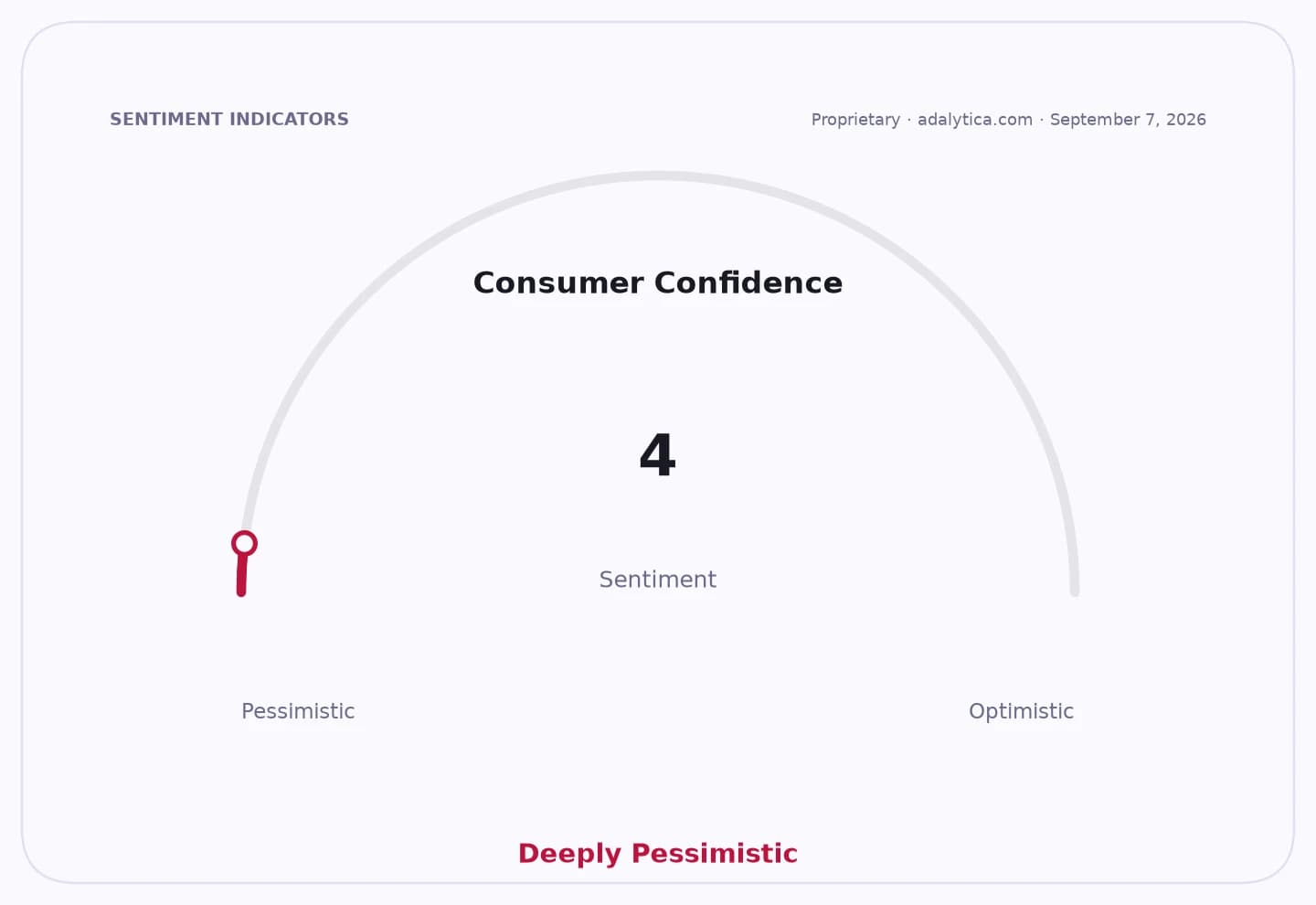
A survey by the Singapore National Employers Federation found 54% of companies do not plan to add staff next year, while 51% intend to freeze or only gradually adjust wages in 2027. That is a meaningful shift for a city-state that usually depends on disciplined labor markets and productivity gains to sustain growth. It also suggests firms are trying to protect margins at a time when demand visibility is weak and operating costs remain elevated.
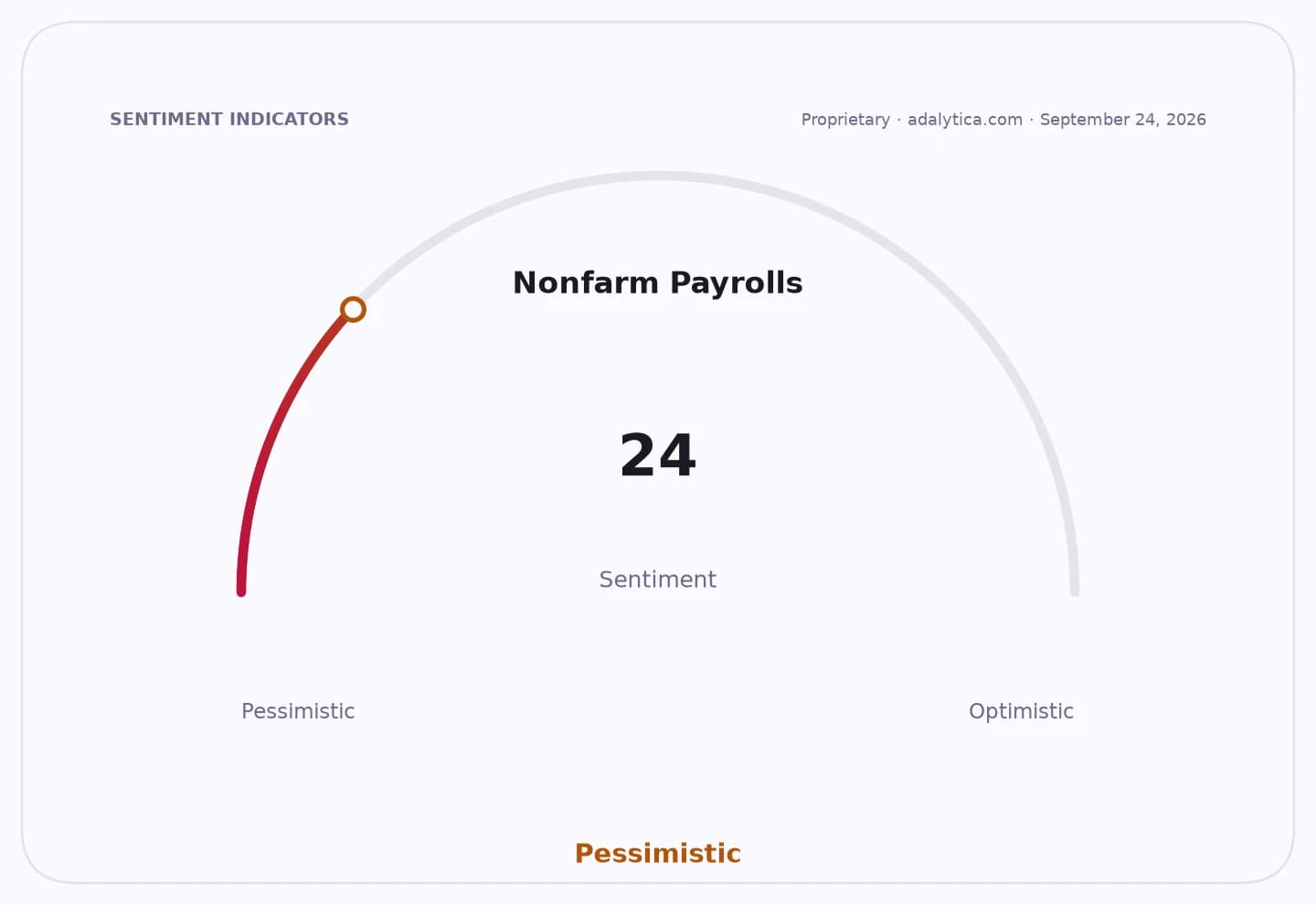
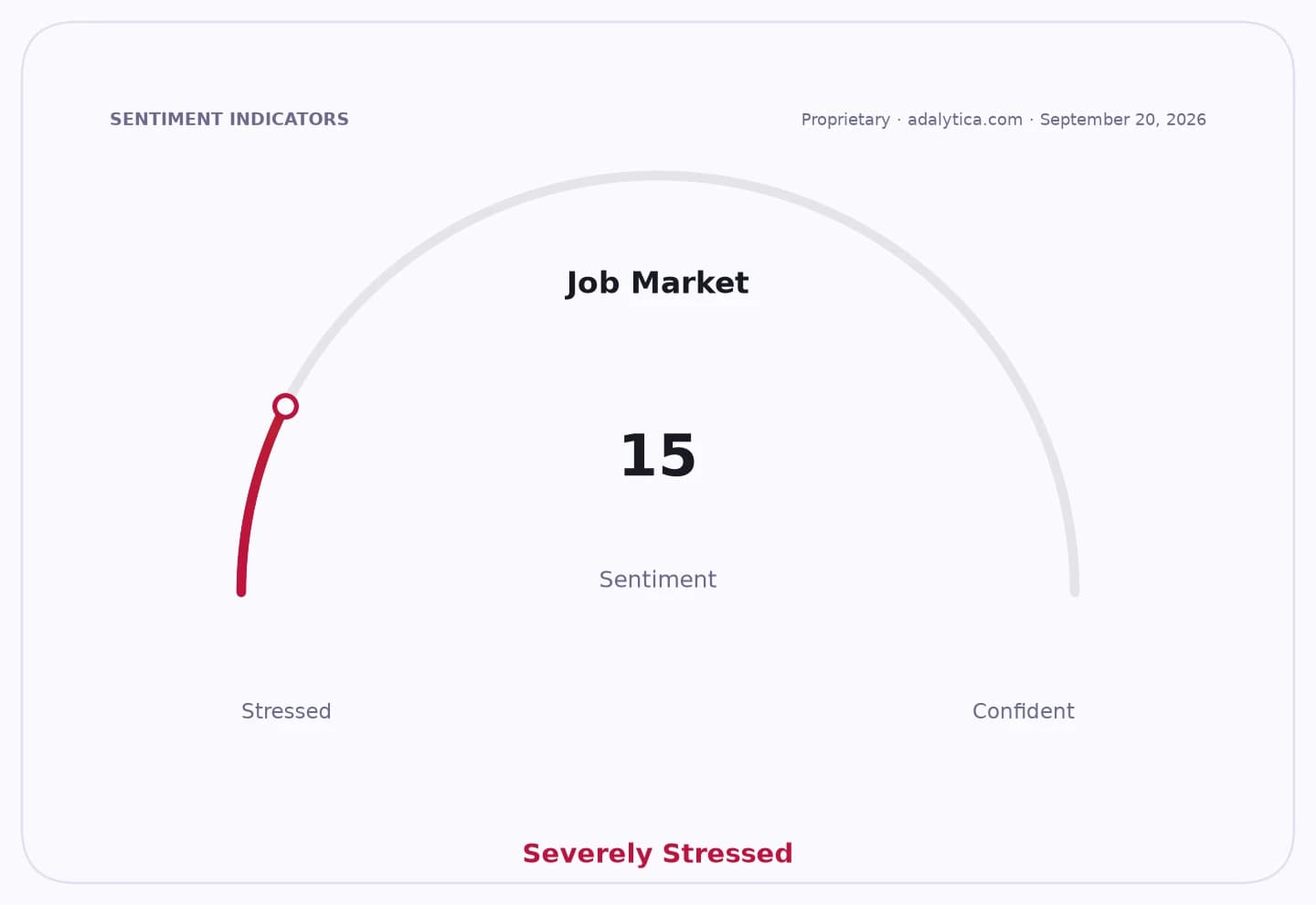
Sentiment IndicatorsⓘProprietary · adalytica.com · September 7, 2026
This is a snapshot — live sentiment, awareness and momentum for 130+ markets update continuously in the dashboard.Open AlphaPulse
The survey covered 320 companies employing about 160,000 workers across 20 sectors. Hiring intentions are not collapsing — 40% of employers still plan to recruit, up from 33% a year earlier — but the balance of caution remains tilted toward holding back. Only 6% expect to cut headcount, which points to a low-fire, low-hire environment rather than a full labor downturn.
That distinction matters economically. In Singapore, where GDP per capita reached $99,365, the labor market is not being hit by weakness alone; it is also being reshaped by corporate restructuring and faster adoption of artificial intelligence. Employers are using technology to boost productivity instead of simply adding workers, especially as labor shortages ease and the pool of managerial and technical talent becomes easier to tap.
The pressure is most visible among small and mid-sized businesses, which the employers’ federation says face the most uncertainty. Larger firms appear more confident and are less likely to freeze compensation, but they are also likely to be the ones with the balance sheets to keep investing in automation, digital tools and AI-driven workflow changes.
For investors, the message is broader than one survey. A cautious Singapore wage outlook reinforces the case for companies that sell productivity, automation and enterprise software rather than pure labor-intensive growth. It also argues for selectivity in consumer-facing and domestic demand names if pay growth slows more broadly. The market underestimates how quickly wage restraint can flow through to margins, hiring plans and capital allocation in an economy built on high-value services and regional trade.
The next catalyst will be whether this caution spreads from Singapore’s smaller firms into larger listed employers, and whether AI-related restructuring becomes a permanent substitute for headcount growth. If it does, the winners will be the picks-and-shovels providers of automation and workflow efficiency, while labor-heavy businesses and wage-sensitive consumption plays face a tougher road.
| Entity | Gains | Losses |
|---|---|---|
| Large Singapore firms | ▲Better margins | ▼Slower wage growth |
| AI and automation vendors | ▲More corporate demand | ▼Fewer traditional hires |
| Small and mid-sized firms | ▲Lower cost pressure | ▼Greater uncertainty |
| Wage-dependent workers | ▲Job retention odds | ▼Pay increases, bargaining power |