SK Hynix is betting that the next phase of the AI boom will be decided as much by memory as by GPUs, arguing that high-bandwidth chips are now a core bottleneck for data centers and advanced accelerators.
SK Hynix says HBM demand is central to AI buildout
Chief Executive Noh-Jung Kwak said at the Global Forum 2026 in California that AI models cannot fully use their computing power without fast enough memory to feed data to processors, putting SK Hynix’s HBM and next-generation DRAM at the center of the buildout. The message lands as cloud operators and chipmakers keep expanding AI infrastructure even as the industry runs into tighter supply for memory components.
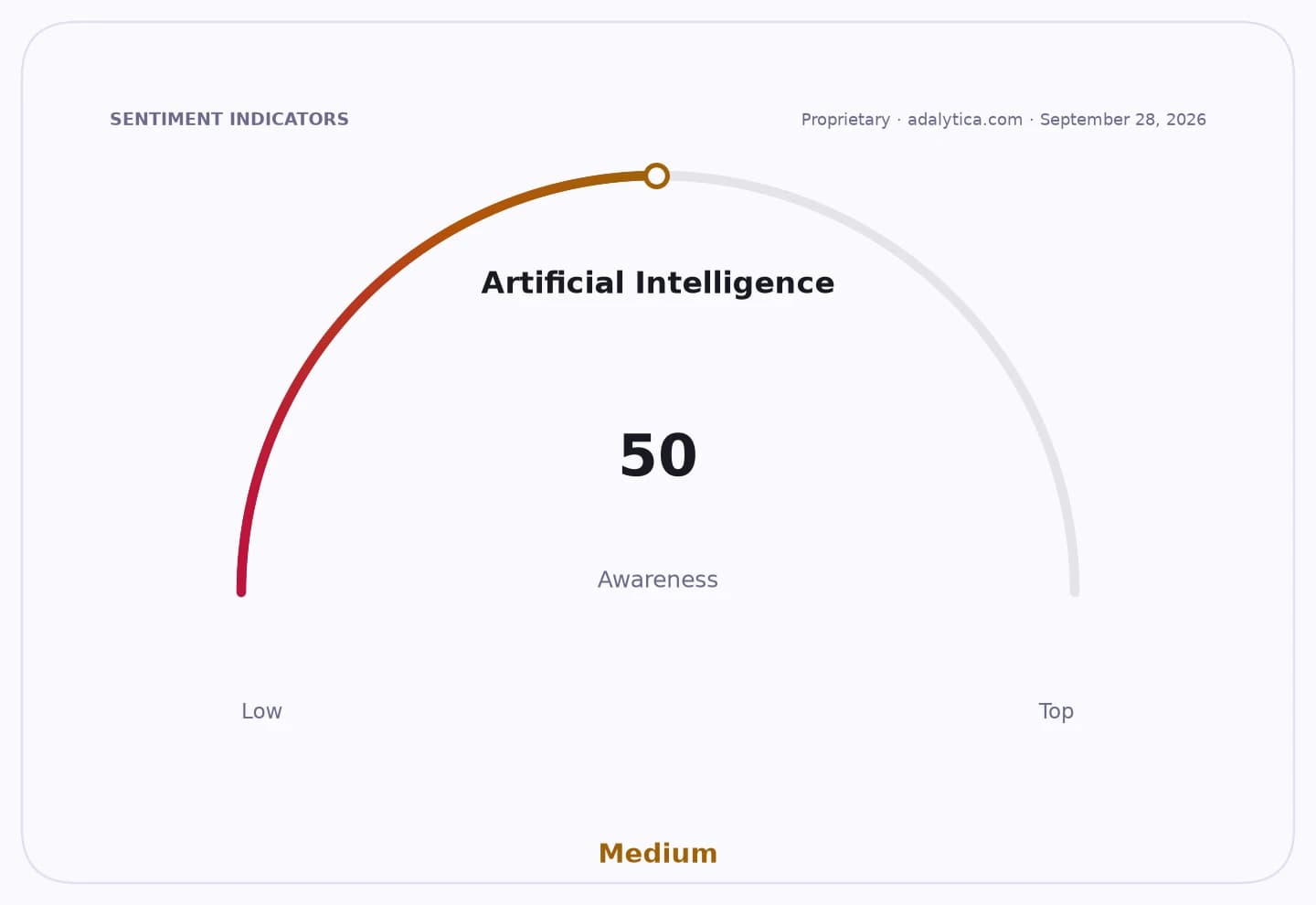
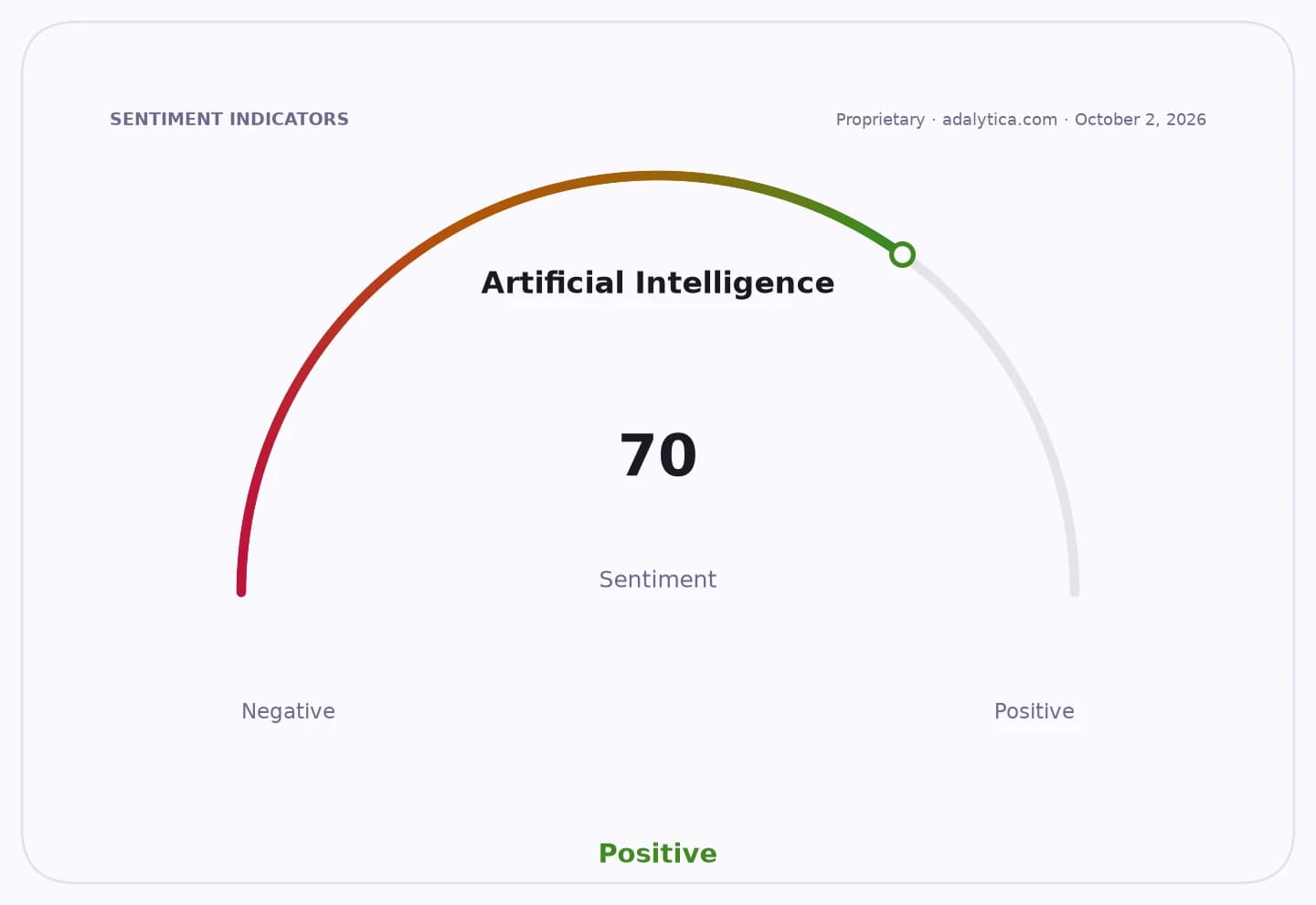
Sentiment IndicatorsⓘProprietary · adalytica.com · October 2, 2026
This is a snapshot — live sentiment, awareness and momentum for 130+ markets update continuously in the dashboard.Open AlphaPulse
For investors, that reinforces the case that the memory cycle is no longer just about personal computers and smartphones. AI servers need far more bandwidth than conventional systems, and that is pushing demand toward HBM, where SK Hynix already has a lead with HBM4 shipping into Nvidia’s Rubin AI accelerators and HBM4E in development.
The company’s pitch also helps explain why its capital spending remains aggressive. SK Hynix is expanding production in Yongin, South Korea, and building a U.S. facility in Indiana focused on research, packaging and advanced memory manufacturing for AI systems, while also planning an AI research center in the U.S. to work more closely with chip designers and data-center operators.
Artificial Intelligence vs 000660.KSadalytica.com
Explore this data interactively — full history, time series and cross-market comparisons.Open AlphaPulse
The competitive backdrop is getting tougher. Samsung and Micron remain major rivals in memory, while Chinese producers such as CXMT are increasing DRAM capacity, adding pressure for incumbents to keep upgrading technology and output at the same time.
The stock market has already priced in much of the AI-memory optimism: SK Hynix shares have climbed sharply this year, while Micron has also rallied as investors bet the AI buildout will keep memory pricing firm. SK Hynix’s latest comments suggest that demand could stay structurally strong if AI server deployments continue to outpace memory supply.
The next tests are execution and capacity expansion, with investors watching whether SK Hynix can convert its HBM advantage into sustained pricing power while competitors close the gap.
| Entity | Gains | Losses |
|---|---|---|
| SK Hynix | ▲HBM demand and pricing power | ▼Capacity constraints and rivals |
| Nvidia | ▲Better memory supply for AI chips | ▼Higher component costs |
| Micron | ▲Stronger memory-cycle tailwind | ▼Share risk to HBM leaders |
| Samsung/CXMT | ▲Larger memory market | ▼Pressure from HBM competition |