SKY token investors are suddenly confronting a bigger question than a one-day selloff: can a DeFi protocol built on permissionless code keep trust when its stablecoin plumbing is tied to wallets linked to North Korean hackers?
Sky Protocol Faces AML Scrutiny After Hack Flows
That is the market’s central concern after blockchain intelligence firm Inca Digital said about $101.9 million in transactions linked to North Korean illicit actors flowed through Sky Protocol’s Peg Stability Module, part of a broader $518 million cluster involving hackers, phishing operations and sanctioned entities. SKY fell 16.9% in 24 hours as traders reacted not just to the alleged bad actors, but to the possibility that the protocol’s reserve structure could become a regulatory and operational liability.
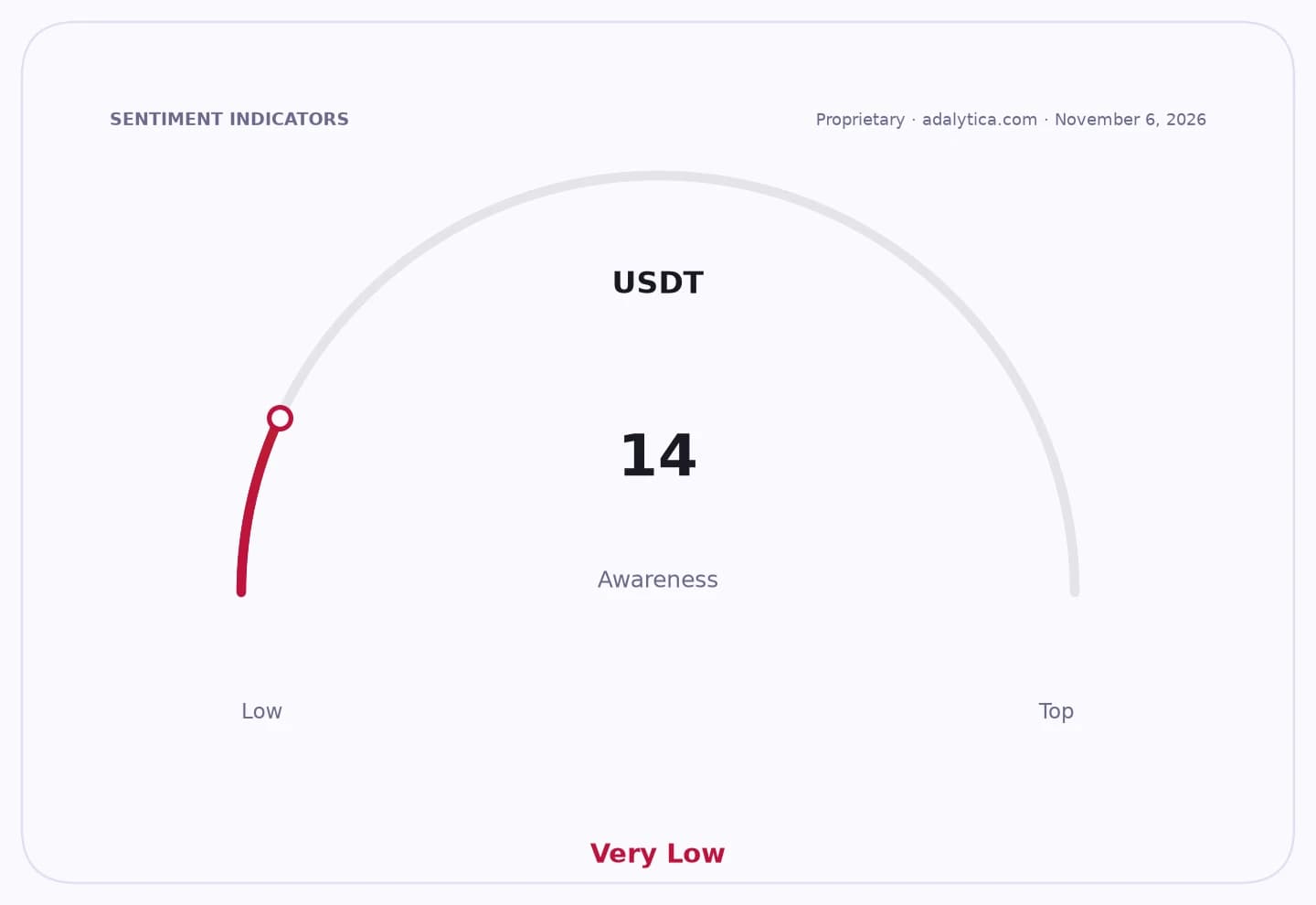
Sentiment Indicators
The stakes matter because Sky sits at the intersection of crypto’s two most important themes: stablecoin liquidity and compliance risk. The protocol’s Peg Stability Module allows users to swap Circle’s USDC for Sky’s USDS and DAI at a fixed 1:1 rate, making it a key piece of infrastructure for liquidity in the decentralized finance ecosystem. If confidence in that mechanism weakens, the effects can ripple well beyond SKY holders to users of the stablecoins themselves.
Inca Digital said roughly $91.5 million of the flagged transactions involved wallets funded by crypto stolen in the February 2025 Bybit hack, which the FBI linked to North Korea. Another $26.1 million was tied to the FTX Accounts Drainer and $49.5 million to the Infini exploit, underscoring how stolen funds can be laundered across DeFi rails when intermediaries remain open and permissionless. The investigation said nearly 95% of the activity reached Sky through third-party aggregators such as 1inch, ParaSwap and MetaMask Swaps, not Sky’s own front ends.
That distinction is important for long-term investors. Sky’s foundation argues the flagged transactions amounted to less than 0.06% of more than $930 billion in cumulative Peg Stability Module volume, and that most of the activity occurred between 2021 and mid-2024. In other words, the protocol is not being accused of knowingly running a North Korea gateway. But in crypto, perception often moves faster than nuance, and reputational damage can still pressure token prices, user behavior and partner relationships.
The other risk is more structural. Inca Digital said as much as $2.7 billion in USDC reserves could be vulnerable if Circle were to freeze the Ethereum address holding those funds. That is not an accusation that the reserve contains illicit assets, and no freeze has been reported. But the mere possibility highlights a central tension in stablecoins: the more they are used as institutional-grade money, the more they depend on centralized issuers and compliance controls that can override the promise of decentralization.
For investors, that means the story is less about a single token drop and more about the durability of DeFi’s business model. Sky has built institutional ties with firms such as Coinbase and Galaxy Digital, so reserve accessibility and regulatory scrutiny now matter just as much as protocol design. If users or counterparties start to view the system as operationally fragile, the cost of that trust deficit can show up in wider spreads, weaker activity and a lower valuation multiple for the governance token.
The long-term takeaway is straightforward: Sky’s code may still work, but its investment case now depends on whether it can prove its reserve system is both compliant and resilient under stress. For crypto investors, that makes SKY worth watching closely, but only as part of a diversified portfolio and with the understanding that in DeFi, infrastructure risk can become market risk very quickly.
| Entity | Gains | Losses |
|---|---|---|
| Sky Protocol | ▲Defends scale of activity | ▼Faces trust and price hit |
| SKY token holders | ▲Potentially clearer risk disclosure | ▼Suffer sharp drawdown |
| Circle / USDC issuer | ▲More demand for compliance controls | ▼Faces reserve-freeze scrutiny |
| North Korean hackers | ▲DeFi rails may aid laundering | ▼Greater law-enforcement attention |