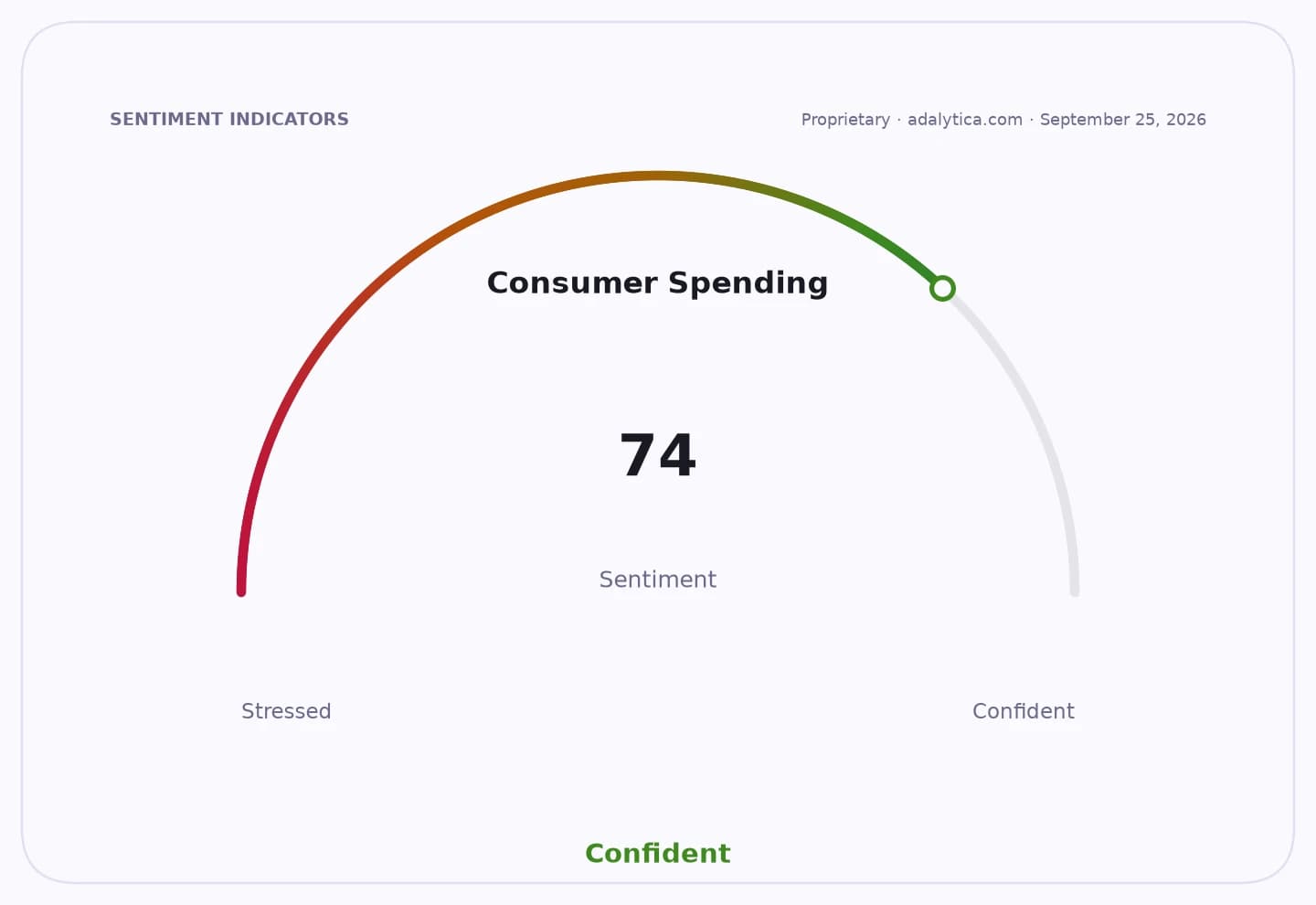
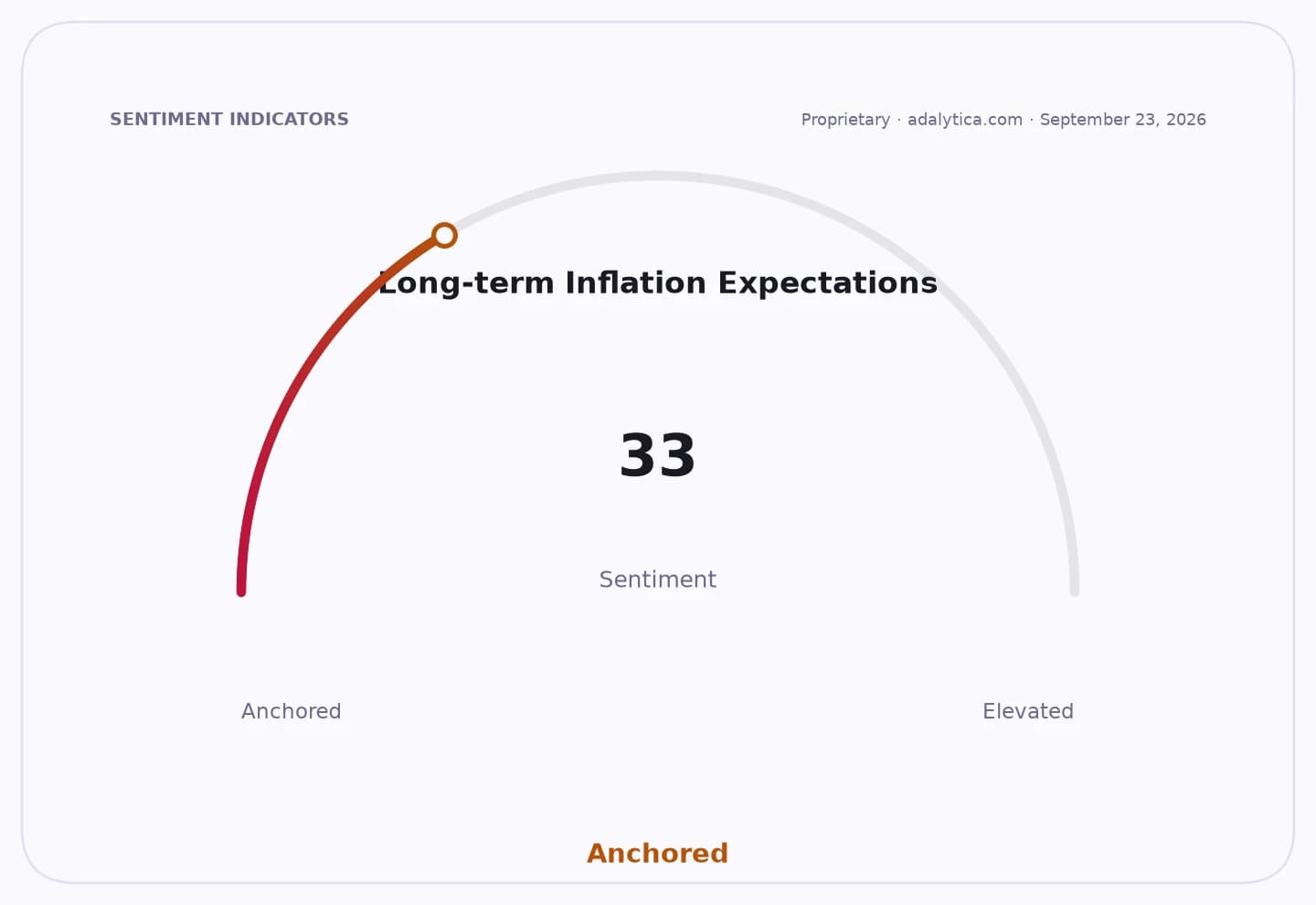
The next Social Security cost-of-living increase is hanging on one inflation report, and that makes the September Consumer Price Index unusually important for retirees, investors and anyone betting on the path of consumer spending.
Social Security COLA Hinges on September CPI

The Bureau of Labor Statistics is scheduled to publish the September CPI report on Oct. 14, and that reading will complete the three-month CPI-W average the Social Security Administration uses to calculate the 2027 COLA. July and August are already locked in. September decides the final number.
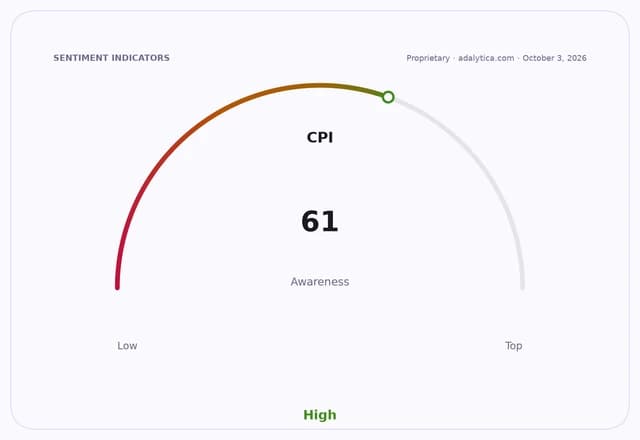
Sentiment IndicatorsⓘProprietary · adalytica.com · October 3, 2026
This is a snapshot — live sentiment, awareness and momentum for 130+ markets update continuously in the dashboard.Open AlphaPulse
That matters because Social Security is not getting a political “Trump bump.” The benefit adjustment is written into law and tied to inflation, not to presidential rhetoric or congressional discretion. If prices run hotter, the COLA rises. If they cool, the increase does too. The signal to watch is the data, not the politics.
The distinction is important for the economy. Social Security checks are one of the biggest and most predictable cash flows in the U.S. consumer landscape. A larger COLA puts more money into the hands of retirees, who tend to spend a meaningful share of those dollars on groceries, rent, utilities and health care. That can support demand in parts of the economy that matter most to everyday inflation.
CPIAUCSL vs CPILFESL — macro contextadalytica.com
Explore this data interactively — full history, time series and cross-market comparisons.Open AlphaPulse
Current estimates show why September is such a pivotal month. Based on the latest data in hand, CPI-W stood at 334.131 in August after a forecast decline to 333.8642 in September, a move that would leave the 2027 COLA calculation vulnerable to a modest downtick rather than a sharp acceleration. The core inflation measure commonly stripped of food and energy, meanwhile, has been edging higher, with a forecast September reading of 338.0382. In plain English: the final adjustment is still close enough to the line that one month can sway the outcome.
Investors should care for a simple reason. A higher COLA is a tailwind for consumer staples, discount retailers and health-care spending, because it can extend purchasing power among older Americans. A softer COLA can do the opposite, especially if households are already feeling pressure from stubborn prices and higher borrowing costs. That is one reason shares of consumer staples ETFs such as XLP, often seen as defensive havens, remain relevant when inflation is sticky, even if their recent technical picture has been weak. XLP’s price has slipped below both its 50-day and 200-day moving averages, a sign of near-term pressure rather than long-term collapse.
The same goes for small-cap stocks in IWM, which are more exposed to domestic consumption than multinational giants. If retirees get a bigger boost to monthly income, that can feed through to spending at local businesses, regional banks and the broader small-cap universe over time. But if inflation eases enough to restrain the COLA, investors may need to lean more heavily on companies with pricing power rather than those depending on a spending surge.
There is also a bond-market angle. Higher inflation readings tend to keep Treasury yields elevated, and the 10-year note has already been hovering around 5.3% in the latest data. That is not a trivial backdrop. It affects mortgage costs, discount rates and the valuation math for everything from dividend stocks to growth names.
So what should long-term investors take from all this? Social Security’s 2027 COLA is not about politics, and it is not about one headline or one speech. It is about whether September inflation nudges the three-month CPI-W average higher or lower. That makes the Oct. 14 report one of the most consequential economic releases of the fall for retirees and the companies that serve them. For investors with a multi-year horizon, it is worth watching closely — not as a trading catalyst, but as a reminder that inflation still shapes consumer demand, yield levels and portfolio returns in very real ways.
| Entity | Gains | Losses |
|---|---|---|
| Social Security recipients | ▲Larger monthly checks | ▼Slower benefit growth if inflation cools |
| Consumer staples retailers | ▲More spending from retirees | ▼Demand if COLA comes in smaller |
| Treasury bondholders | ▲Lower inflation if September is soft | ▼Higher yields if inflation stays hot |
| Small-cap stocks | ▲Stronger domestic spending | ▼Weaker consumer budgets |