Solana’s biggest short-term challenge is not its technology — it’s whether buyers can push SOL back above key resistance levels after a weak October and a fresh wave of selling across crypto.
Solana Falls as ETF Outflows Hit SOL
That matters because Solana is still one of the market’s most closely watched blockchain networks, and its token price tends to reflect more than just speculation. It also tracks confidence in adoption, network upgrades and the appetite for risk across digital assets. When SOL stalls after a major technical improvement, investors have to ask whether fundamentals are improving faster than the market is willing to price them in.
Sentiment Indicators
At $105, SOL was down 12% for the month in the source material and needed a 12.7% rally in just eight days to recover its $118 monthly open. The token spent much of October hovering just above $100, a level buyers defended repeatedly, but the tape still showed sellers in control. SOL had fallen from an early-month peak near $124 to a low of $100 by Oct. 18, and it had not closed above $111 after Oct. 8.
The chart picture was not encouraging. SOL faced resistance around its 20-day moving average near $109 and its 50-day moving average near $110, levels where sellers have historically emerged. Those are standard technical indicators, but they matter because they show where traders are likely to take profits or add short positions. Until Solana can clear that zone, a move back to $118 looks more like hope than trend reversal.
The more interesting long-term story is the Alpenglow upgrade. Solana said the update cut transaction finality to 150 milliseconds, reinforcing its speed advantage over rivals such as Ethereum. That is exactly the kind of infrastructure improvement that can widen a network’s competitive moat over time. Faster finality should make Solana more attractive for payments, trading and other high-throughput applications where latency matters.
But investors should not confuse better plumbing with an immediate token rally. SOL fell to $104 the day after the upgrade launched, a reminder that crypto prices often respond more to liquidity, sentiment and broader market positioning than to product news in the short run. In other words, a stronger network does not guarantee a stronger token right away.
That disconnect was visible in the ETF market too. U.S. Solana ETFs posted net outflows of $17 million between Oct. 19 and 22, with inflows on only two days during the month. For long-term investors, that is a meaningful warning sign. Institutional demand is still uneven, and without consistent inflows, rallies can run out of steam quickly.
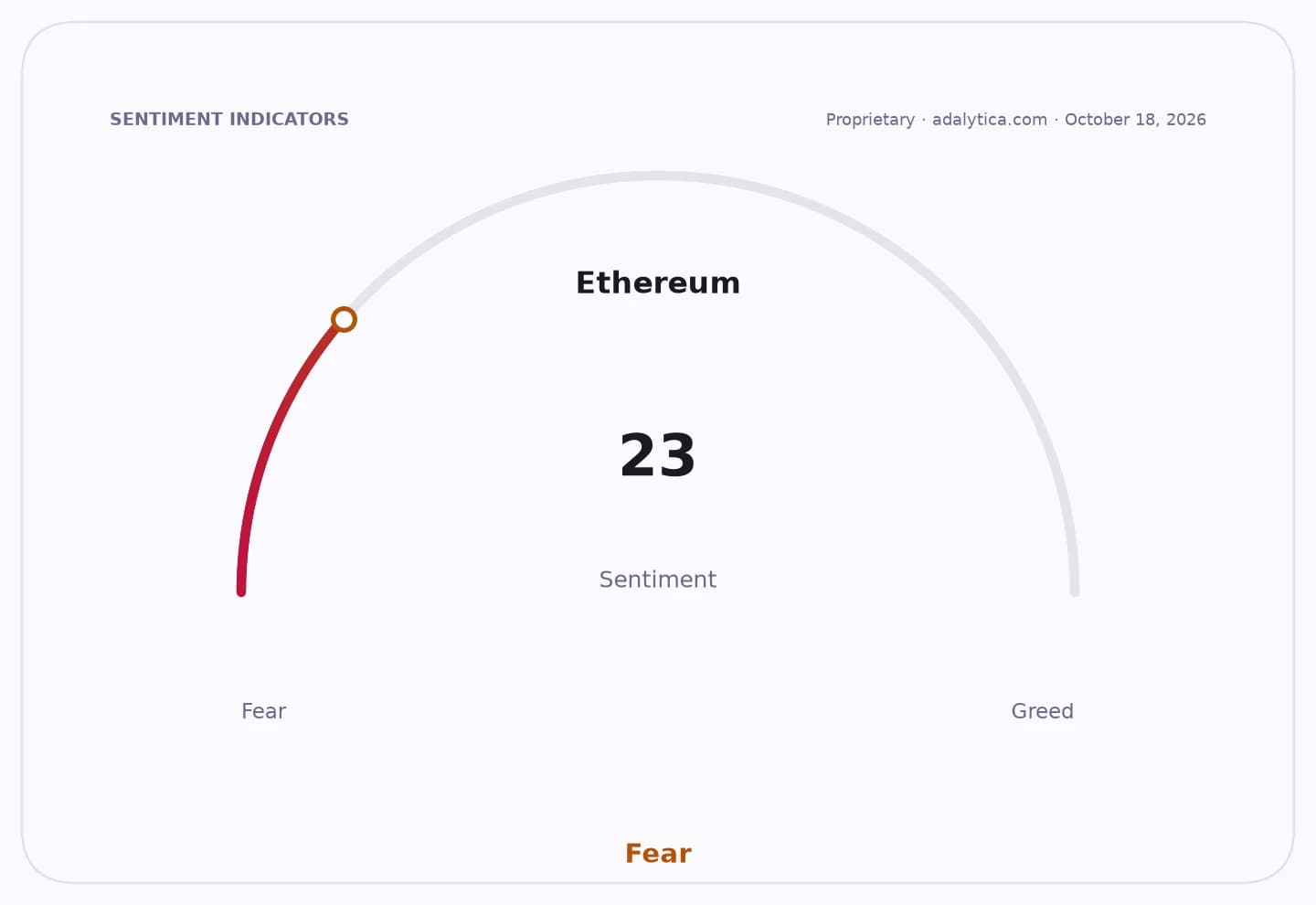
Bitcoin and Ethereum were also flashing extreme caution in Adalytica.com’s sentiment gauges, both showing “Extreme Fear” at the snapshot date. That matters because Solana rarely trades in isolation. When the broader crypto complex is under pressure, even strong project-specific catalysts can be overwhelmed by de-risking.
So where could SOL be by the end of October? The honest answer is that the path depends less on the upgrade than on whether buyers can defend $100 and reclaim the 50-day moving average. If they can, a move back toward $118 is possible. If not, Solana could spend more time digesting its gains before the market rewards the network’s fundamentals.
For investors, the takeaway is simple: Solana remains a compelling long-term blockchain story, but the near-term price action says patience is still required. Watch the ETF flows, the broader crypto backdrop and whether SOL can turn $109 to $110 into support. For now, it belongs on the watchlist, not in the “must-buy today” category.
| Entity | Gains | Losses |
|---|---|---|
| Solana network | ▲Faster finality, stronger utility | ▼Token price still under pressure |
| SOL buyers | ▲Potential rebound if $100 holds | ▼Need a 12.7% rally to regain $118 |
| Solana ETF holders | ▲Long-term adoption thesis improves | ▼Weak inflows and net outflows |
| Competing blockchains | ▲Clearer comparison point for speed | ▼Lose some edge if Solana adoption accelerates |