Thousands of sugarcane farmers blocked the road outside Solapur’s district collector office after talks over a higher cane price failed, turning a local protest into a fresh test of Maharashtra’s sugar industry and rural income politics.
Solapur Sugarcane Farmers Block Road Over Cane Price
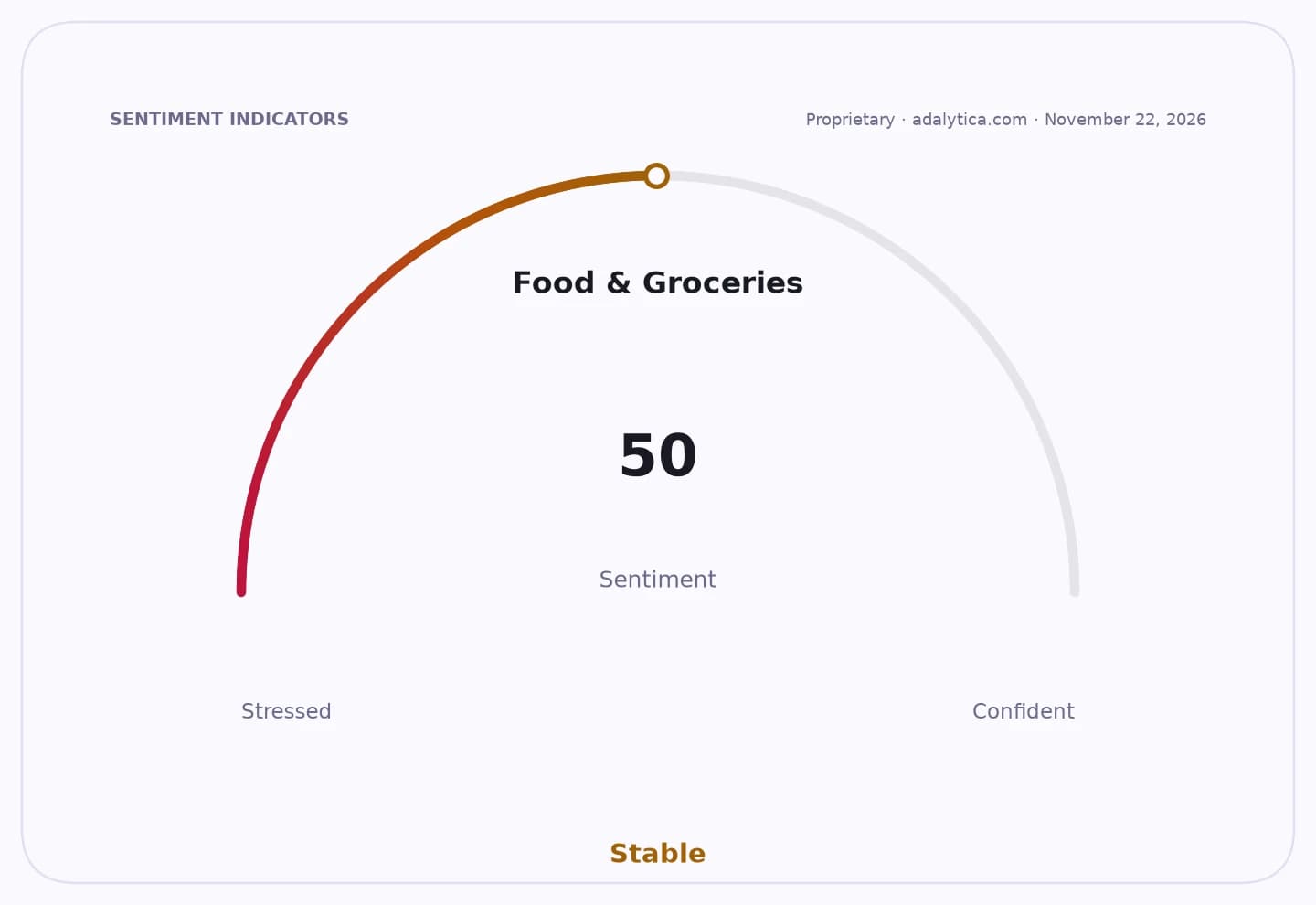
Food & Groceries
The immediate issue is cash flow for growers: farmers led by former MP Raju Shetti and Mahadev Jankar are demanding an initial payment of 3,500 rupees per tonne, plus additional payments that could take the total to 3,800 rupees if sugar prices stay above 45 rupees a kilogram. For farmers, that gap is the difference between covering cultivation costs and slipping deeper into debt; for mills, it directly affects procurement costs, margins and the pace at which they can clear cane bills.
Sentiment Indicators
The protest drew more than 10,000 farmers to Solapur, where the district headquarters and the Solapur-Vijaypur highway were effectively turned into a sit-in site. Police sealed the collector office, more than 150 personnel were deployed and traffic on a key route was diverted, underscoring how quickly pricing disputes can spill into public order and logistics disruptions in India’s sugar belt.
Shetty said mills in Kolhapur are paying 4,200 rupees a tonne, factories in Karnataka about 3,600 rupees, and mills in parts of Satara and Pune 3,500 rupees, while Solapur mills are offering only 3,000 to 3,100 rupees. That comparison raises the stakes for processors in Solapur, where growers are arguing that local cane should not be valued below neighboring districts.
The standoff also lands at a politically sensitive moment, with local leaders distracted by a district cooperative bank election. Farmers are framing the issue as a broader question of who benefits from Maharashtra’s sugar economy, especially as they spent the night cooking on roadside stoves in the cold rather than leaving empty-handed.
With no deal after the afternoon meeting, the risk now is that the protest widens and pressures mills and the district administration to find a number that can hold through the crushing season. If not, Solapur’s cane dispute could become a template for similar price fights elsewhere in western Maharashtra.
| Entity | Gains | Losses |
|---|---|---|
| Sugarcane farmers | ▲Higher cane price | ▼Low procurement rates |
| Sugar mills in Solapur | ▲Cost control | ▼Higher payout pressure |
| Maharashtra administration | ▲Negotiating leverage | ▼Traffic and order disruption |
| Competing cane districts | ▲Benchmark for better rates | ▼Pressure to match payouts |