China and the Philippines met for foreign ministers’ talks and again traded protests over clashes in the South China Sea, underscoring that the dispute remains a live risk for regional trade, energy flows and investor sentiment even as both sides say dialogue must continue.
South China Sea Tensions Keep Regional Risks Elevated
The meeting matters because the South China Sea sits on one of the world’s most important shipping routes, and any escalation raises the odds of higher freight costs, insurance premiums and supply-chain friction across Asia. Japan is already pushing to map alternative sea lanes through Southeast Asia to reduce exposure to chokepoints near the South China Sea and Malacca Strait, a sign that governments and shippers are treating the risk as more than a diplomatic spat.
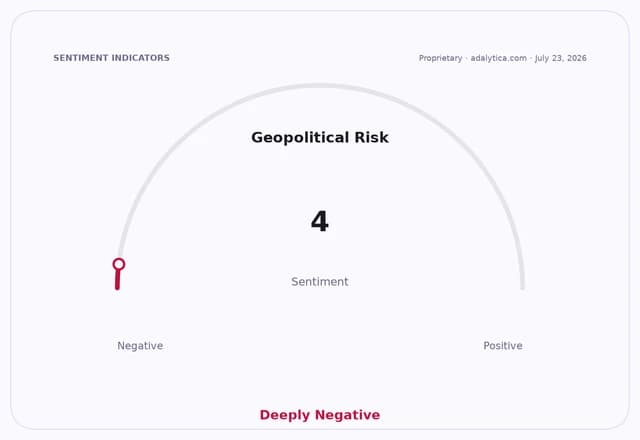
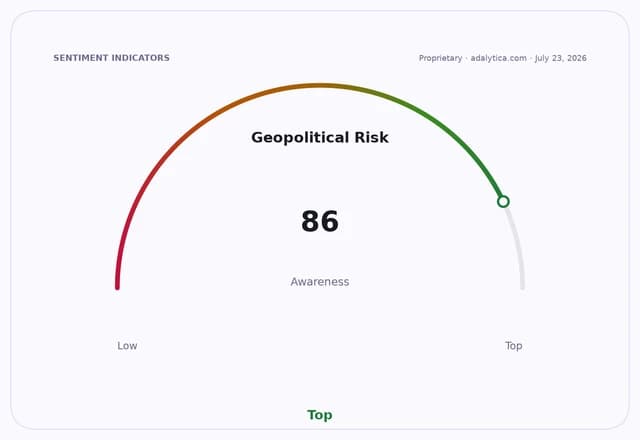
Sentiment IndicatorsⓘProprietary · adalytica.com · July 23, 2026
This is a snapshot — live sentiment, awareness and momentum for 130+ markets update continuously in the dashboard.Open AlphaPulse
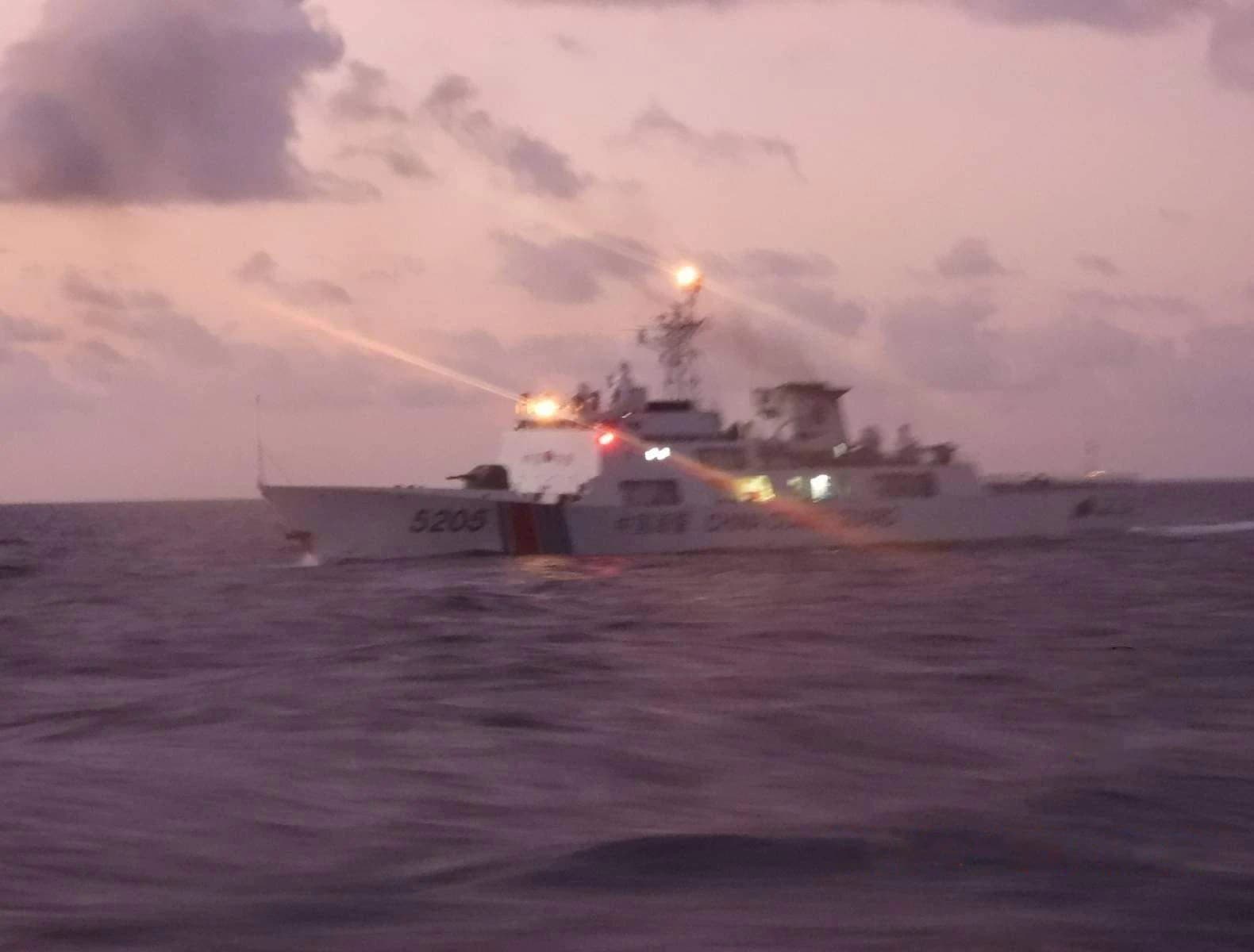
The latest friction follows a series of incidents, including clashes that injured a Philippine sailor, and comes as Beijing presses its territorial claims while Manila leans on allies and international backing. That keeps the confrontation politically sensitive and economically relevant: the longer the standoff lasts, the more it complicates trade planning for importers, exporters and maritime insurers across the region.
Markets are not pricing a full-blown disruption yet, but the backdrop remains fragile. Adalytica’s Global Stability Sentiment sits at 4, or “Extreme Fear,” while its U.S.-China Relations Sentiment is also at 4, reflecting deep caution around escalation risk. At the same time, the U.S. dollar trade signal has strengthened, a pattern often associated with demand for safer assets when geopolitical tension rises.
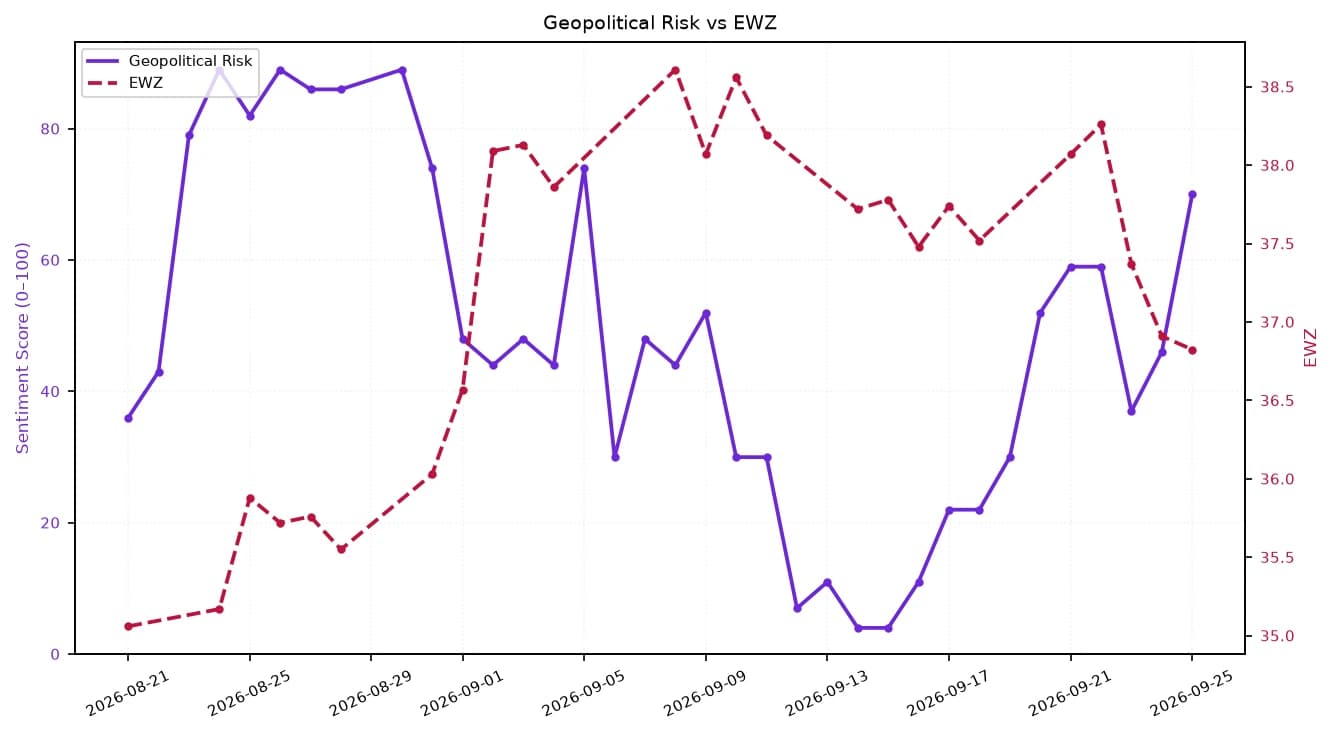
Geopolitical Risk vs MCHIadalytica.com
Explore this data interactively — full history, time series and cross-market comparisons.Open AlphaPulse
For investors, the story is less about one meeting than about the chance of a wider regional shock that can hit shipping, commodities, defense procurement and broader risk appetite. Shares tied to Asia trade lanes, marine insurance, energy logistics and defense can move quickly if rhetoric turns into new blockades, patrol confrontations or sanctions risk.
The immediate test is whether the two governments keep channels open after the latest exchange, or whether repeated maritime incidents force a harder line from Manila, Beijing or their partners. Any further clashes in the South China Sea could tighten volatility across Asian equities and lift demand for havens.
| Entity | Gains | Losses |
|---|---|---|
| China | ▲Leverage in territorial dispute | ▼Diplomatic pressure if tensions rise |
| Philippines | ▲International support for claims | ▼Maritime and trade exposure |
| Shippers/Insurers | ▲Clarity from continued talks | ▼Higher costs if clashes escalate |
| Defense names | ▲More security spending | ▼Trade-sensitive sectors and risk assets |