South Korea’s biggest public-data and AI startup contest has drawn a record 7,440 teams, underscoring how generative AI is rapidly widening access to software development and funneling more entrepreneurs into government-backed innovation pipelines.
South Korea AI Startup Contest Draws 7,440 Teams
The 93% jump from last year’s 3,856 teams matters economically because it shows a sharp increase in the number of new services being built around public data, from health and logistics to compliance and agriculture. For policymakers, that means a larger pool of early-stage ideas that could turn into businesses, jobs and exportable software. For investors, it points to a deeper bench of AI-enabled startups that may eventually seek seed capital, strategic partnerships or acquisition.
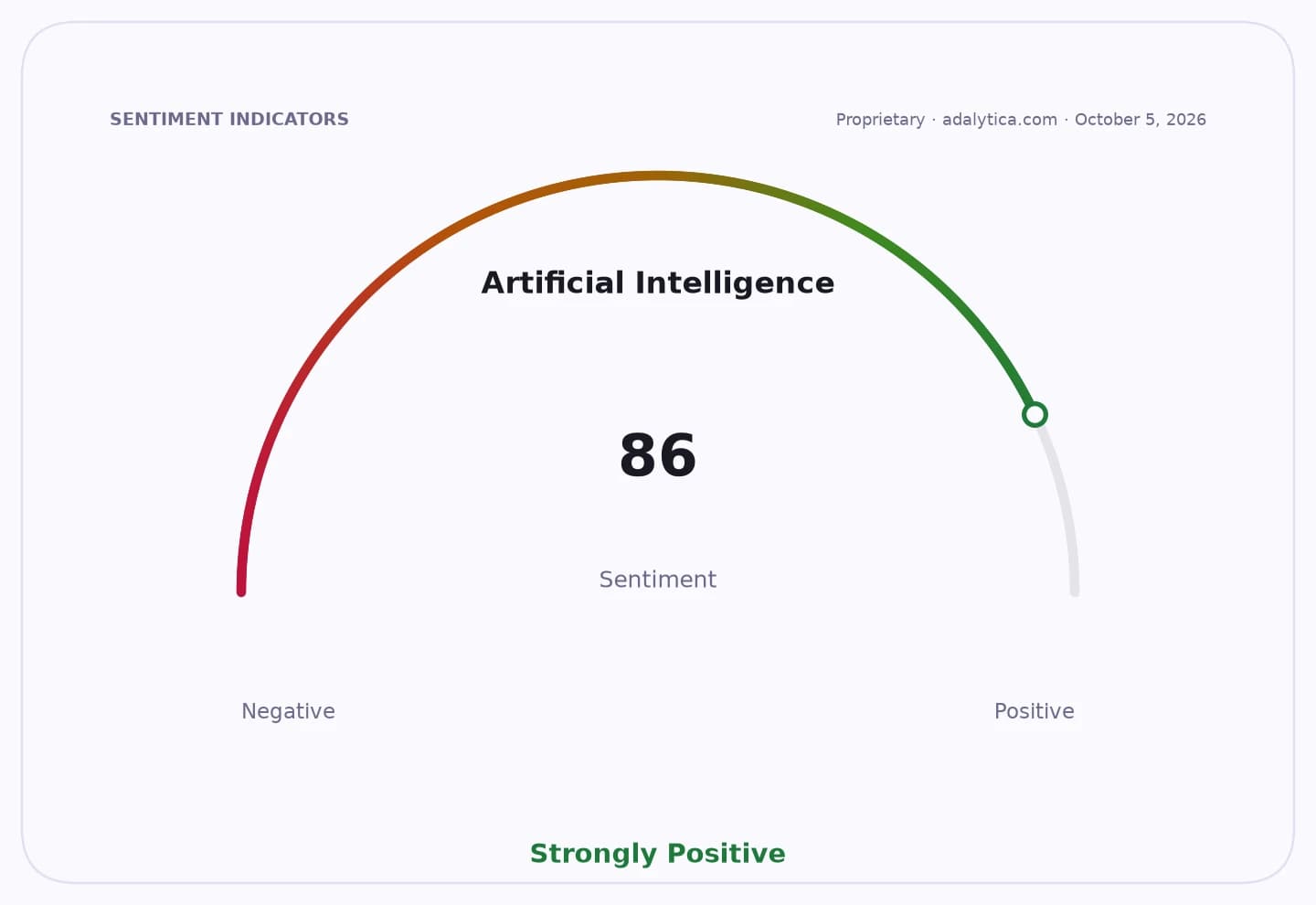
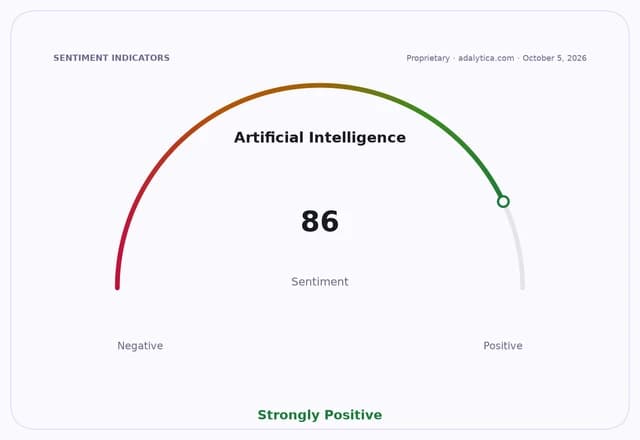
Sentiment IndicatorsⓘProprietary · adalytica.com · October 5, 2026
This is a snapshot — live sentiment, awareness and momentum for 130+ markets update continuously in the dashboard.Open AlphaPulse
The Ministry of the Interior and Safety said 42 agencies held preliminaries before 111 teams advanced to the integrated finals in Seoul. Ten teams have now earned spots in the November “grand finale” at KINTEX in Goyang, where final awards include two presidential prizes, two prime minister prizes and 100 million won in total cash.
The contest’s scale is being driven by the same forces reshaping global AI investing: conversational coding tools, faster prototyping and cheaper access to multimodal models. Seoul officials said the lower technical barrier is bringing in more teams that combine computer vision, optical character recognition and generative AI to analyze satellite images, drawings, administrative documents and recommendation data.
That mix is important because it shifts public data from a static government asset into a commercial input for startups. Winning entries this year include a digital health service for cancer survivors, a platform that links unserved school meals to welfare support, and a service that helps small exporters draft certification and customs paperwork. In the product category, finalists include a tool that cross-searches health-insurance claims data, a livestock disease prediction system and software that checks school business plans against laws and local ordinances.
The ministry said 82 of the 147 past award-winning teams have gone on to actually found companies, a sign the contest is functioning as a pipeline rather than a one-off showcase. That track record gives the event relevance beyond the public sector: it is helping identify founders and use cases early, at a time when governments across Asia are trying to build domestic AI ecosystems.
For investors, the takeaway is less about the prize money than the deal flow. The competition is surfacing startups built on regulatory, health and logistics workflows — areas where public data can create defensible products and recurring revenue. The November final will offer the next read on which teams can turn a government showcase into venture-ready businesses.
| Entity | Gains | Losses |
|---|---|---|
| Startup finalists | ▲Visibility, prize money, investor access | ▼Competition for 10 final spots |
| South Korean government | ▲Innovation pipeline, startup creation | ▼Pressure to sustain support |
| AI tool providers | ▲More demand for coding and multimodal models | ▼Greater scrutiny over misuse |
| Incumbent service firms | ▲More AI-driven efficiency tools | ▼Disruption from new entrants |