South Korea’s current account surplus jumped to $116.63 billion in the second quarter, overtaking the combined surpluses of Germany and Japan for the first time on record and underscoring how semiconductor exports are reshaping the country’s external balance.
South Korea Current Account Surplus Tops Germany and Japan

The figure, based on IMF data compiled by the Bank of Korea, was the second largest among 36 major economies after China’s $193.72 billion and more than 4 times South Korea’s surplus a year earlier. Germany posted $52.28 billion and Japan $50.62 billion, putting their combined total at $102.89 billion.
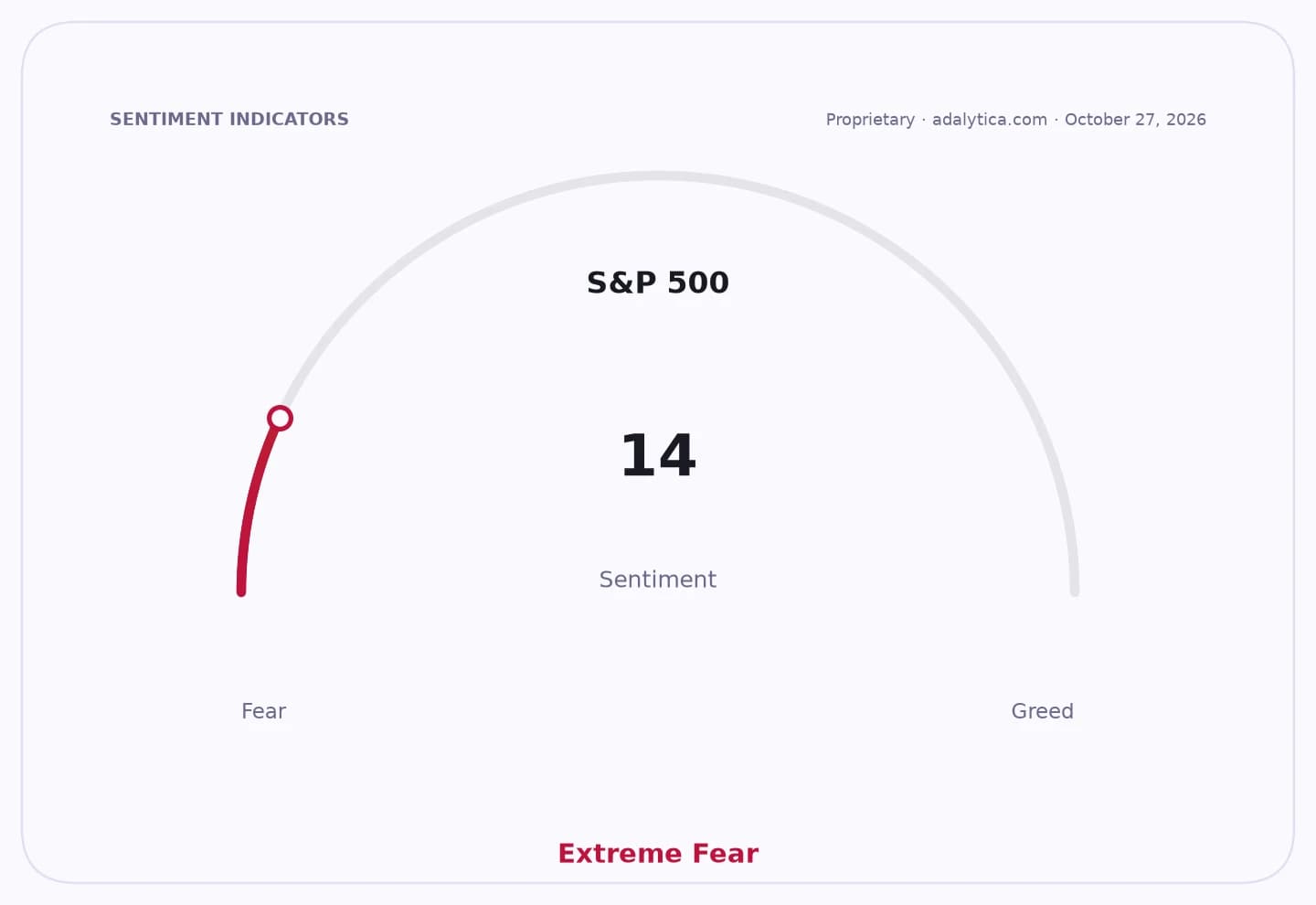
Sentiment Indicators
For investors, the scale of the surplus matters because it signals sustained foreign-currency earnings, support for the won and continued trade strength at a time when global growth is uneven and policy rates remain elevated in many economies. A stronger external position also gives Seoul more room to absorb volatility from tariff risks, oil prices and financial-market swings.
The surge has been driven by a semiconductor export boom tied to the AI cycle. South Korea’s semiconductor exports rose 218.7% year on year in the third quarter to $148.02 billion, with September shipments up 262.8% to $60.33 billion, according to the data cited in the report.
The windfall is not necessarily permanent. The IMF expects South Korea’s current account surplus to reach $421.95 billion for the full year, second only to China, but also projects it will shrink in coming years as the semiconductor price cycle normalizes. That makes the durability of the export boom, not just the size of the quarterly number, the key issue for markets.
| Entity | Gains | Losses |
|---|---|---|
| South Korea exporters | ▲Larger foreign-currency inflows | ▼None immediate |
| Korean won bulls | ▲External-balance support | ▼Dollar buyers |
| Semiconductor producers | ▲Strong pricing and demand | ▼Import-dependent sectors |
| Germany and Japan | ▲— | ▼Surplus ranking slips |