South Korea’s household lending still rose by 6.2 trillion won in July, but the pace is slowing as speculative “debt investment” cools, a shift that could matter more for credit quality, bank earnings and policymakers than the headline increase itself.
South Korea household lending growth slows in July
That combination is economically important because it suggests the worst of the credit-fueled borrowing cycle may be passing even as household balance sheets remain stretched. When loan growth is driven less by leveraged bets and more by genuine consumer demand, banks face lower systemic risk and regulators get more room to manage the economy without stoking another debt bubble. It also helps explain why authorities are moving to ease subsidy rules and widen access to low-interest loans for vulnerable borrowers.
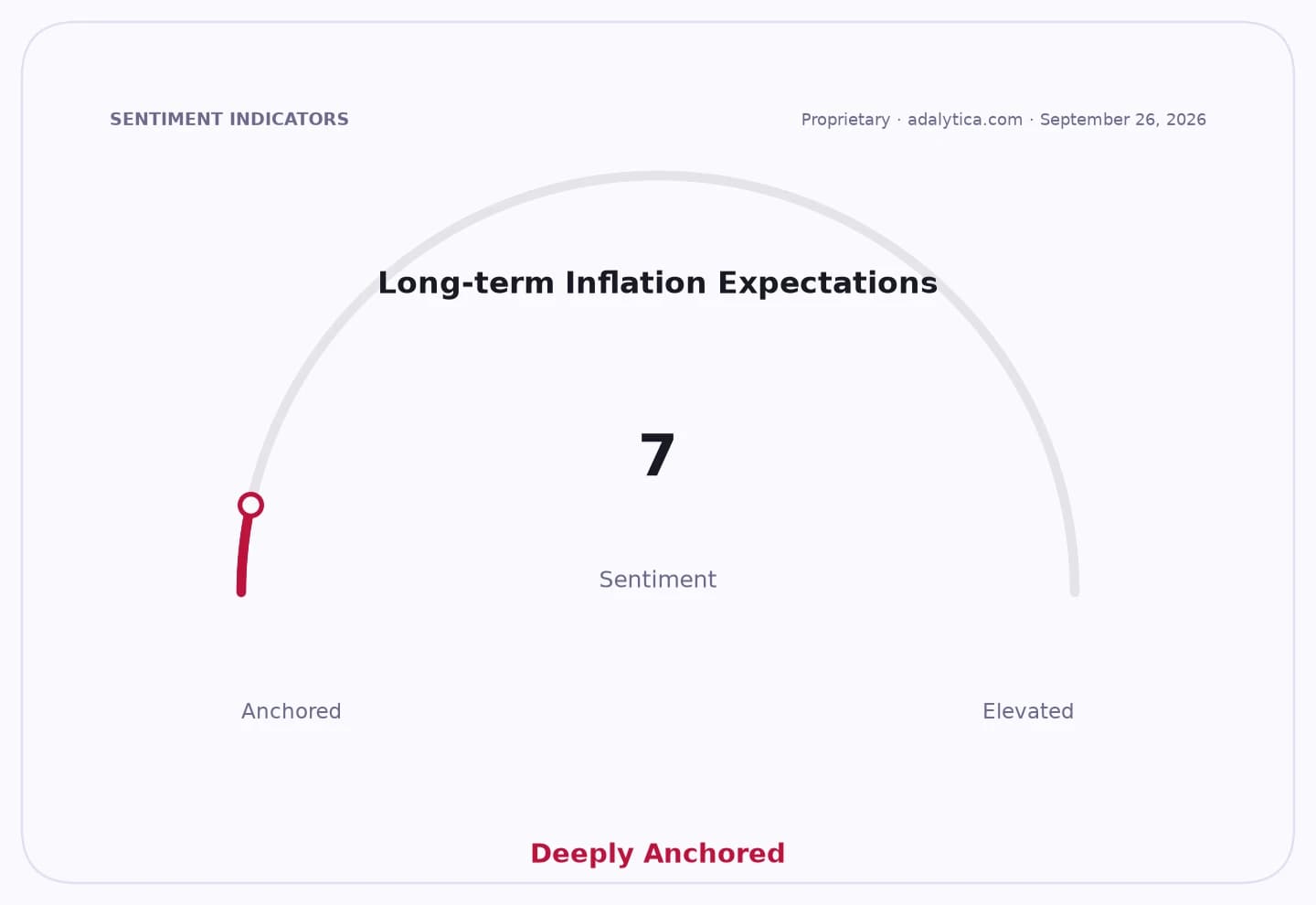
Sentiment IndicatorsⓘProprietary · adalytica.com · August 14, 2026
This is a snapshot — live sentiment, awareness and momentum for 130+ markets update continuously in the dashboard.Open AlphaPulse
The Bank of Korea’s benchmark 10-year government bond yield was around 4.68% to 4.72% this week, while the policy rate was at 3.63%, keeping borrowing costs elevated enough to discourage fresh debt-chasing behavior. Unemployment at 4.1% in July and a still-sluggish economy point to households remaining cautious, even as relief measures are being rolled out for borrowers under strain. For lenders, that matters because slower loan growth may cap near-term volume expansion, but it can also reduce future delinquencies if riskier borrowing is finally easing.
The policy backdrop is turning more borrower-friendly. The National Reconstruction Bank has eased interest subsidy rules to help struggling households, while the Financial Services Commission is preparing measures to guarantee minimum low-interest loans for vulnerable groups. At the same time, new loan recovery rules prohibit harassment, underscoring how politically sensitive household debt has become after non-performing loans climbed above levels seen during the pandemic.
For investors, the key read-through is not just macro relief but stock selection. Korea’s banks are not being priced like a market facing a full-blown credit event, but the risk/reward is shifting toward institutions with stronger balance sheets and better deposit franchises. In the U.S., JPMorgan Chase, Bank of America and Wells Fargo are all trading near technical strength, with JPMorgan and Bank of America holding above their 200-day moving averages and Wells Fargo also above its longer-term trend. That reflects the broader market’s preference for large lenders with pricing power and diversified earnings as rates stay restrictive.
The narrative is straightforward: household borrowing is still growing, but the speculative excess is fading. That is exactly the kind of transition the market tends to miss until credit losses, not loan growth, become the real story. If debt investment keeps cooling and policymakers keep leaning toward relief rather than tightening, the next phase should favor lenders with disciplined underwriting, while investors should stay wary of consumer-credit-heavy names most exposed to a stretched household sector.
| Entity | Gains | Losses |
|---|---|---|
| Large, well-capitalized banks | ▲Lower credit risk | ▼Slower loan growth |
| Strained households | ▲Easier repayment relief | ▼Limited borrowing capacity |
| Korean regulators | ▲More control over debt growth | ▼Less room to tighten later |
| Consumer-credit lenders | ▲— | ▼Higher policy and credit pressure |