South Korea’s short-term bond market shrank sharply in the third quarter as securities companies cut funding needs, a sign that one of the busiest borrowers in the market stepped back just as investors are still facing a higher-rate world.
South Korea Short-Term Bond Issuance Falls 42.4%
The amount of short-term bonds issued through the Korea Securities Depository fell 42.4% from the previous quarter to 349.3 trillion won, after a surge in second-quarter funding. The biggest swing came from securities firms, whose issuance dropped 68% to 130.5 trillion won from 407.9 trillion won, more than accounting for the entire quarter’s decline. Their share of total issuance fell to 37.4% from 67.2%.
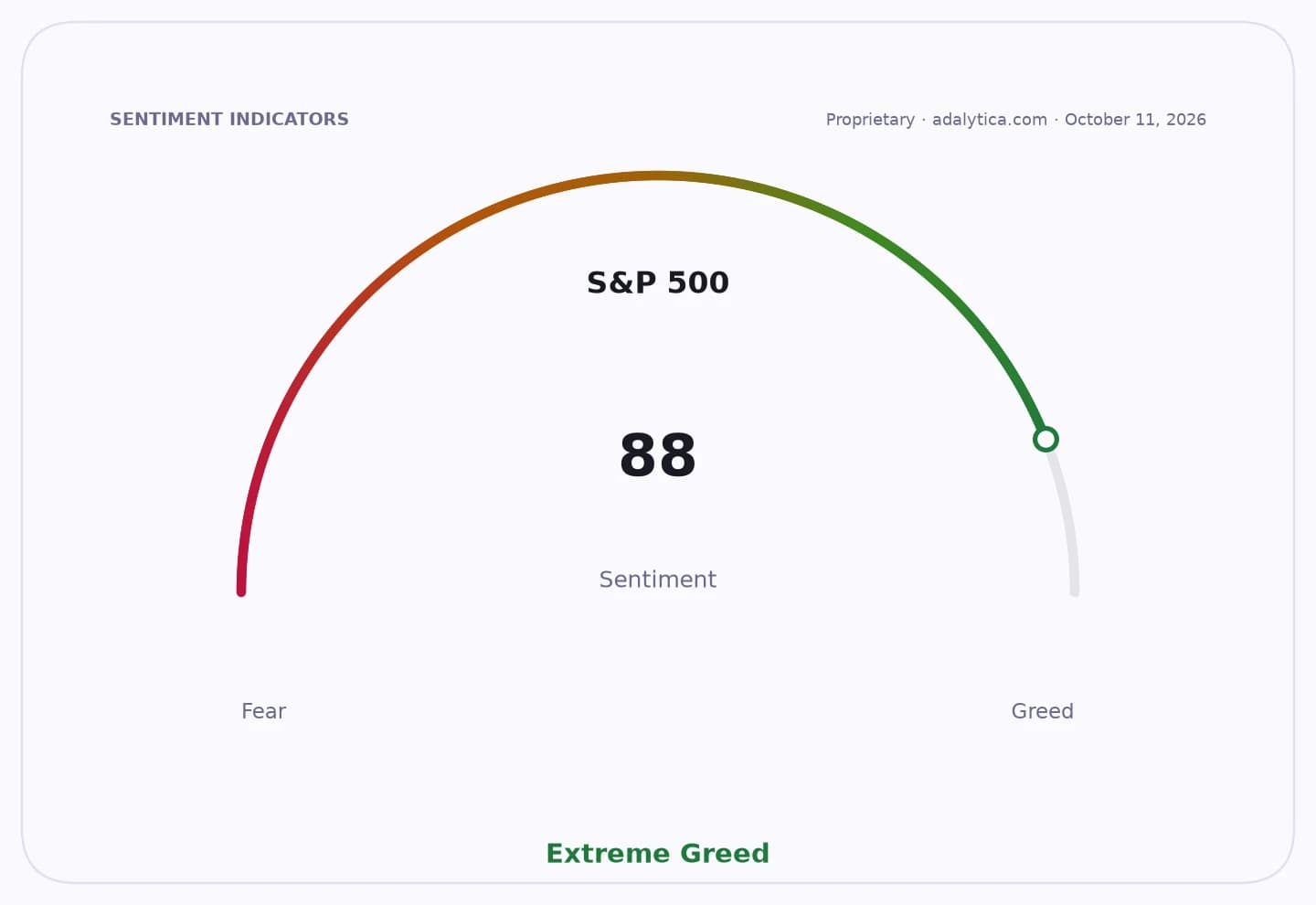
Sentiment IndicatorsⓘProprietary · adalytica.com · October 15, 2026
This is a snapshot — live sentiment, awareness and momentum for 130+ markets update continuously in the dashboard.Open AlphaPulse
That matters because short-term bonds are a key source of liquidity for brokerages, card issuers and other financial companies. When issuance falls so quickly, it usually means borrowers no longer need the same amount of cash, or they are choosing to lean less on short-dated funding. Either way, it can point to a quieter balance-sheet period after earlier refinancing or trading-related needs.
For investors, the shift is a reminder that funding conditions remain sensitive even if markets are not in outright distress. Short-term paper is especially exposed to movements in interest rates and liquidity preferences, and the drop in one-day issuance by 59.5% to 99.7 trillion won shows how much demand faded at the very shortest maturities. In a high-yield environment, that can be a healthy sign of discipline — but it can also reflect caution about rolling funding too often.
The retreat by securities firms also changes the composition of the market. Other borrowers stepped in somewhat, including card and capital companies, general corporations and securitization vehicles, but not enough to offset the collapse in broker-dealer supply. General short-term bonds fell 51% to 249.7 trillion won, while securitization paper edged up 2.6% to 99.6 trillion won.
The credit quality of the market remained strong, with A1-rated issuance accounting for 93.5% of the total. That suggests the pullback was not driven by a broad loss of market access, but by a cyclical reduction in demand from the largest issuer group.
For long-term investors, that is the real story here: funding markets are still functioning, but they are becoming more selective. If rates stay elevated, the companies most reliant on rolling short-term debt will keep facing pressure to manage liquidity more carefully. That should keep short-term funding trends worth watching, especially for brokers and other financial firms that live closest to the market’s nerve endings.
| Entity | Gains | Losses |
|---|---|---|
| Securities firms | ▲Lower funding needs | ▼Less market dominance |
| Investors in high-grade paper | ▲Stronger credit quality | ▼Fewer short-term opportunities |
| Card, capital and other issuers | ▲More room in funding markets | ▼Little offset to broker pullback |
| Short-term bond market | ▲Better funding discipline | ▼Sharp volume contraction |