The U.S. government’s debt burden has climbed to $40.6 trillion, yet the S&P 500 has still risen 9% over the past year, underscoring a market backdrop in which higher borrowing costs have not produced the equity weakness investors might normally expect.
S&P 500 Rises as U.S. Debt Hits $40.6 Trillion

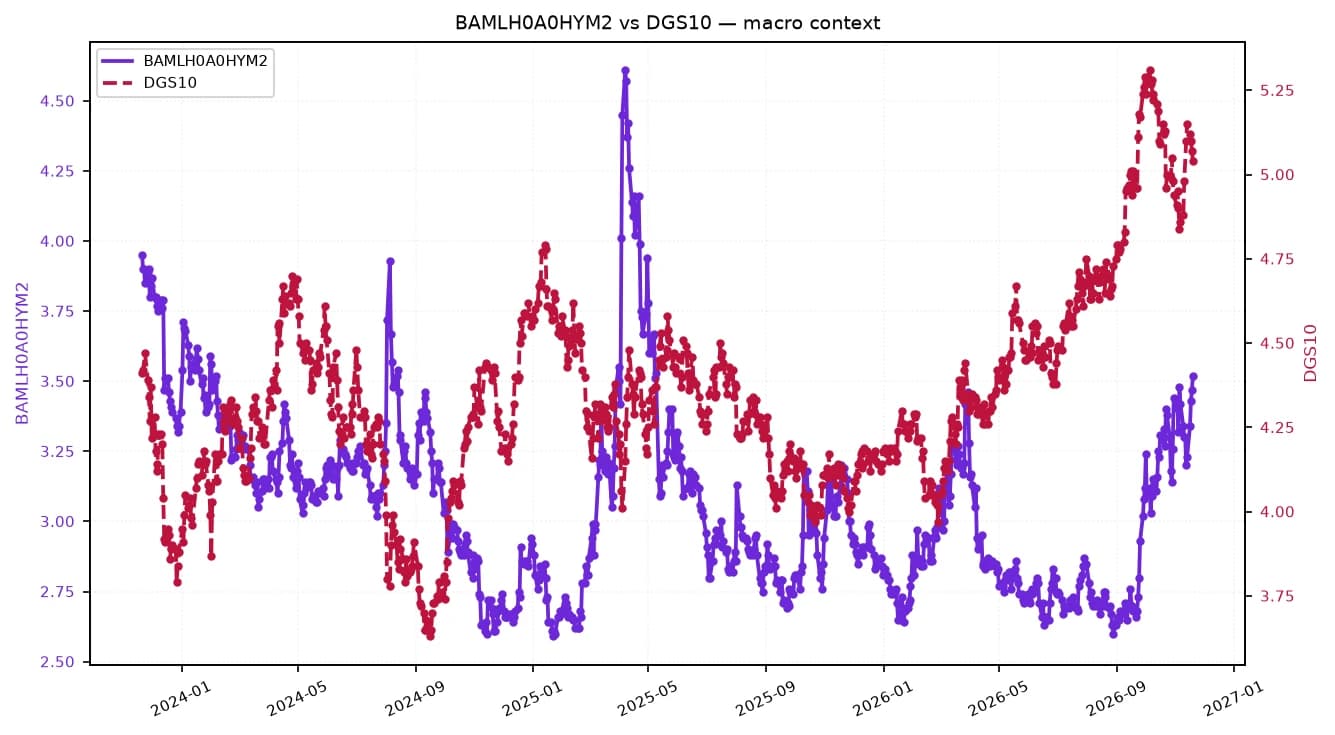
That divergence matters because it goes to the heart of how markets price risk in an economy where federal borrowing is still expanding and the 10-year Treasury yield remains near 5.1%, a level last seen before the 2007-09 financial crisis. In theory, a rising risk-free rate should compress equity valuations, especially for growth stocks that rely on cash flows far in the future. In practice, the benchmark index has delivered an 11% total return with dividends over the same period, suggesting equities are still being driven more by earnings resilience, index concentration and liquidity than by the cost of money.
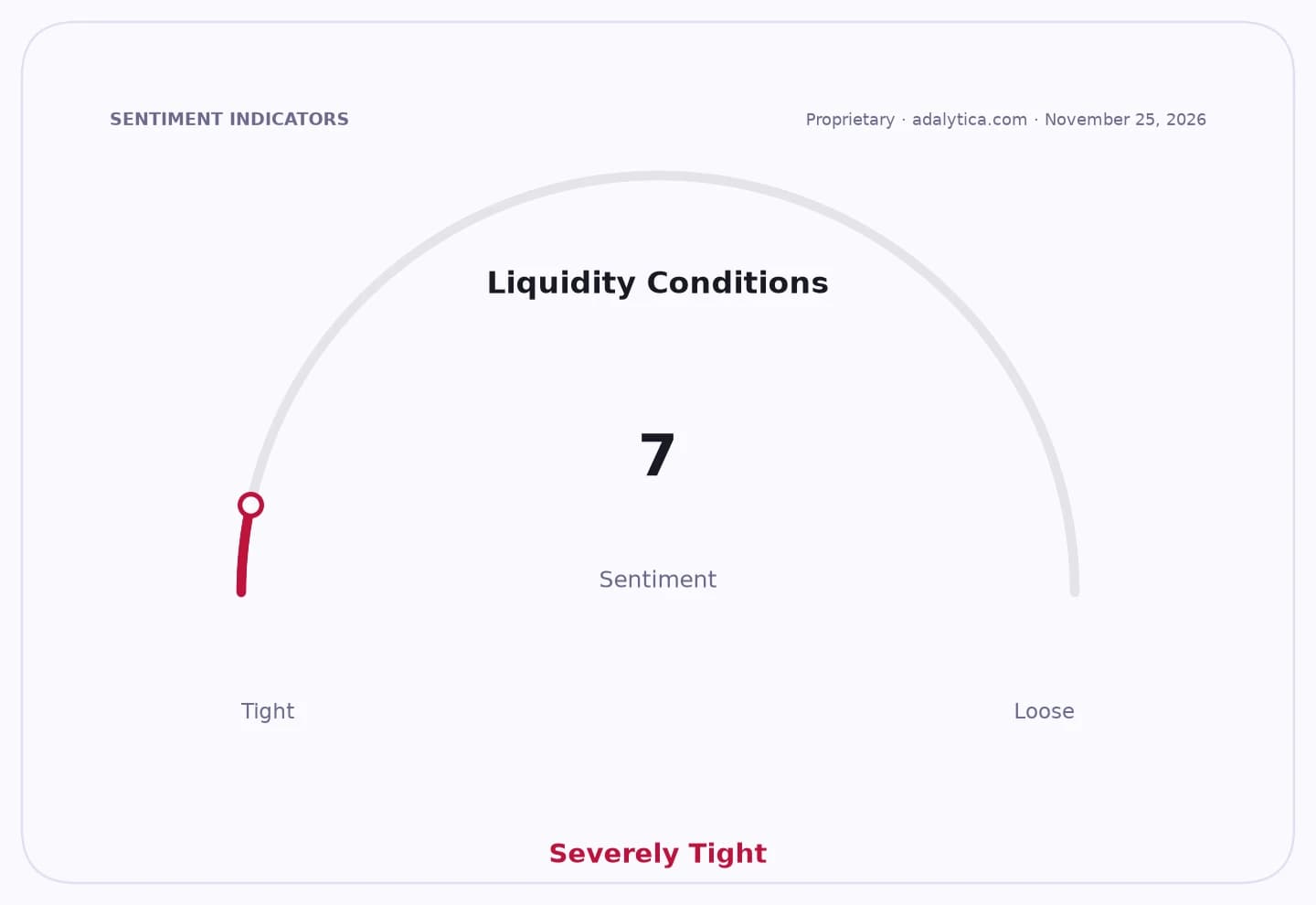
Sentiment Indicators
The debt load itself is no longer a marginal macro concern. At 125% of GDP, U.S. federal debt is at its highest non-pandemic level on record and up roughly 20 percentage points over the past decade. The bigger near-term market signal is the bond market’s response: 10-year yields have risen about 24% in the past year, indicating investors are demanding more compensation for lending to Washington amid persistent deficits and sticky inflation expectations.
Yet the stock market is telling a different story. The S&P 500’s advance despite that rise in yields suggests investors have become less sensitive to the traditional negative correlation between bond rates and equity multiples. For now, the market appears willing to look through government borrowing concerns as long as corporate profits hold up and the economy avoids a hard landing. That helps explain why valuations have not cracked the way many macro models would imply.
For investors, the implication is not that debt no longer matters, but that it may matter more indirectly than mechanically. Higher yields still raise the discount rate used in valuation work and increase financing costs for companies with weaker balance sheets. That is why the most vulnerable names remain those dependent on cheap capital, while firms with durable earnings and low leverage should be better insulated if rates stay elevated. The pressure is also more visible in fixed income: Treasury holders face mark-to-market risk, while shorter-duration assets and cash-like instruments continue to offer attractive returns.
There is also a policy angle. With the federal debt stock already above $40 trillion and Treasury yields near cycle highs, any new fiscal expansion would likely deepen scrutiny over the sustainability of U.S. borrowing. That does not automatically translate into an equity selloff, but it raises the odds of more volatile rates, tighter financial conditions and renewed debate over the long-run cost of servicing the debt.
The clearest takeaway for markets is that higher yields are no longer enough on their own to force a broad equity re-rating. Investors still need to track the macro backdrop, but the dominant driver of stocks remains company fundamentals. If borrowing costs keep rising while profits soften, the current calm could fade quickly.
| Entity | Gains | Losses |
|---|---|---|
| U.S. Treasury bond buyers | ▲Higher yields | ▼Mark-to-market risk |
| Cash-rich, low-debt companies | ▲More resilient margins | ▼Less benefit from cheap capital |
| Highly leveraged borrowers | ▲None | ▼Higher refinancing costs |
| S&P 500 equity holders | ▲Positive returns | ▼Valuation pressure from rates |