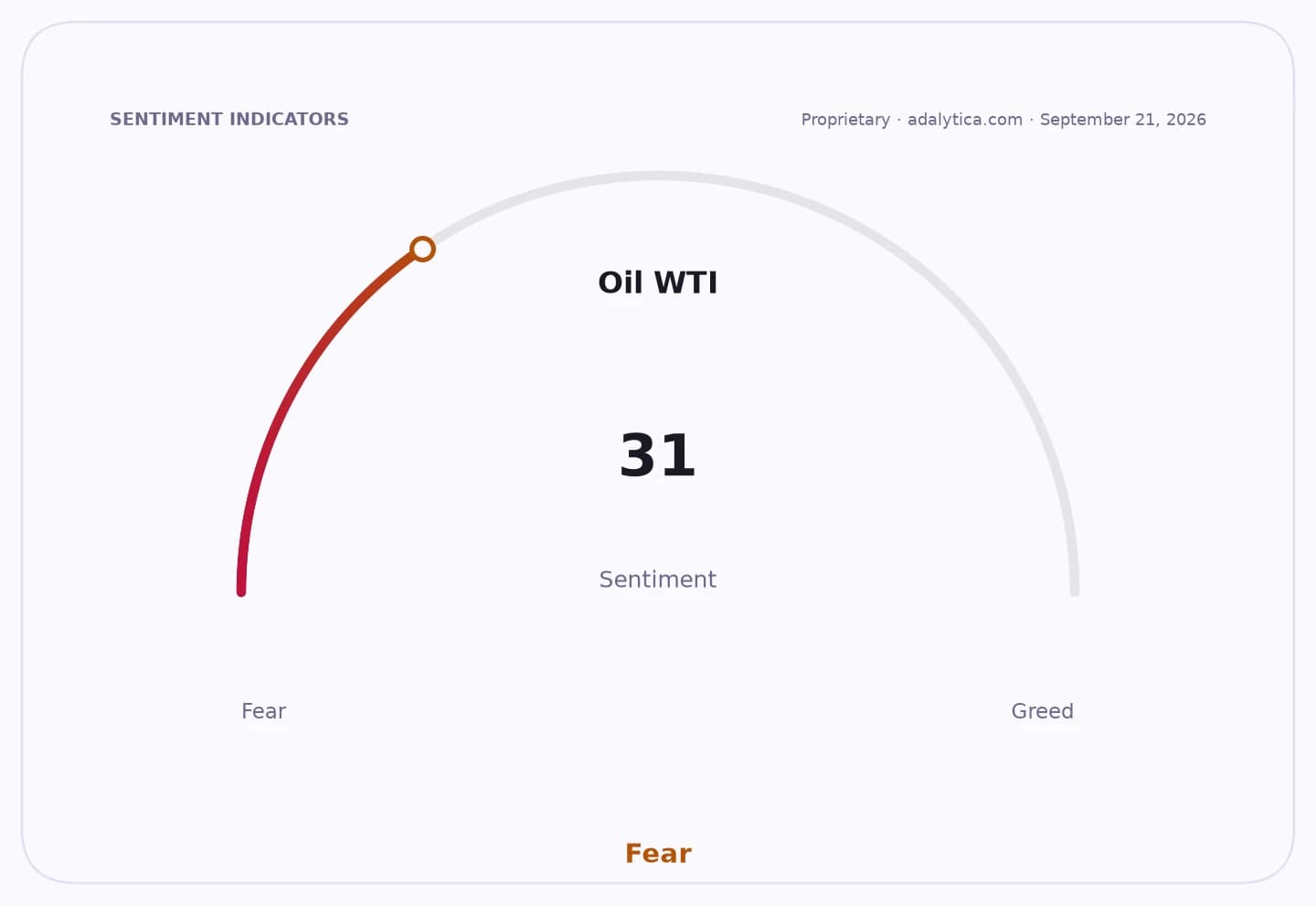
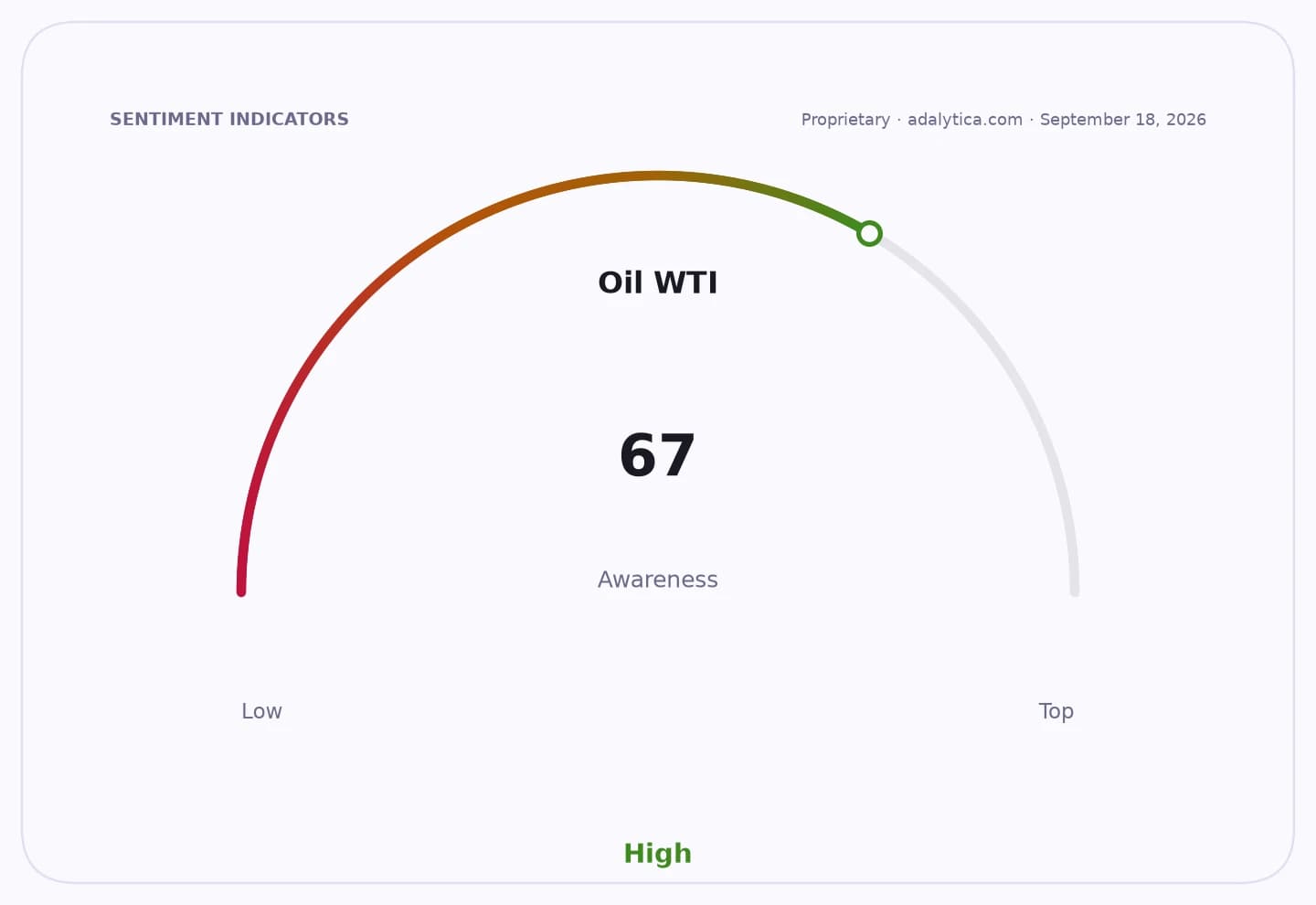
Gas station operators in Spain are pressing the government to restore fuel tax breaks immediately as surging crude and refined-product prices threaten to push pump prices sharply higher on October 1, worsening inflation and squeezing a sector dominated by small businesses.
Spain gas stations seek fuel tax breaks

The call from the Confederación Española de Empresarios de Estaciones de Servicio, or CEEES, lands at a delicate moment for the Spanish economy. Brent crude is close to $105 a barrel, but the sharper pressure is coming from refined fuels, where gasoline prices have jumped and diesel costs are rising at an unprecedented pace. For stations that buy fuel on wholesale markets and sell it into a consumer market already under inflation strain, the combination is eroding margins and raising the risk of lower demand if prices climb further.
Sentiment IndicatorsⓘProprietary · adalytica.com · September 13, 2026
This is a snapshot — live sentiment, awareness and momentum for 130+ markets update continuously in the dashboard.Open AlphaPulse
CEEES said without immediate fiscal relief, the average retail price of gasoline would rise 6.05 euro cents a liter from Oct. 1, while diesel would jump 24.2 cents a liter as current discounts expire. Those increases reflect the VAT on the existing discounts, and they come on top of already steep gains since the start of hostilities in Iran on Feb. 28: gasoline is up 25% to 1.85 euros a liter and diesel 26.4% to 1.82 euros, even after the temporary relief measures now in place.
The industry is asking Madrid to revive the spring package that ran from March 22 to June 30, including a reduced 10% VAT rate on automotive fuels and a temporary cut in the special hydrocarbons tax. CEEES says those measures proved effective in cushioning consumers and keeping station networks afloat, particularly among the independent operators and family-owned businesses that make up most of the sector.
For policymakers, the request is about more than a pump-price dispute. Fuel is a visible and politically sensitive inflation component, and higher diesel prices feed through freight, logistics and the broader cost base of the economy. Spain’s government must weigh the fiscal cost of renewed relief against the risk that a fresh jump in fuel prices would amplify consumer stress and undermine household spending just as broader price pressures remain elevated.
Investors are also watching the oil complex for second-order effects. Higher refined-product prices tend to support margins for refiners such as Marathon Petroleum, Valero and Phillips 66, whose shares have already been buoyant on tighter supply conditions. But sustained price spikes can ultimately curb demand, invite political intervention and increase volatility across the energy value chain. For retailers and transport-heavy sectors, the effect is the opposite: tighter margins, weaker consumption and more pressure on earnings if the government lets the current discounts lapse.
The next market test is Oct. 1, when the existing measures expire. If Madrid relents, pump prices could stabilize temporarily; if not, Spain is likely to become another case study in how tight refined-fuel markets quickly turn into a policy problem.
| Entity | Gains | Losses |
|---|---|---|
| Refiners | ▲Wider product margins | ▼Fuel retailers |
| Gas stations | ▲Fiscal relief, lower costs | ▼Without discounts |
| Consumers | ▲Lower pump prices | ▼Higher fuel bills |
| Spanish government | ▲Short-term inflation relief if it acts | ▼Fiscal balance if it cuts taxes |