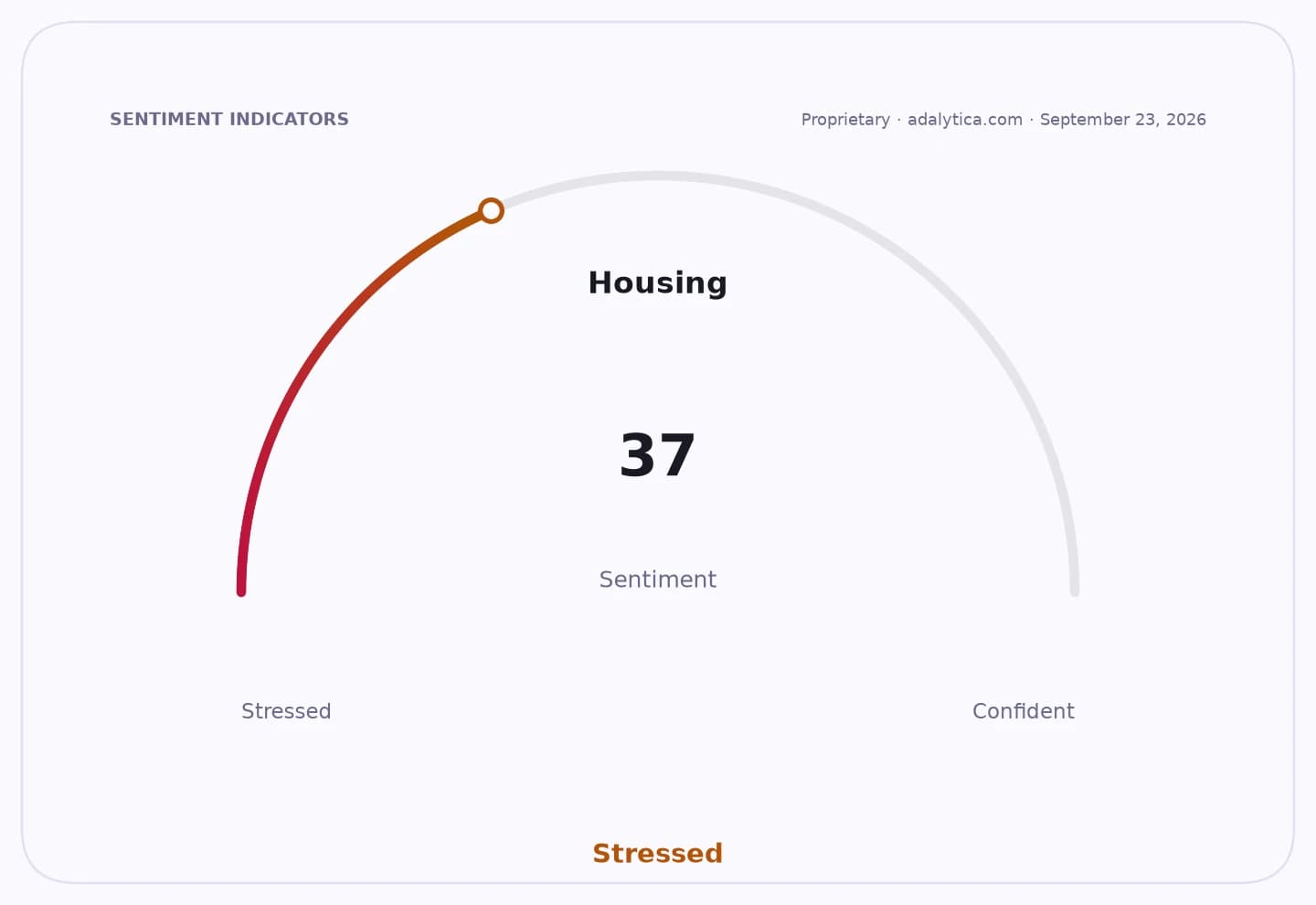
Spain’s housing market is moving from scarcity to strain, and the first clear sign is showing up in asking prices: 16% of home-sale listings are now marked down, with average discounts of 6% from the original price.
Spain Housing Listings See More Price Cuts
That matters because it suggests the long rally in Spanish housing is starting to meet resistance from affordability, even as official prices keep climbing. In the first quarter of 2026, home prices rose 12.9% from a year earlier, with existing homes up 13.5%, according to the national statistics office. But transaction data are turning choppier: sales fell 7.3% in May, recovered 1.6% in June, then slipped 5.1% in July. The message is simple — demand is still there, but the market is becoming harder to finance.
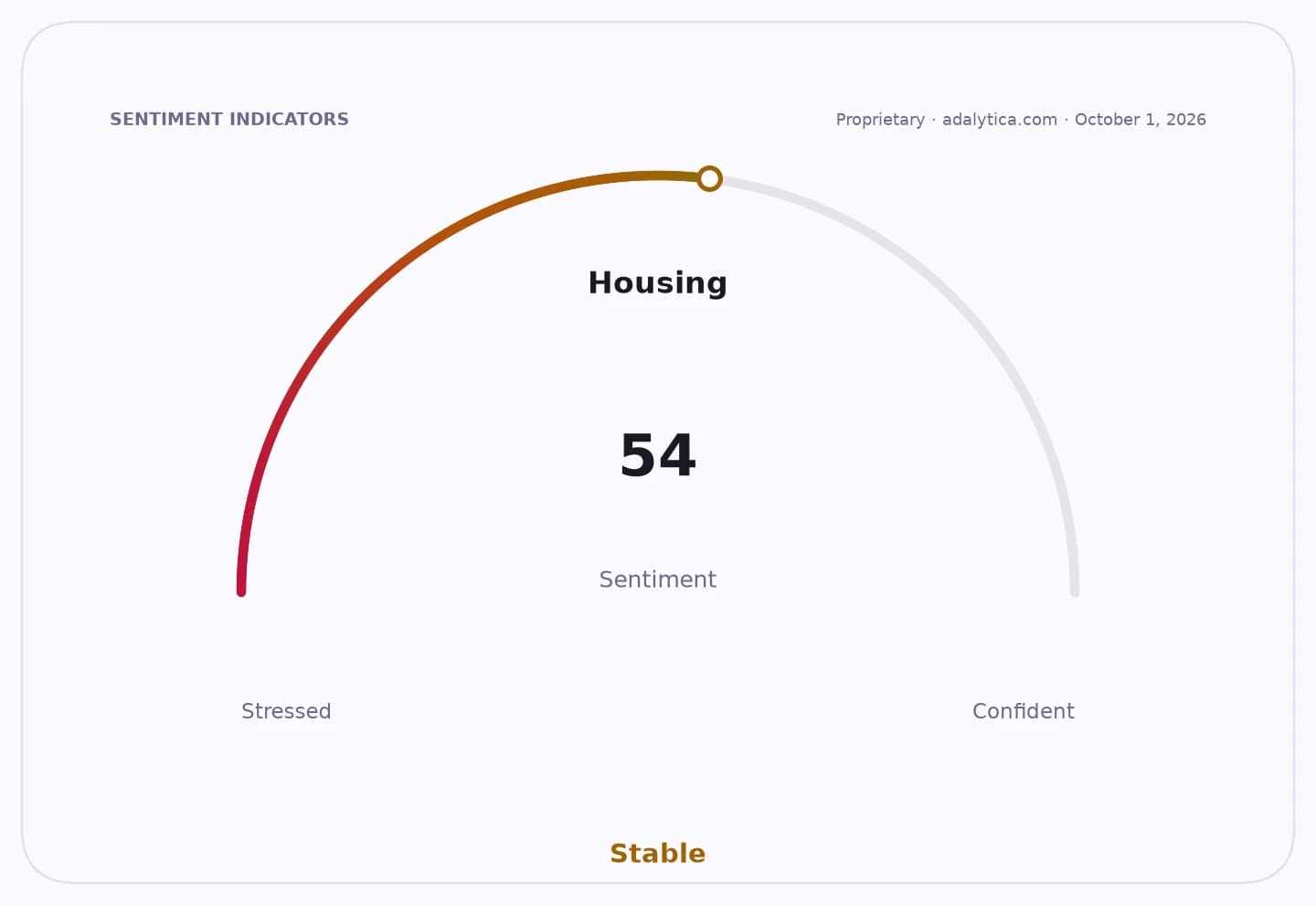
Sentiment IndicatorsⓘProprietary · adalytica.com · October 1, 2026
This is a snapshot — live sentiment, awareness and momentum for 130+ markets update continuously in the dashboard.Open AlphaPulse
For investors, that combination is more important than any single monthly print. When more sellers begin cutting asking prices, it often means the market is no longer clearing at the old level of optimism. That can take heat out of price momentum, pressure brokers and developers to lean harder on incentives, and shift the balance toward buyers who have been priced out for months. It also points to a broader affordability squeeze that is now visible in Europe’s residential market, not just in overheated U.S. cities.
Montse Cespedosa, a mortgage adviser, says the discounting is not confined to slower provincial markets. She notes that one in five listings in Madrid and Barcelona already carries a lower asking price, with Madrid and Palma among the cities seeing the sharpest cuts. Baleares stands out with an average discount of 96,326 euros, underscoring how quickly pricing can soften even in areas that had been strongest during the upswing.
The macro backdrop helps explain the pressure. Spain’s housing stock remains tight, but the ability to pay has not kept pace with prices. The result is a market where headline inflation in home values can coexist with weakening transactions and rising concessions. For homebuilders, lenders and real estate platforms, that usually means slower pricing power and a heavier reliance on affordability tools such as discounts and mortgage support.
That is where the investable angle gets interesting. If price cuts spread, the winners are likely to be buyers, rental substitutes and the parts of the market tied to affordability rather than luxury. The losers are sellers counting on continued appreciation, and developers forced to protect volumes with incentives. Our thesis is that Spain’s housing cycle is shifting from “how fast can prices rise?” to “how much discount is needed to keep deals moving?” — and that inflection point creates opportunity in lower-cost housing, financing support, and select real estate names with balance-sheet strength.
For now, the clearest signal is that Spain’s housing boom is no longer one-way. The market is learning the same lesson seen in other rate-sensitive sectors: once affordability breaks, asking prices have to do the adjustment. Investors should position for a slower, more promotional housing environment and look for the companies best equipped to profit from the transition.
| Entity | Gains | Losses |
|---|---|---|
| Homebuyers | ▲Better negotiation power | ▼Less urgency to bid up prices |
| Sellers with stale listings | ▲More chance to transact | ▼Lower sale proceeds |
| Affordability-focused lenders/builders | ▲More demand for financing help | ▼Margin pressure from incentives |
| High-priced urban markets | ▲Faster price discovery | ▼Smaller pricing power |