A Spanish judge has opened a fresh line of inquiry into whether Social Security "proved" that Plus Ultra had no debts after a meeting involving former prime minister José Luis Rodríguez Zapatero and then minister José Luis Escrivá, a development that keeps political scrutiny on the airline rescue and the public money behind it.
Spain opens inquiry into Plus Ultra bailout
What matters for investors is not the legal drama alone, but the precedent it could set for state-backed bailouts in Spain. If the court finds that the debt-free claim was improperly validated, it could raise questions about how public support was granted, whether due diligence was sufficiently rigorous and how future rescue packages are assessed. That kind of uncertainty tends to linger well beyond the courtroom, especially when taxpayer funds and politically connected beneficiaries are involved.
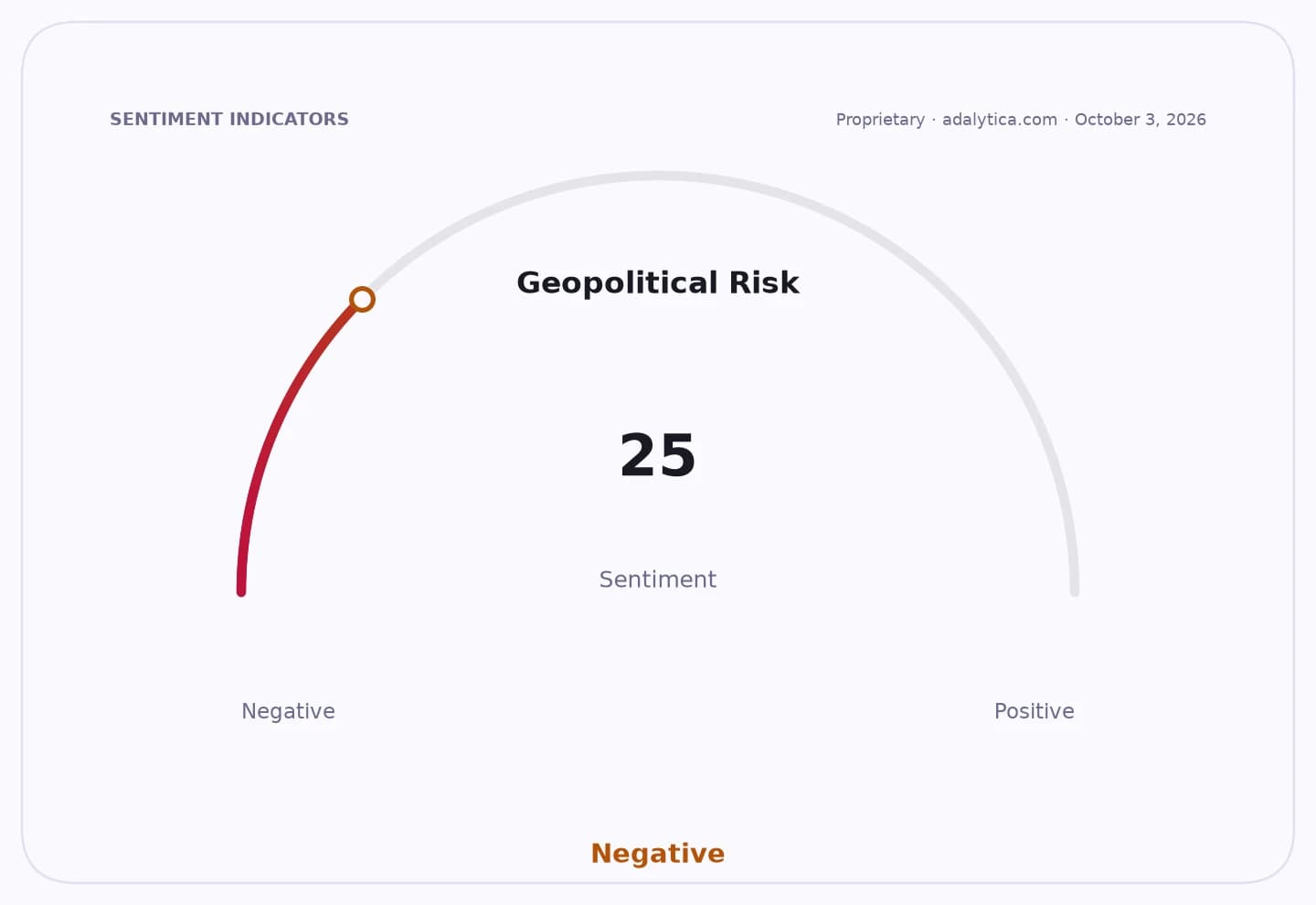
Sentiment IndicatorsⓘProprietary · adalytica.com · October 17, 2026
This is a snapshot — live sentiment, awareness and momentum for 130+ markets update continuously in the dashboard.Open AlphaPulse
The Plus Ultra case has become a proxy battle over governance, transparency and the boundaries of government intervention. For markets, the core issue is confidence: confidence that public rescues are awarded on the merits, confidence that liabilities are fully disclosed and confidence that political relationships do not distort the allocation of capital. When those questions are left hanging, the result is usually a higher risk premium, not just for the companies directly involved but for any sector that relies on state support in a downturn.
The immediate market impact is likely to be limited because Plus Ultra is not a listed heavyweight, but the ripple effects matter. Airlines are capital-intensive businesses that can quickly run into liquidity stress, which is why state aid and rescue financing often become part of the investment backdrop in the sector. Investors in larger carriers such as IAG, American Airlines and Delta know that government policy can shape competition, balance-sheet resilience and even future capacity decisions. The cleaner and more credible the bailout framework, the less distortion there is for private operators.
That is why the broader story is about institutional trust as much as one airline. If the judge’s investigation uncovers weaknesses in the administrative basis for the rescue, it could tighten political oversight around future interventions and make approvals slower and more contentious. For long-term investors, that is a reminder to focus on carriers with durable cash generation, manageable leverage and the flexibility to weather policy shocks without depending on emergency support.
For now, the case is worth watching less as a trading event than as a test of Spain’s bailout discipline. Investors should treat it as another reason to favor businesses with strong balance sheets and avoid assuming that political backstops are reliable investment theses.
| Entity | Gains | Losses |
|---|---|---|
| Taxpayers / public purse | ▲Stronger oversight | ▼Potential bailout misuse |
| Competing airlines | ▲Fairer rules | ▼Distorted competition |
| Plus Ultra | ▲Continued support if upheld | ▼Legal and reputational risk |
| Spanish government / regulators | ▲Credibility if process is clean | ▼Scrutiny over due diligence |