An insurance product designed to protect landlords from rent arrears is increasingly functioning as a second test for would-be tenants, raising fresh questions about access to housing and the economics of a rental market already constrained by fear of non-payment.
Spain rent-default insurance tightens tenant screening
The shift matters because rent-default insurance has become embedded in the leasing process, not a niche add-on. In Spain, one in three rental contracts signed in 2025 included such a policy, and demand rose 20% a year over the past three years, according to an INESE survey cited by Real Cober chief executive Carlos Romera. That growth reflects a landlord market trying to price in the risk of tenants who pay for a few months and then stop — the so-called “inquiokupa” problem that has discouraged supply.
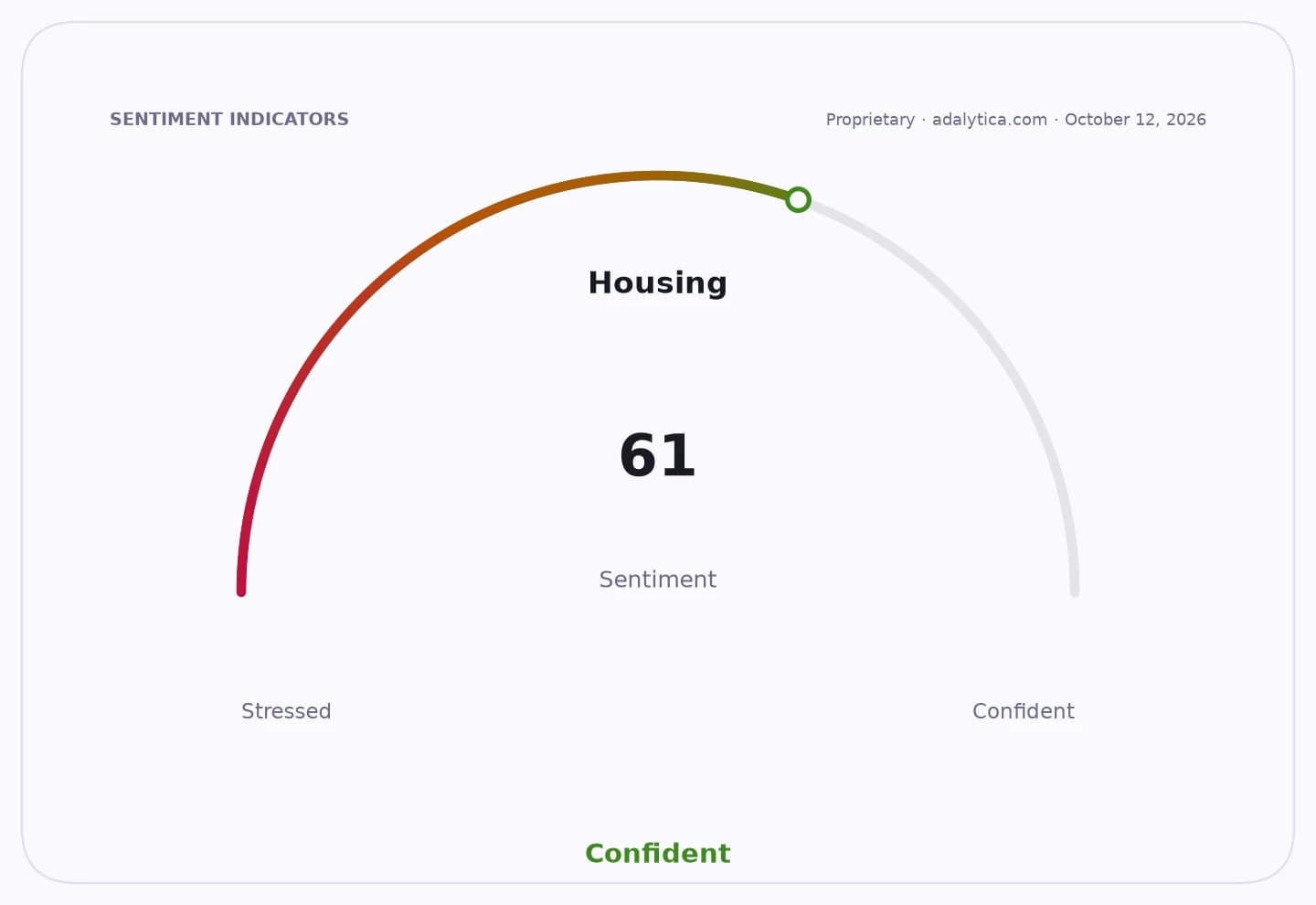
Sentiment IndicatorsⓘProprietary · adalytica.com · October 12, 2026
This is a snapshot — live sentiment, awareness and momentum for 130+ markets update continuously in the dashboard.Open AlphaPulse
For landlords, the appeal is straightforward: the policies typically cover up to 12 months of unpaid rent, can include legal defense and sometimes vandalism damage, and cost about 3% to 5% of annual rent. In a market where vacancy risk, arrears and legal recovery costs can quickly erase returns, that is a relatively modest premium for balance-sheet protection. The insurance also professionalizes underwriting in a sector long shaped by informal checks and personal judgment.
But the same risk management that makes the product attractive may also tighten access to housing. Insurers have to assess income, job stability, rent-to-income ratios and other indicators before issuing a policy. That means two applicants with similar means can be treated differently if an algorithm assigns them distinct risk scores. The result is a new kind of filter: not just whether a tenant can afford the rent, but whether they are “insurable.”
That distinction matters economically because it can reinforce the very supply problem the industry says it is trying to solve. If landlords see insurance as a prerequisite for leasing, and insurers apply increasingly strict solvency screens, some otherwise viable tenants may be pushed out of the market. The effect could be felt most sharply in tight urban rental sectors, where affordability pressures are already limiting household mobility and adding to political pressure for rental reform.
For property owners and professionally managed landlords, the development is a tailwind. It lowers credit risk, improves predictability of cash flow and may support higher occupancy by making landlords more willing to rent. For insurers, it opens a growing fee pool tied to housing turnover. For tenants with irregular income, recent job changes or thin credit files, it is potentially another obstacle layered on top of deposits and affordability checks.
There is also a broader market narrative here: risk transfer products are increasingly shaping real-world access to scarce assets. That is visible in other parts of the housing market as well, including large U.S. single-family rental operators such as American Homes 4 Rent and Invitation Homes, where investor focus remains on occupancy, rent collection and underwriting discipline. The common thread is that when housing supply is limited and default risk rises, more of the leasing decision migrates from landlords to risk models.
The bull case is that these policies make rental housing more available by giving owners confidence to lease. The bear case is that they harden into an algorithmic barrier, excluding tenants who can pay but do not fit the model. How regulators and insurers manage that tension will determine whether rent-default cover remains a stabilizer for the market — or becomes another reason housing stays tight.
| Entity | Gains | Losses |
|---|---|---|
| Landlords | ▲Lower default risk | ▼Less screening flexibility |
| Insurers | ▲Rising premium income | ▼Higher underwriting scrutiny |
| Tenants with stable income | ▲Easier approvals | ▼More paperwork |
| Irregular-income renters | ▲Little | ▼Access barriers |