Spain’s market is being squeezed from both sides: higher oil prices are pressuring growth-sensitive stocks while surging bond yields are raising the cost of capital across the economy.
Spain stocks fall as yields and oil rise
That is why the day matters far beyond a modest move in the Ibex 35. When the Spanish 10-year bond yield climbs to 4.10%, its highest since 2013, investors are effectively being told that the era of ultra-cheap money is still over. That has direct consequences for mortgage rates, corporate borrowing, public financing and equity valuations. At the same time, Brent-linked oil jumping about 4% toward $104 a barrel feeds inflation fears just as central banks are already signaling more tightening may be needed before year-end.
Sentiment IndicatorsⓘProprietary · adalytica.com · October 10, 2026
This is a snapshot — live sentiment, awareness and momentum for 130+ markets update continuously in the dashboard.Open AlphaPulse
The Ibex 35, which had fallen as much as 1.5%, was down 0.2% at 19,090 points in late trade, but the pressure underneath the surface was more telling. Banks such as BBVA and Santander slipped about 1%, reflecting the broader selloff in sovereign debt markets, where rising yields can unsettle financial assets even if they eventually help lending margins. Aena fell 3%, IAG lost 2.5% as energy costs climbed, while Repsol rose 3.2% on the back of the crude rally. That split is a reminder that inflation shocks do not hit every stock the same way.
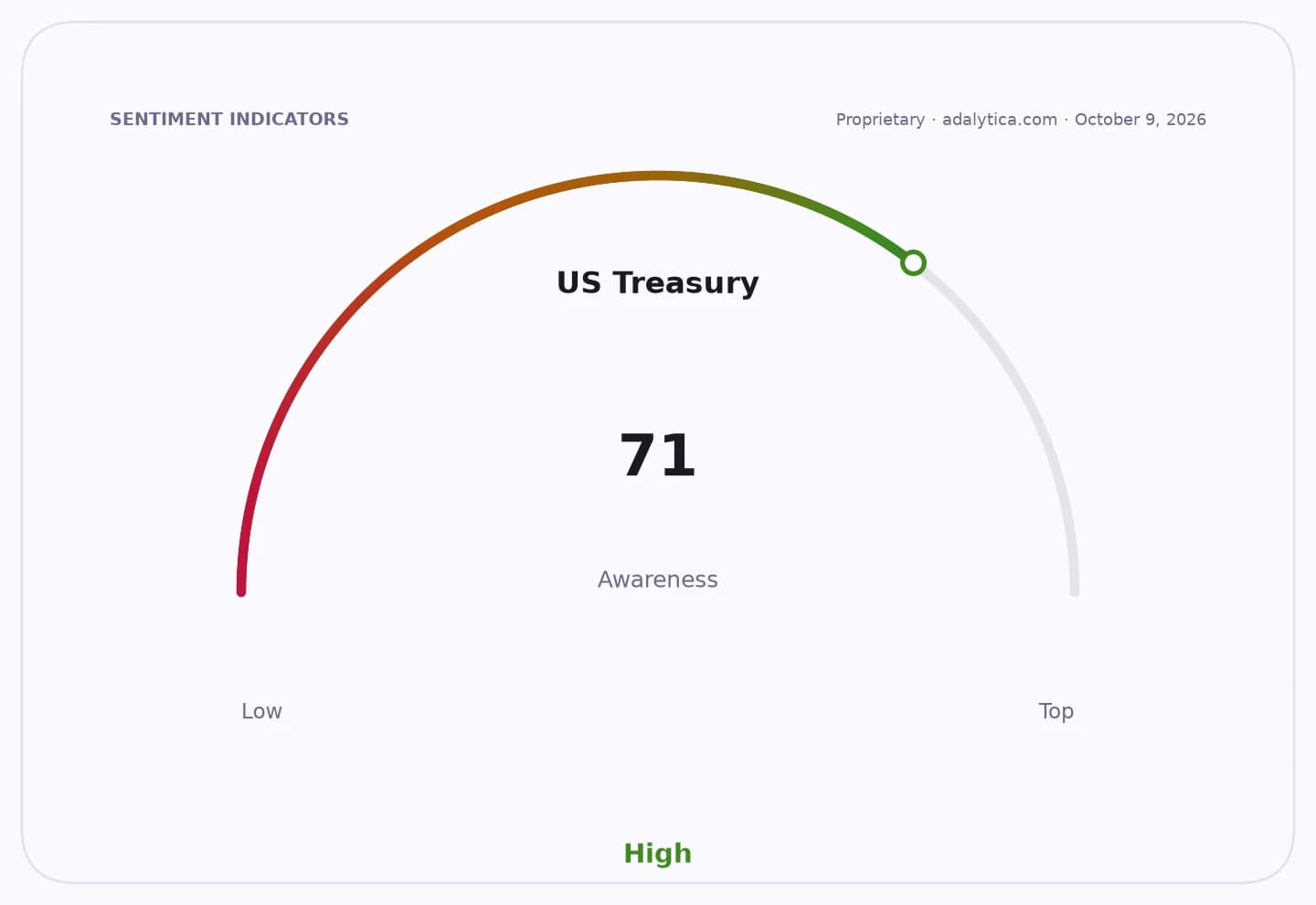
The macro backdrop is doing the heavy lifting here. U.S. Treasury yields also moved higher, with the 10-year near 5.29%, its highest level since 2002, after Federal Reserve minutes showed policymakers still consider another rate hike possible before year-end. In Europe, the German 10-year rose to 3.48%. Those moves matter because they reset the discount rate investors use to value stocks. The higher that rate goes, the less forgiving the market becomes toward companies whose profits are expected far in the future.
For long-term investors, the message is not to chase every daily move, but to pay attention to who can absorb a higher-rate, higher-energy world. Spanish banks, infrastructure names and airlines face different pressures than an integrated energy producer like Repsol. And if bond yields stay elevated, companies with strong free cash flow, pricing power and low debt should continue to outlast those that depend on cheap financing.
The near-term outlook still hinges on the same two forces: whether oil keeps climbing and whether central bankers stay hawkish. Until one of those pressures eases, Spanish equities may continue to look more like a battleground than a broad bull market. That makes selectivity, patience and diversification more valuable than ever.
| Entity | Gains | Losses |
|---|---|---|
| Repsol | ▲Higher oil prices | ▼Consumer-facing airlines |
| BBVA and Santander | ▲Potentially wider lending spreads later | ▼Bond-market pressure now |
| Aena and IAG | ▲None from this move | ▼Higher fuel and valuation pressure |
| Spanish bondholders | ▲Higher yields on new debt | ▼Existing bond prices |