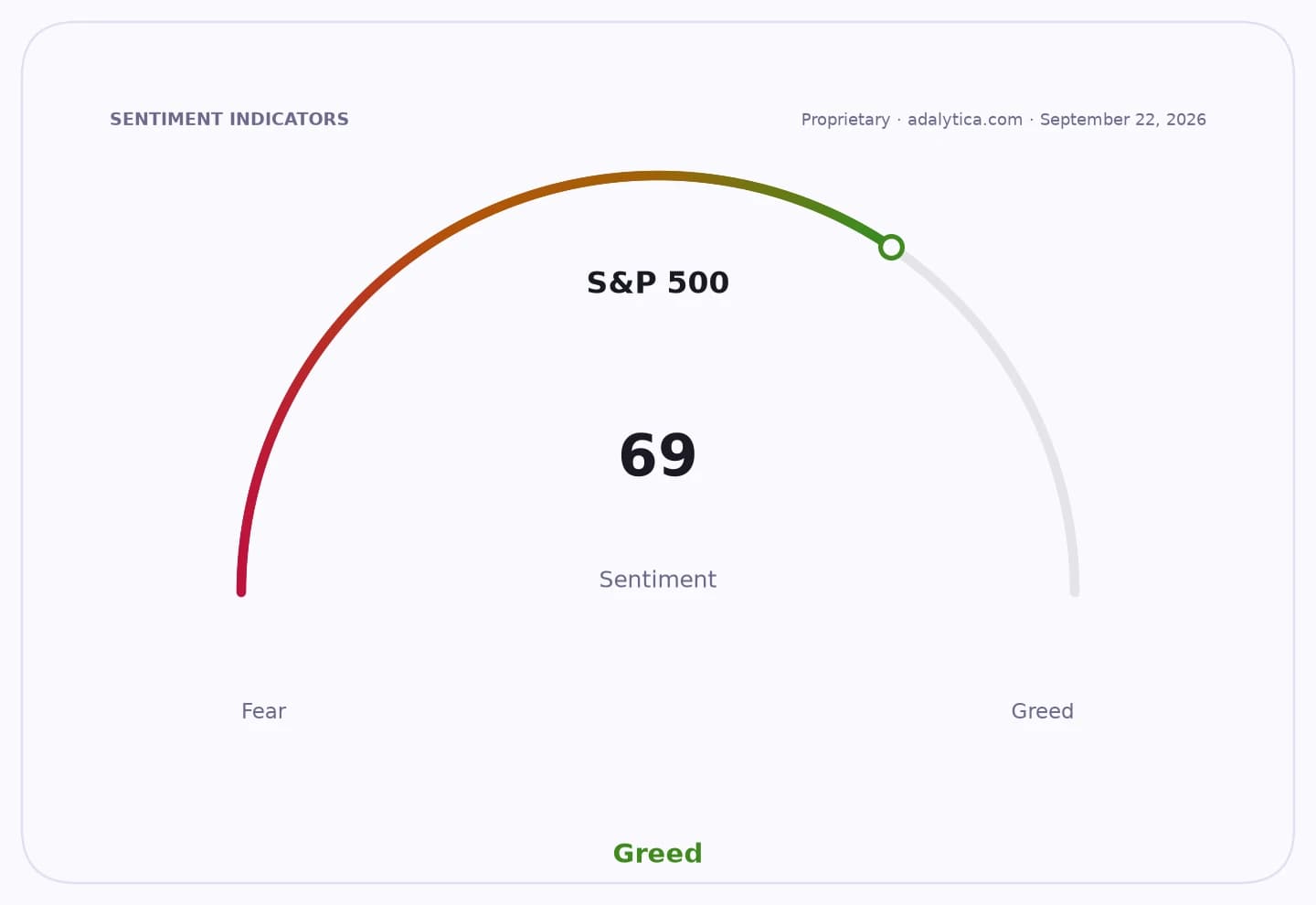
US stocks are trading on domestic rate, growth and labor data, not headlines from India, with the S&P 500 ETF SPY, Nasdaq 100 ETF QQQ and Russell 2000 ETF IWM all extending gains even as Treasury yields stay elevated.
SPY QQQ IWM Rise as Yields Stay Elevated

That split tells the real story for investors: US asset prices are still being driven by the Federal Reserve path, the labor market and bond yields, while foreign-market headlines have limited impact unless they change the US macro outlook. The 10-year Treasury yield is at 4.77% to 4.79%, the fed funds rate is pinned at 3.63%, and unemployment is holding near 4.1%, keeping the market focused on whether policy stays restrictive for longer.
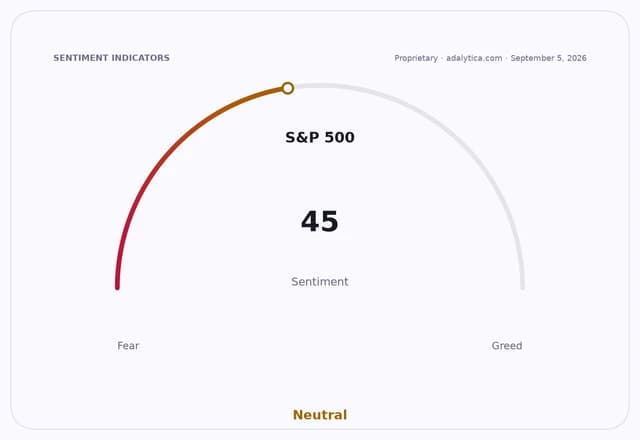
Sentiment IndicatorsⓘProprietary · adalytica.com · September 5, 2026
This is a snapshot — live sentiment, awareness and momentum for 130+ markets update continuously in the dashboard.Open AlphaPulse

SPY closed at 770.19 on Sept. 4, near its 50-day average of 756.86 and well above its 200-day average of 709.87, while QQQ ended at 718.96 versus a 50-day of 711.09 and a 200-day of 656.78. IWM lagged at 296.01, just below its 50-day average of 297.01, showing smaller companies remain more sensitive to higher borrowing costs even as large-cap indices hold firmer.
From a technical standpoint, SPY’s RSI reading of 47.5 points to a neutral tape, QQQ’s 42.1 suggests momentum is recovering but not overheated, and IWM’s 36.9 shows small caps are still struggling for breadth. Adalytica.com’s S&P 500 Trade Signals snapshot also shows neutral sentiment at 45, underscoring a market that is not panicking but is still waiting for a clearer catalyst.
The broader implication is that Wall Street is pricing a US-driven cycle: if yields stay near current levels and the Fed holds at 3.63%, equity gains likely remain concentrated in the biggest and most resilient names, while rate-sensitive corners of the market stay choppy. Traders will now watch the next inflation read, jobs data and any fresh Fed commentary for the next move in yields and equities.
| Entity | Gains | Losses |
|---|---|---|
| Large-cap growth stocks | ▲Better access to capital and index support | ▼Higher valuation pressure if yields rise |
| Small-cap stocks | ▲Relief if rates ease | ▼Higher funding costs and weaker breadth |
| Bond bears | ▲Elevated 10-year yield near 4.8% | ▼Fixed-income bulls |
| US macro-driven traders | ▲Clear domestic catalysts | ▼Foreign-news-only narratives |