Sri Lanka’s central bank has kept its inflation target at 5% for the next three years, a move that should help anchor expectations after years of price shocks and policy swings.
Sri Lanka Central Bank Keeps 5% Inflation Target
That matters because inflation targeting is not just a technical exercise. For an economy like Sri Lanka’s, where households, businesses and lenders have lived through abrupt changes in prices and borrowing costs, a steady target gives the market a clearer rulebook. It also signals that the central bank wants credibility and predictability to do more of the heavy lifting as the country works to rebuild growth.
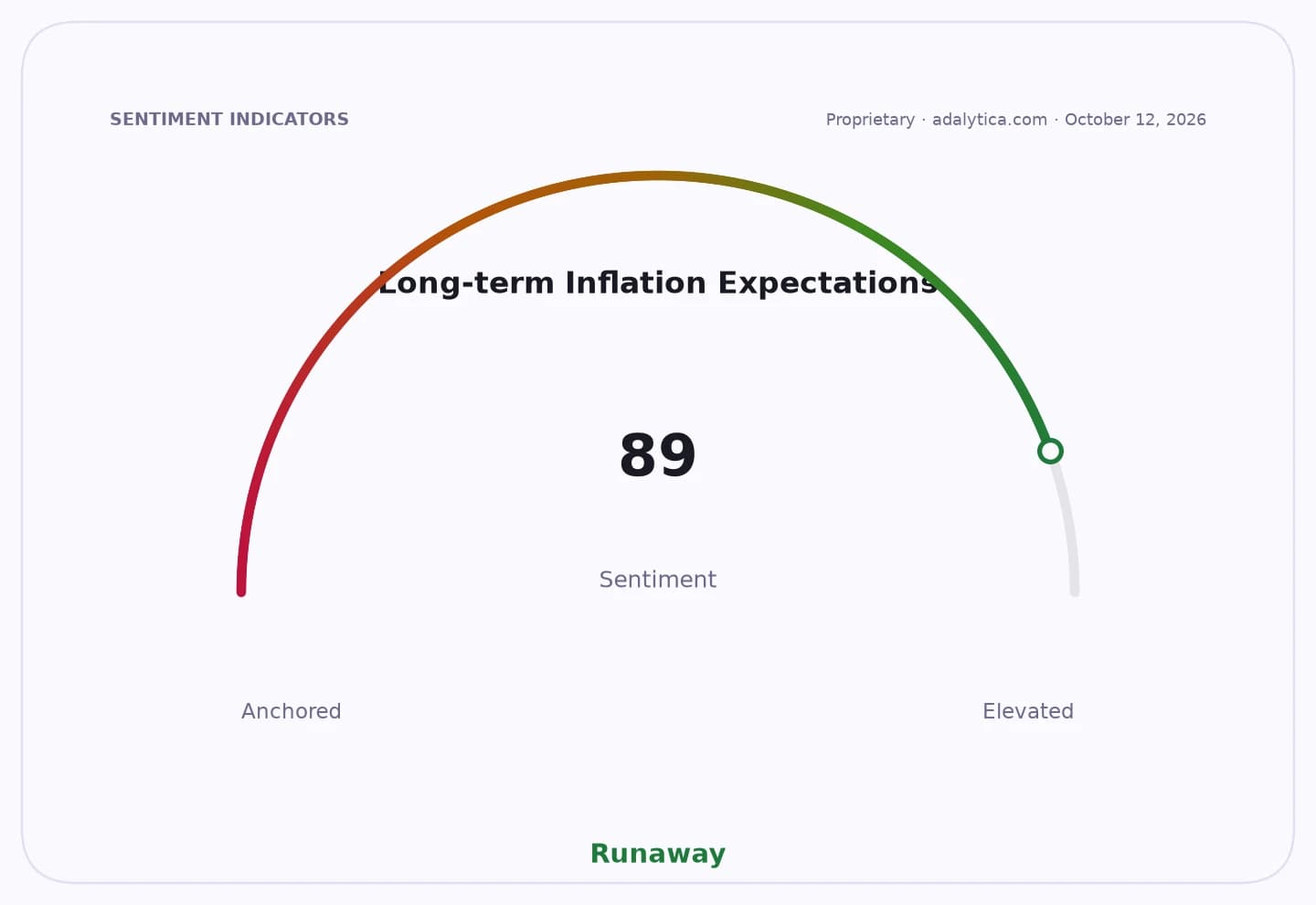
Sentiment IndicatorsⓘProprietary · adalytica.com · October 12, 2026
This is a snapshot — live sentiment, awareness and momentum for 130+ markets update continuously in the dashboard.Open AlphaPulse
Governor Nandalal Weerasinghe said the decision was reached after the statutory review with the finance ministry for 2026, and that the official inflation target measured on the Colombo Consumer Price Index would remain unchanged at 5%. He also stressed that the target is a precise number, not a range the bank is comfortable drifting around.
That distinction matters. A fixed target tells investors the central bank is aiming for a specific inflation outcome, not simply tolerating moderate price rises. It is also introducing an accountability band under the new central bank law. If inflation stays above or below that band for two consecutive quarters, the bank must explain itself to parliament and the public.
In practical terms, that should support confidence in local assets and in the policy framework more broadly. When inflation expectations are stable, businesses can plan pricing, wages and capital spending with less guesswork, and bond investors can better assess real returns. That is especially important in a country still recovering from a balance-of-payments crisis, where policy credibility can be as valuable as interest-rate moves.
The timing is notable too. Global inflation is still uneven, with the US making progress toward lower price pressures while parts of Europe remain under strain from energy costs. For Sri Lanka, a firm domestic target is a reminder that imported shocks can still test the economy, but the policy response is meant to be more disciplined than in the past.
For investors, the key takeaway is that Sri Lanka is trying to turn inflation from a source of uncertainty into a manageable variable. If the central bank can keep that 5% target credible, it improves the odds of lower risk premiums, steadier rates and a better backdrop for long-term capital. That is worth watching closely.
| Entity | Gains | Losses |
|---|---|---|
| Sri Lanka central bank | ▲Credibility and policy clarity | ▼Room for inflation drift |
| Businesses and households | ▲Better planning visibility | ▼Less tolerance for surprise price rises |
| Bond investors | ▲More predictable real returns | ▼Inflation-linked uncertainty |
| Borrowers facing higher prices | ▲Stable expectations | ▼Easier inflation pass-through |