Sri Lanka’s pledge that its territory will not be used for anti-India activity gives New Delhi a strategic opening in the Indian Ocean just as India and Colombo move to lock in deeper defence cooperation.
Sri Lanka Assures India on Anti-India Activity
The reassurance, delivered by President Anura Kumara Dissanayake in talks with Defence Minister Rajnath Singh, matters because it addresses one of India’s long-running regional security concerns: whether external powers can use Sri Lankan infrastructure to project influence close to India’s southern coast. For investors, it underscores that geopolitical risk around the Indian Ocean is not only a defence issue but also a factor shaping port access, logistics, energy flows and the balance of power between India and China.
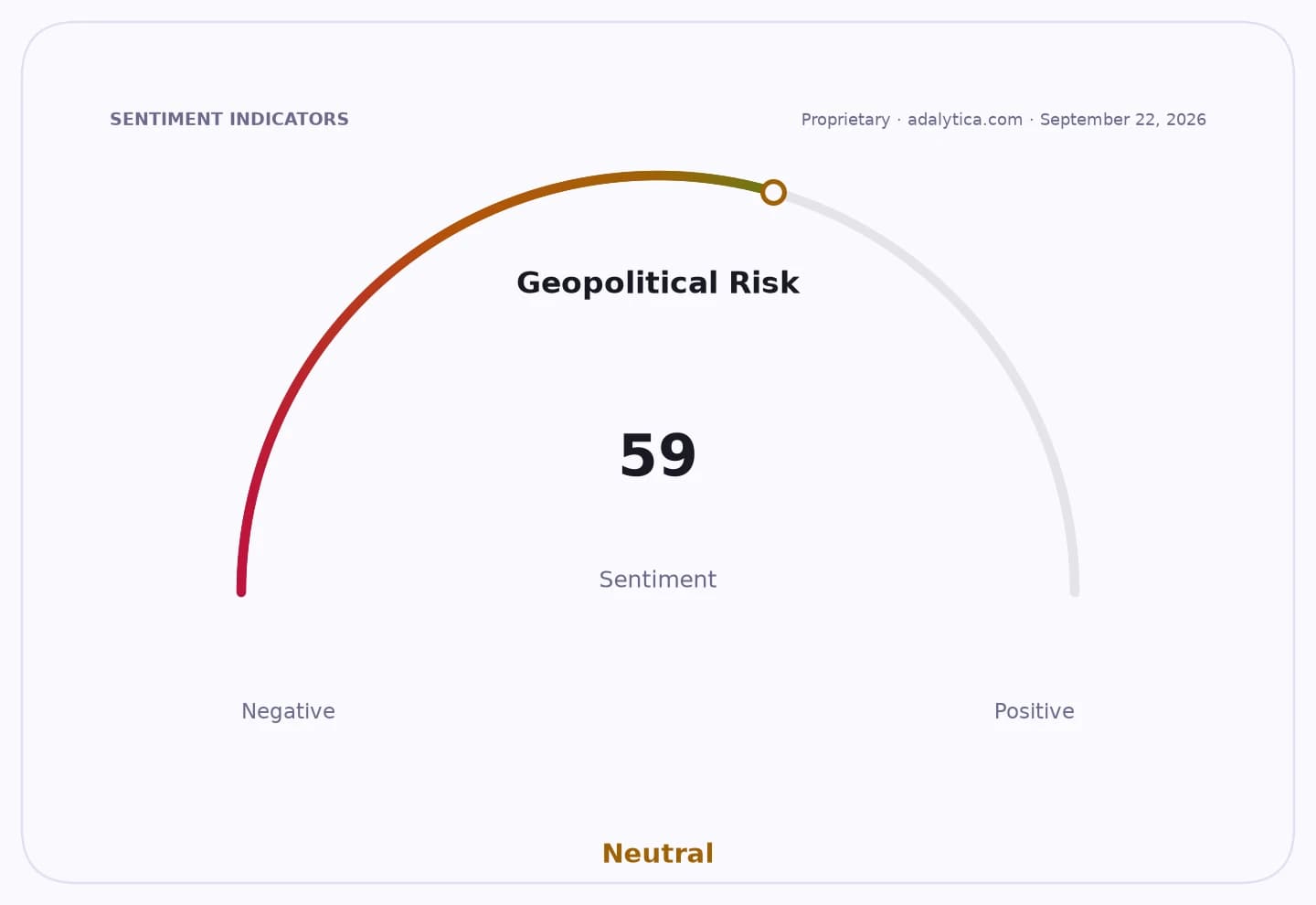
Sentiment IndicatorsⓘProprietary · adalytica.com · September 10, 2026
This is a snapshot — live sentiment, awareness and momentum for 130+ markets update continuously in the dashboard.Open AlphaPulse
The timing is significant. India and Sri Lanka have agreed to three defence pacts, according to the news context, signaling a more formalized security partnership after years of episodic cooperation. That makes the Colombo visit more than a diplomatic gesture. It suggests India is trying to convert proximity and political goodwill into durable strategic leverage at a time when Beijing still has a footprint in the island through the Hambantota port and related land leases.
Hambantota remains central to the market and geopolitical narrative. Sri Lanka handed a 99-year lease on the port to China in 2017 after struggling to service debt, and Chinese investment there has continued to deepen concerns in New Delhi about dual-use infrastructure in a strategically sensitive corridor. Dissanayake’s assurance does not erase those concerns, but it does indicate Colombo is willing to balance its ties carefully and avoid further antagonizing India, its largest neighbor and an essential economic partner.
That balance matters economically because Sri Lanka is still heavily reliant on external financing, trade and tourism, while India has become one of its most important sources of support and regional stability. A closer defence relationship can also improve predictability for shipping, maritime surveillance and infrastructure development, all of which matter to companies exposed to Indian Ocean trade routes and to broader risk premiums across South Asia.
For investors, the implication is that India’s influence in its neighborhood is being reinforced not only through economics and aid but also through security architecture. That can support the case for Indian ports, logistics and defence-linked suppliers, while keeping pressure on Chinese-backed assets in the region that may face greater political scrutiny.
The legal fight involving BJP spokesperson Gaurav Bhatia and his petition in Delhi High Court is far smaller in macro terms, but it fits the same broader theme of narrative control and institutional contestation in India’s political arena. The market relevance is limited; the Sri Lanka development is the one with regional economic and strategic consequences.
The key test now is execution. If the three defence agreements translate into more joint exercises, intelligence sharing and maritime coordination, India’s security umbrella around the Indian Ocean will look stronger. If Colombo’s assurances remain mostly rhetorical, investors will still have to price in a contested neighbourhood where ports, debt and defence are tightly intertwined.
| Entity | Gains | Losses |
|---|---|---|
| India | ▲Stronger regional security | ▼Fewer strategic concerns |
| Sri Lanka | ▲Indian support and trust | ▼Less room for China tilt |
| China | ▲— | ▼Greater scrutiny in Hambantota |
| Indian defence and maritime firms | ▲More cooperation | ▼— |