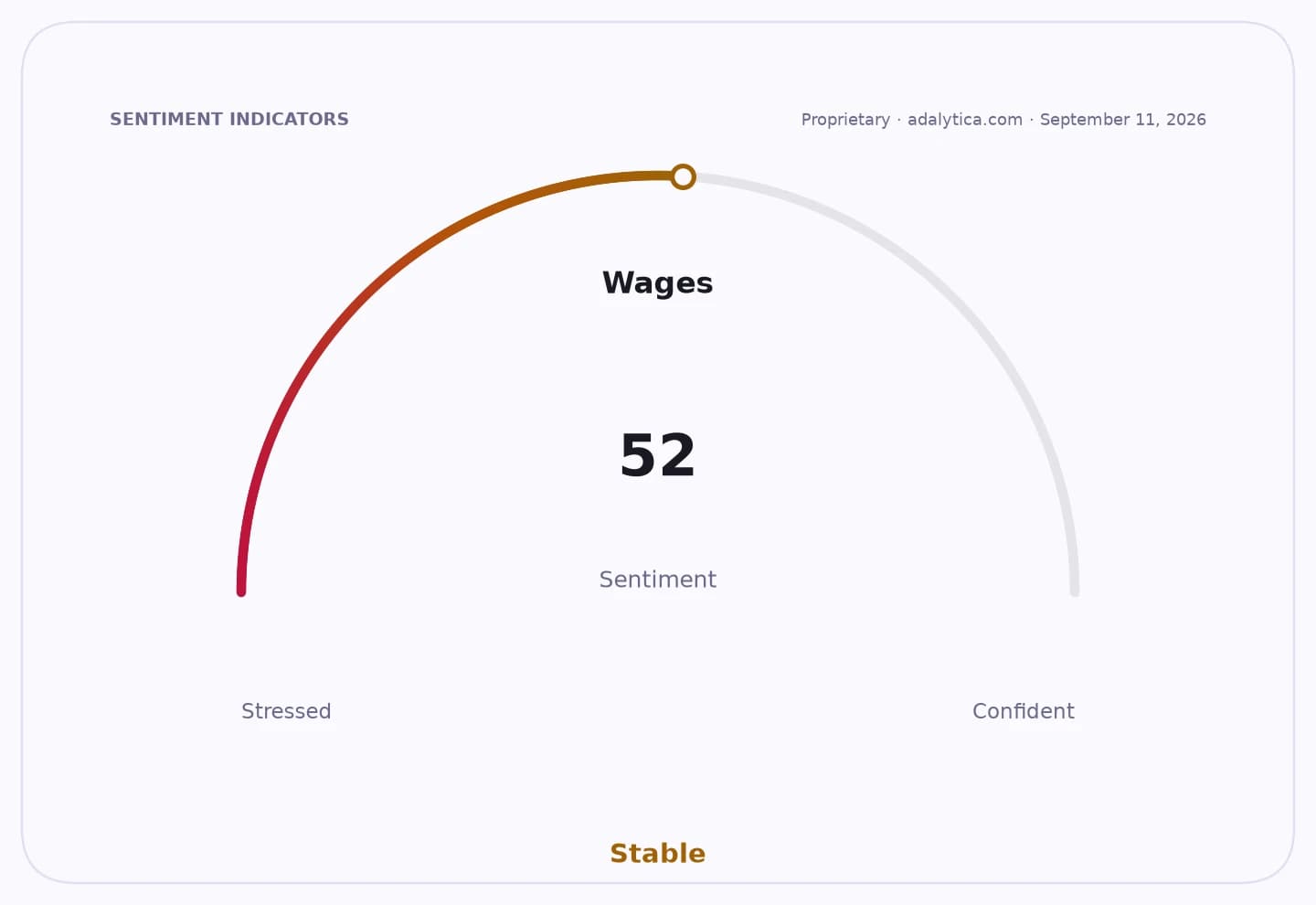
The biggest wage story in America is no longer Washington’s stalled $7.25 federal minimum, but the widening gap between that national floor and the states that have raced ahead with automatic increases and inflation-linked pay rules.
State minimum wages rise above federal floor in 2026
That matters because wage-setting at the state level is now a real economic variable for consumers, employers and investors. In 2026, Washington, D.C. tops the country at $17.95 an hour, followed by Washington at $17.13, Connecticut at $16.94 and California at $16.90. New York’s minimum is $16 statewide and $17 in New York City, Long Island and Westchester County. Rhode Island and Hawaii are at $16, while New Jersey pays $15.92. Oregon’s standard rate is $15.55, rising to $16.80 in the Portland metro area, and Colorado and Arizona round out the top tier above $15.
Sentiment IndicatorsⓘProprietary · adalytica.com · September 28, 2026
This is a snapshot — live sentiment, awareness and momentum for 130+ markets update continuously in the dashboard.Open AlphaPulse
The macro message is clear: the U.S. labor market is increasingly fragmented, with labor costs diverging sharply by state and metro. More than 30 states and Washington, D.C., now set minimum wages above the federal level, while Alabama, Louisiana, Mississippi, South Carolina and Tennessee still rely on the federal minimum because they have not adopted their own standard. That split creates a growing difference in household purchasing power, retail pricing and service-sector margins across regions.
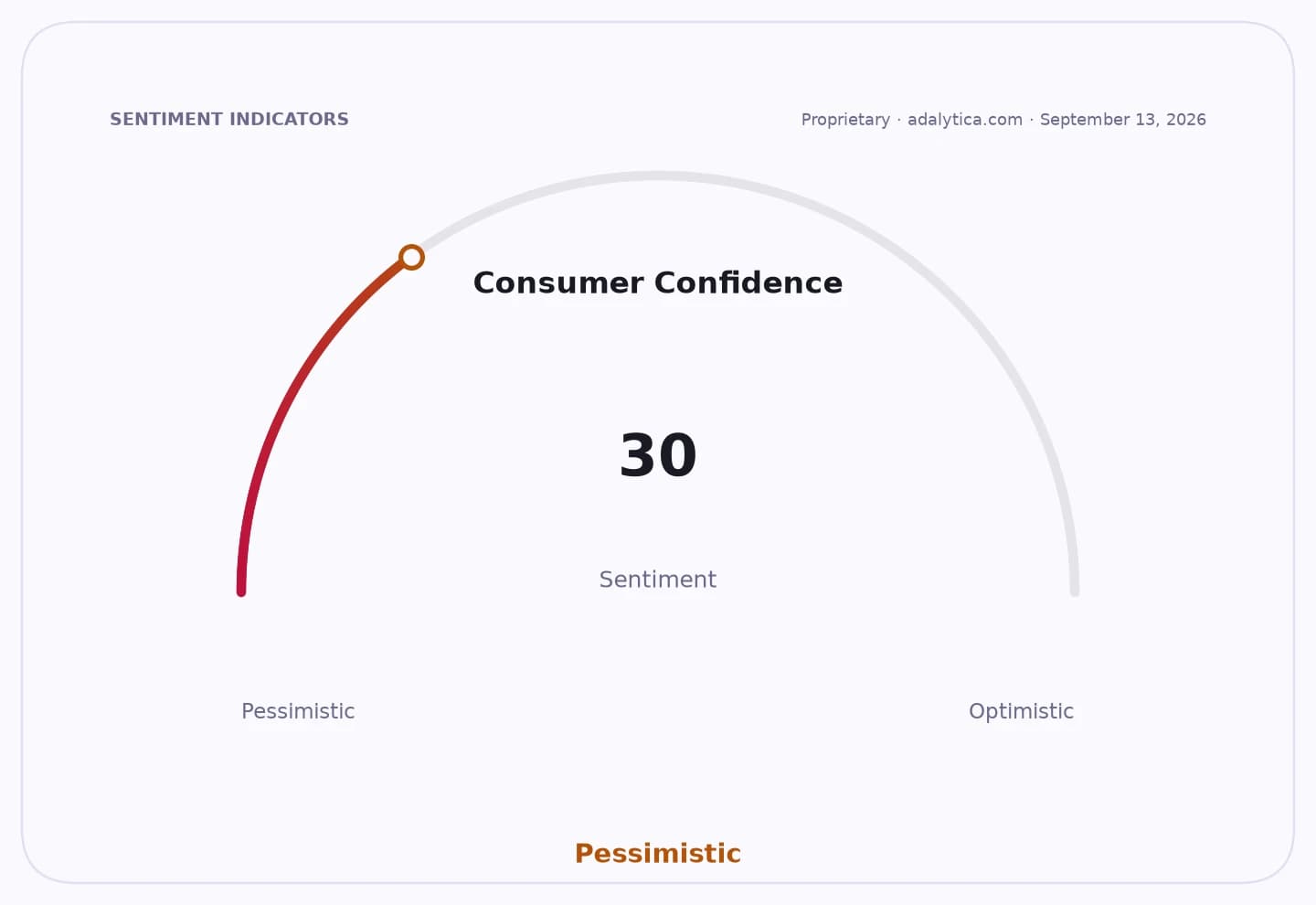
For investors, the implications are immediate. Higher wage floors can support discretionary spending among lower-income workers, which is relevant for retailers, restaurants and consumer brands exposed to the XLY complex. But they also raise labor costs for employers with heavy hourly staffing needs, especially in hospitality, food service, logistics and in-store retail. The pressure shows up first in margins, then in hiring, pricing and automation spending.
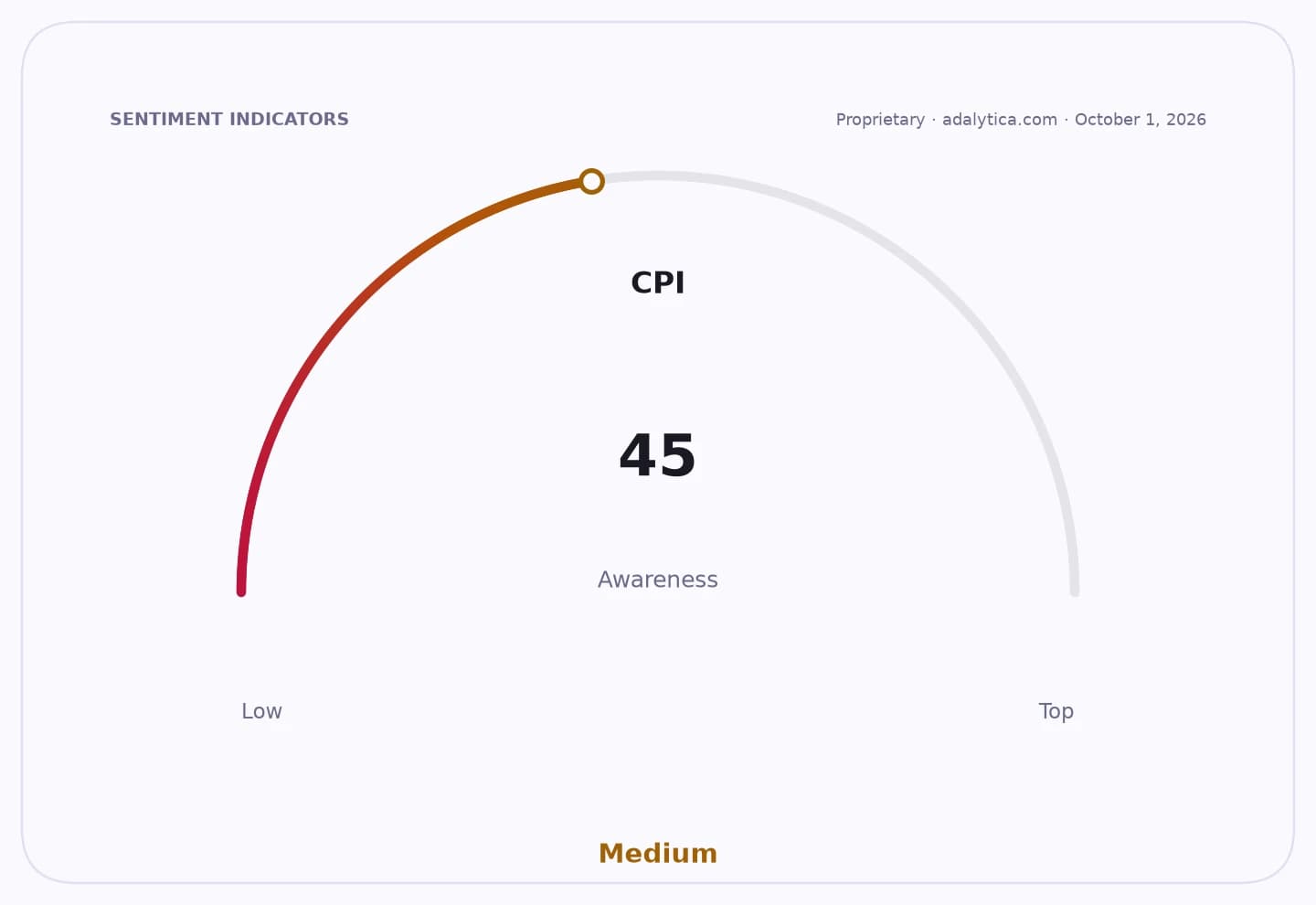
That’s why the market should view state minimum-wage hikes as part of the broader inflation and labor-cost debate, not just a policy footnote. Even with U.S. unemployment at 4.1% in August and forecast to ease to 4.02% in September, wage policy remains a structural driver of cost inflation in labor-intensive industries. The 50-day and 200-day moving averages on sector ETFs show the market is already rotating around that reality: consumer-discretionary shares have been volatile, while financials and industrials have been trying to absorb the same labor-cost backdrop from different angles.
The investable thesis here is straightforward. Investors should look beyond the headline wage number and focus on who can pass through higher labor costs and who cannot. Large national chains, payment processors and automation suppliers are better positioned than small employers with thin margins. Meanwhile, consumer-facing companies in high-wage states may enjoy stronger local spending, but only if price hikes do not offset the benefit.
The federal minimum wage has been frozen since 2009, but the real action is in the states, where wage floors are becoming another expression of policy competition and cost-of-living pressure. As more jurisdictions tie pay to inflation, the winners will be employers with scale, pricing power and automation leverage. The losers will be the labor-heavy businesses that still compete on thin margins and low hourly pay.
| Entity | Gains | Losses |
|---|---|---|
| High-wage state workers | ▲Higher take-home pay | ▼Lower-wage states |
| Large retailers and chains | ▲Scale and pricing power | ▼Small hourly employers |
| Automation providers | ▲More demand for labor-saving tech | ▼Low-margin service firms |
| Consumer discretionary stocks | ▲Stronger local spending | ▼Margin pressure from wages |