The pound is losing traction as softer UK inflation expectations reinforce the case for Bank of England easing, even as U.S. yields stay elevated and keep the dollar broadly supported.
Sterling Weakens as BoE Easing Bets Rise
That mix matters because sterling is trading at the intersection of two policy stories: a UK economy showing enough disinflation to keep rate-cut bets alive, and a U.S. market still pricing a relatively firm Federal Reserve stance. The result is a weaker pound against the dollar, with FXB, the Invesco CurrencyShares British Pound Sterling Trust, slipping to 128.70 on July 21 after touching 130.13 two sessions earlier.
Sentiment IndicatorsⓘProprietary · adalytica.com · July 22, 2026
This is a snapshot — live sentiment, awareness and momentum for 130+ markets update continuously in the dashboard.Open AlphaPulse
The inflation backdrop is doing the heavy lifting. The latest U.S. CPI forecast points to a 0.89% monthly rise in July, underscoring how sticky price pressures remain in the world’s largest economy, while UK inflation has eased to its lowest level since March 2025, according to the market context. For currency traders, that relative divergence is more important than the absolute level of inflation: weaker UK price momentum usually translates into lower yields and a softer pound, especially if the BoE is seen moving faster than the Fed.
Yields are reinforcing that view. The U.S. two-year Treasury note is around 4.205%, with the 10-year at 4.582%, levels that continue to offer the dollar an interest-rate cushion. Against that backdrop, sterling has been unable to sustain gains, even though FXB still trades above its 50-day moving average of 128.48 and its 200-day moving average of 127.81.
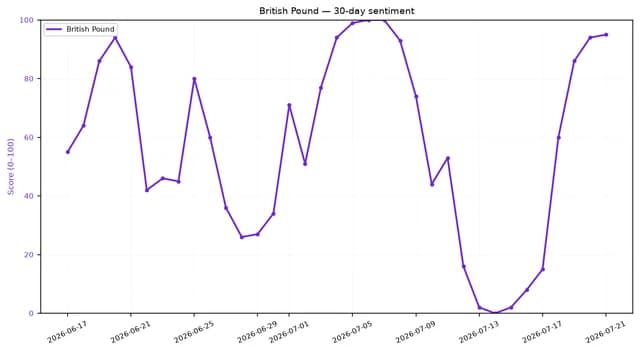
Momentum indicators suggest the move is losing steam rather than breaking down outright. FXB’s RSI has eased to 61.4 from 85.9 on July 15, while MACD remains positive at 0.3, pointing to a market that is still constructive but less stretched. Adalytica’s British pound trade signals show sentiment at 95, or “Extreme Greed,” even as awareness sits in “Fear,” a combination that often leaves the currency vulnerable to a pullback if incoming data fail to justify the optimism.
For investors, the message is straightforward: a softer UK CPI print would likely keep pressure on sterling, support dollar strength, and weigh on any pound-sensitive assets tied to the currency. The next catalyst is the next batch of UK inflation and labor data, which will shape whether the BoE can afford to move earlier than the Fed or whether the pound has to digest another leg lower.
| Entity | Gains | Losses |
|---|---|---|
| U.S. dollar | ▲Higher relative yields | ▼None |
| British pound | ▲Short-covering on surprise inflation upside | ▼Rate-cut expectations |
| Bank of England doves | ▲Easier policy case | ▼Sterling support |
| FXB holders | ▲Range trade if pound stabilizes | ▼Currency downside from weaker CPI |