The battle over control of the Strait of Hormuz is keeping a major geopolitical risk premium in crude, with Brent holding above $112 a barrel and WTI near $103 as the US and Iran trade claims over who can secure one of the world’s most important shipping lanes.
Strait of Hormuz Tension Keeps Brent Above $112
That matters because Hormuz is the main outlet for Gulf oil and LNG, and any disruption there would ripple straight through energy prices, shipping costs and inflation expectations in Europe and beyond. The route carries about 20 million barrels a day of oil products and more than 11 Bcf/d of LNG, leaving little room for a sustained outage without forcing buyers to bid up alternative supplies.
Sentiment Indicators
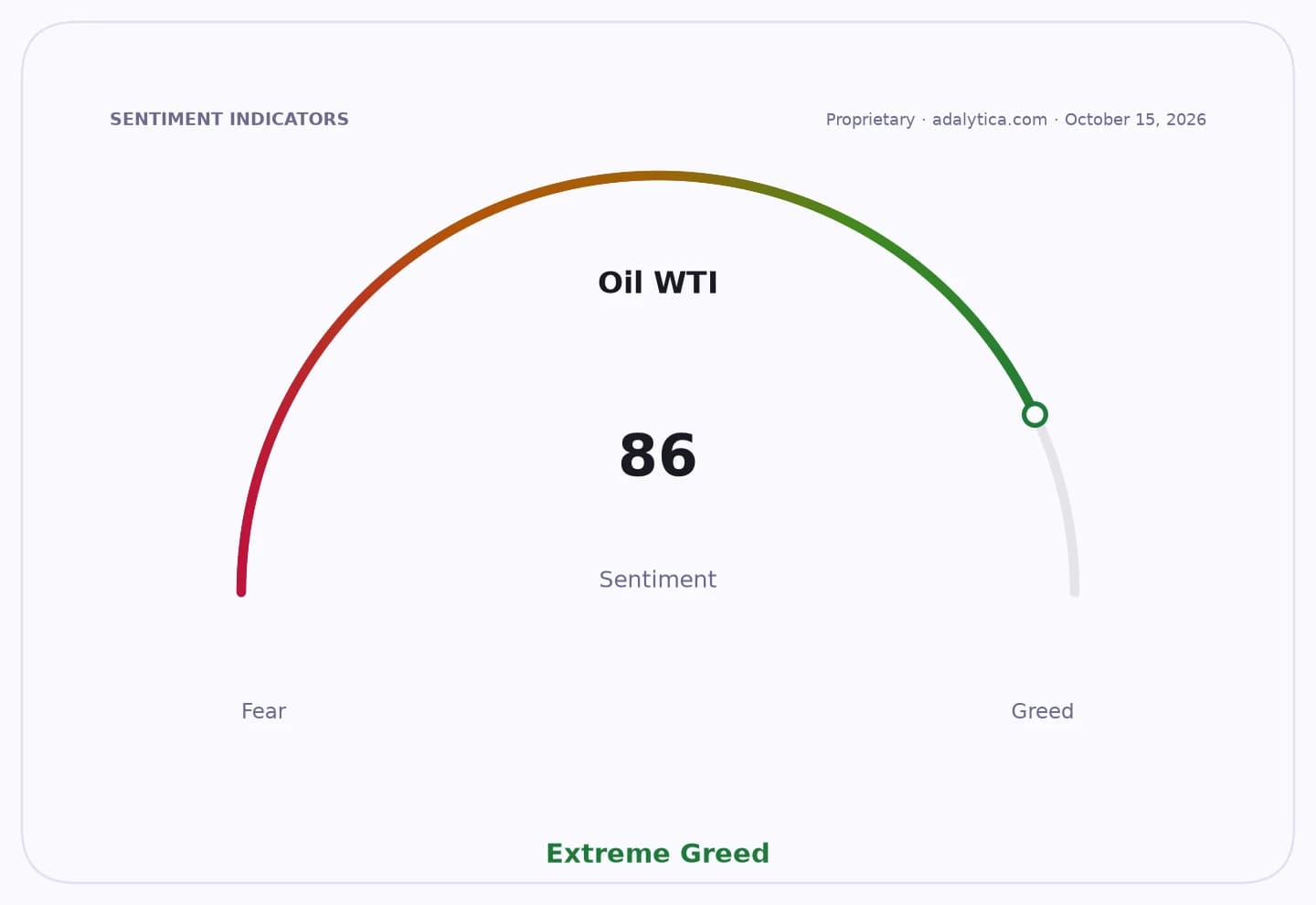
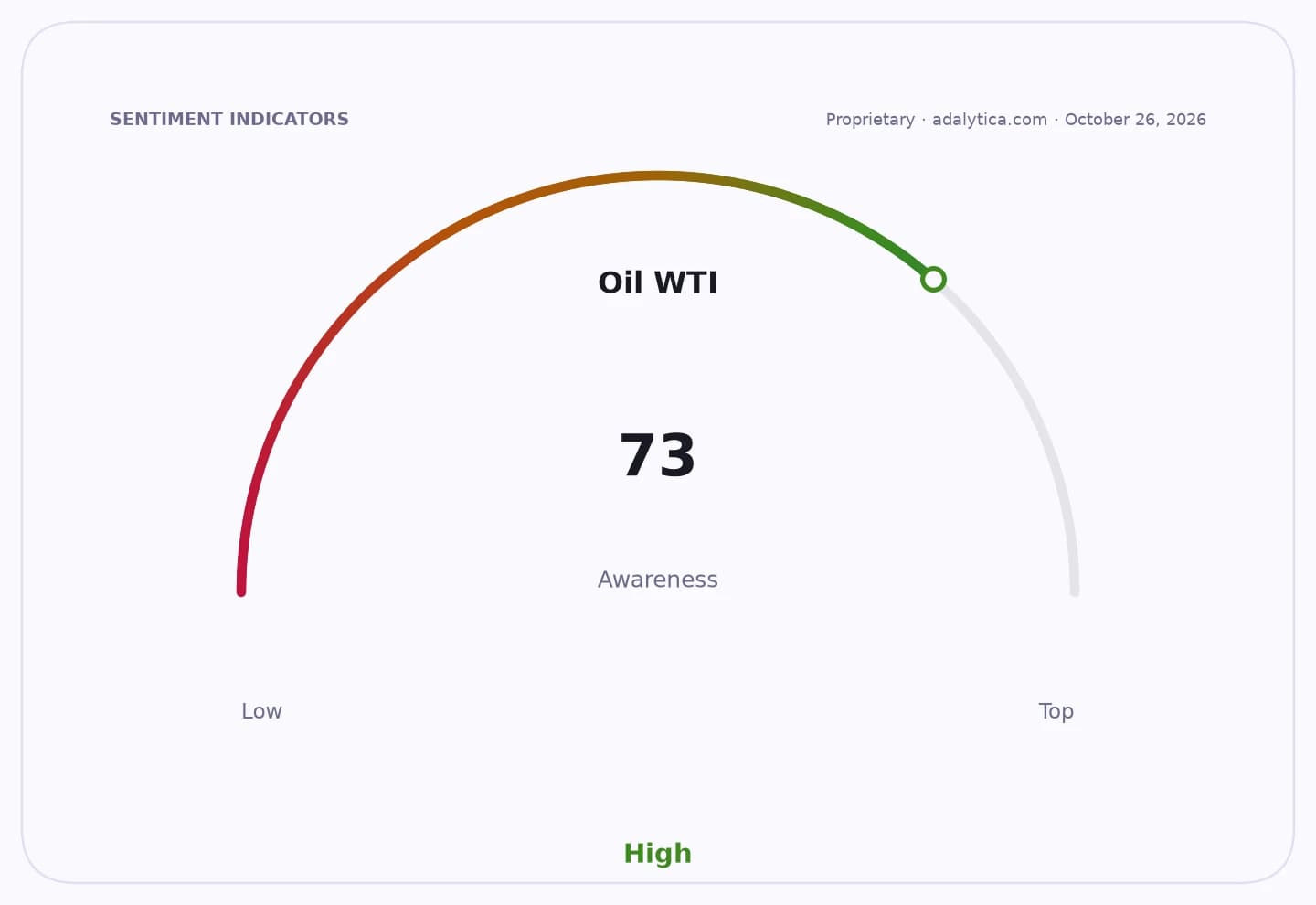
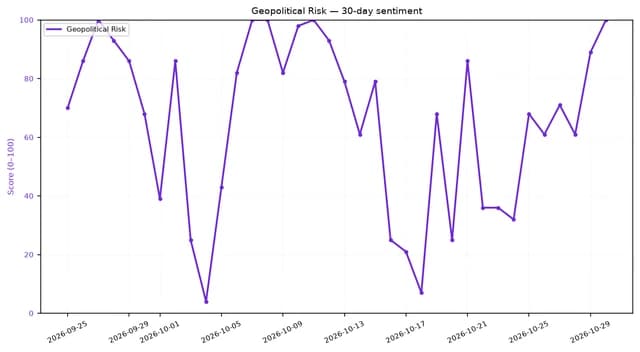
The immediate market read-through is higher fuel costs, tighter freight capacity and renewed pressure on industrial margins. WTI’s latest close of $102.95 sits well above its 50-day moving average of $94.61 and its 200-day average of $86.34, while Brent ended at $112.33, also comfortably above its 50-day and 200-day averages, underscoring how quickly traders are pricing in geopolitical stress. Adalytica’s Global Stability Sentiment gauge is flashing extreme greed even as awareness remains in extreme fear, a split that suggests investors are leaning into risk assets while acknowledging how fragile the backdrop is.
The standoff comes after CENTCOM said US forces remain in control of navigation in the strait and have removed Iranian mines, rejecting Islamic Revolutionary Guard Corps claims that Tehran has full control. The competing narratives have raised the odds of more naval deployments and more mine-clearing operations, even if neither side wants a direct clash that would shut the waterway.
For Europe, the bigger problem is not just oil but the possibility of a combined shock with Bab el-Mandeb and the Red Sea, which would lengthen Asia-Europe shipping routes by as much as 12 to 14 days if vessels detour around the Cape of Good Hope. That would tighten container capacity, lift bunker fuel use and feed through to the price of chemicals, fertilizers, food and manufactured goods.
The economic stakes are already showing up in company disclosures. BP has flagged ongoing geopolitical instability in the Middle East as a material consideration for its interim financial reporting, while tanker operators have warned that changing security conditions around the Strait of Hormuz and the Red Sea are increasing waiting times, repositioning costs and insurance premiums.
For investors, the key question is whether this remains a contained risk premium or becomes a supply shock that pushes oil and freight higher for longer. The next catalyst is any fresh military incident in Hormuz or a policy response from OPEC+ and Western navies that changes the market’s assumption about how long the shipping lanes stay open.
| Entity | Gains | Losses |
|---|---|---|
| Oil producers | ▲Higher crude prices | ▼Demand-sensitive buyers |
| Tanker and shipping firms | ▲Higher freight rates | ▼Importers and exporters |
| European refiners and industry | ▲None | ▼Margins and input costs |
| US naval forces | ▲Strategic leverage | ▼If tensions escalate further |