The Sudanese pound’s collapse to 10,100 per dollar in the parallel market is deepening an inflation shock that is already feeding through to fuel, bread and other essentials, underscoring how a broken foreign-exchange market can quickly become a broader economic crisis.
Sudanese pound falls to 10,100 per dollar
Traders said the dollar closed at 10,100 pounds on Tuesday in the informal market, after rising from 8,700 on Monday to 9,300 and then 10,100 within hours. That marks the worst level in about 26 years and highlights the speed at which confidence in the local currency is evaporating as demand for hard currency outpaces supply.
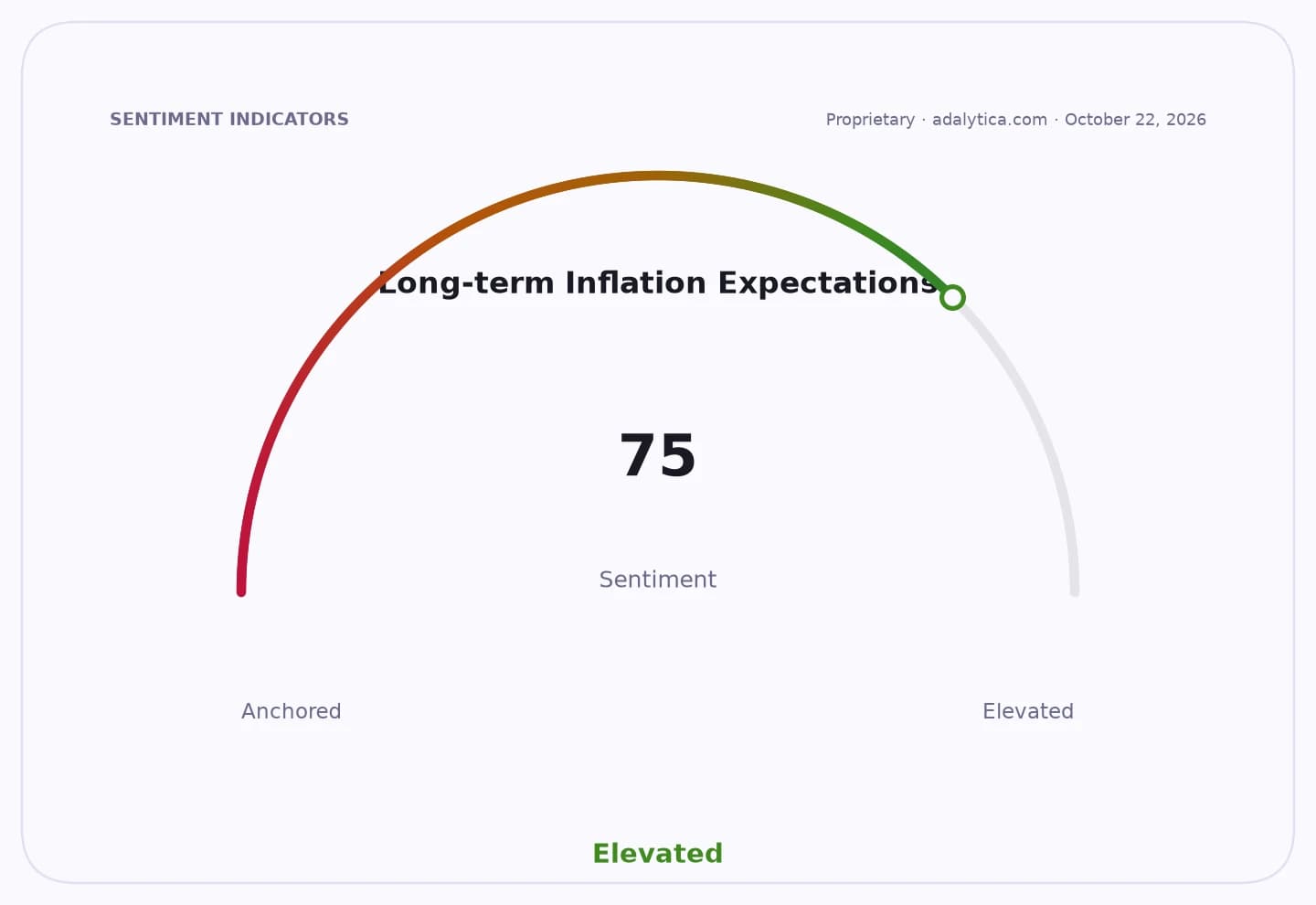
Sentiment IndicatorsⓘProprietary · adalytica.com · October 25, 2026
This is a snapshot — live sentiment, awareness and momentum for 130+ markets update continuously in the dashboard.Open AlphaPulse
The surge matters because Sudan’s parallel market is functioning as the country’s real price setter. With limited central bank intervention and a banking system unable to reliably supply dollars for imports, companies and households have increasingly been forced into the informal market. That pushes up the local-currency cost of imported fuel, wheat and basic goods, making it harder to stabilize prices even when authorities announce spending cuts or other austerity measures.
Prime Minister Kamel Idris has said the government will curb spending from October to ease living costs and defend the exchange rate, but economists argue those steps will do little while the war continues to drain public finances and disrupt trade. The budget is already under strain, with state spending fragmented across short time horizons because the finance ministry lacks clear revenue visibility.
The currency slide is already filtering into consumer prices. Bakeries have raised the cost of two loaves to 1,000 pounds from three loaves, while flour mills have lifted prices as import costs jump. Traders also said fuel shortages are adding pressure, and the energy ministry has opened talks with Saudi Aramco over fuel supplies, a sign that the country’s import dependence is worsening the demand for foreign exchange.
For investors, the episode is a reminder that Sudan’s macro problem is not just depreciation but liquidity scarcity, institutional weakness and war risk. Without regular central bank dollar sales, a meaningful rebound in exports or a political shift that restores access to external financing, the pound is likely to stay under extreme pressure. The few beneficiaries are exporters and holders of hard currency; the losers are importers, consumers and the broader formal economy, which faces a deeper squeeze on activity and margins.
| Entity | Gains | Losses |
|---|---|---|
| Dollar holders / parallel-market traders | ▲Higher local-currency value | ▼— |
| Importers and fuel buyers | ▲— | ▼Higher financing costs |
| Sudanese consumers | ▲— | ▼More expensive food and bread |
| Government / central bank | ▲— | ▼Loss of exchange-rate control |