Sungrow Power Supply’s chair has proposed a share repurchase of as much as 1 billion yuan, a move aimed at supporting the stock and signaling confidence in the inverter maker’s outlook even as China’s solar supply chain remains volatile.
Sungrow Buyback Signals Confidence Amid Solar Volatility
The buyback matters because repurchases can tighten free float, cushion earnings-per-share dilution and provide a floor for shares when investors are re-rating the sector on margin pressure, pricing competition and policy uncertainty. For a company as closely tied to China’s renewable buildout as Sungrow, the proposal is also a statement that management sees the current valuation as cheap enough to put cash behind it.
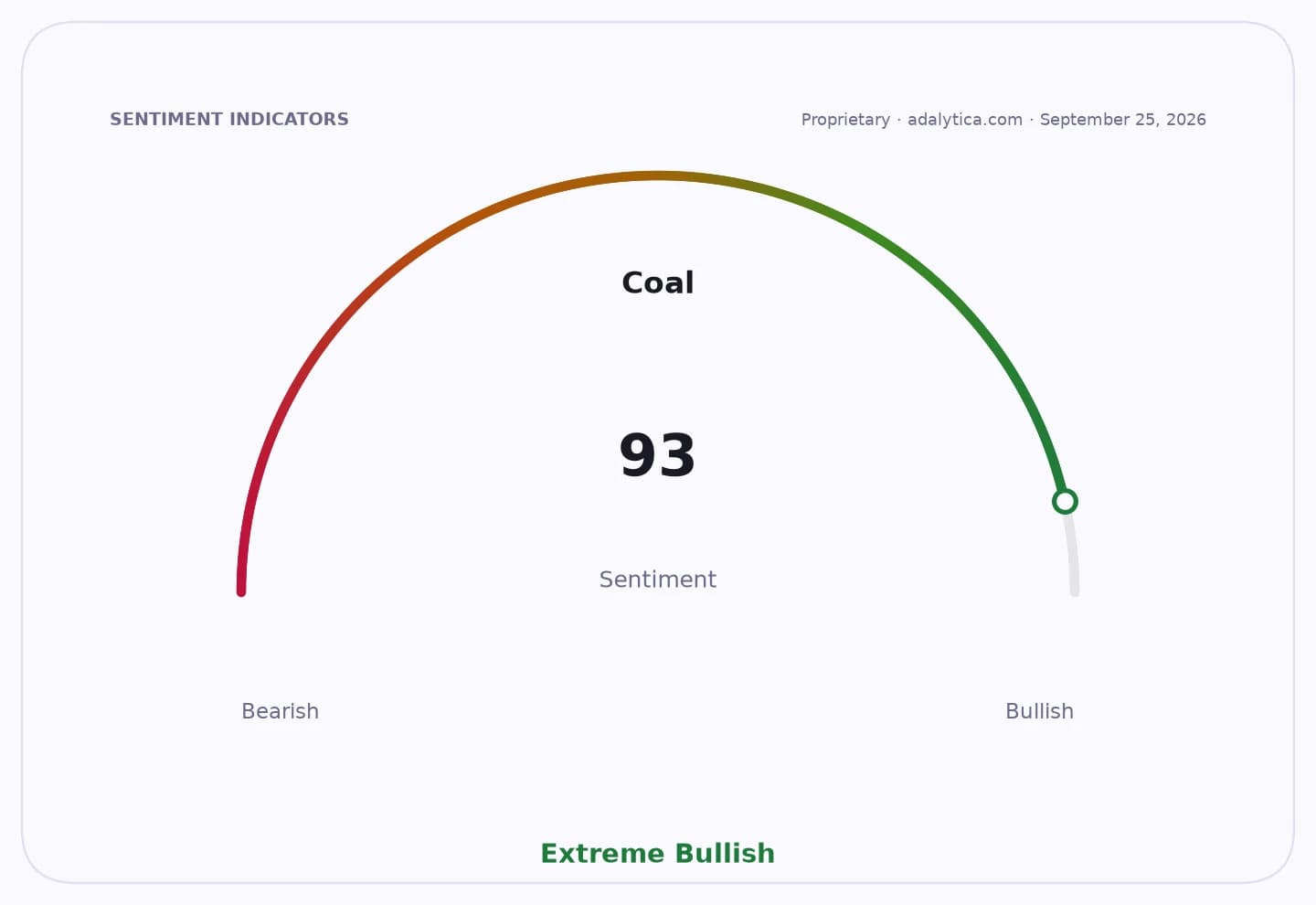
Sentiment IndicatorsⓘProprietary · adalytica.com · July 22, 2026
This is a snapshot — live sentiment, awareness and momentum for 130+ markets update continuously in the dashboard.Open AlphaPulse
The timing underscores that message. Shares of peer First Solar have been highly volatile in recent months, swinging from $219.33 in mid-August to $206.05 in the latest trading data after touching $284.59 in December, while technical readings have weakened sharply, with the 50-day moving average well above the latest close and RSI readings below 30 on the most recent sessions. Enphase Energy has shown a similar pattern, falling from a 2026 peak above $72 to just under $40 recently, with price action sitting below both its 50-day and 200-day moving averages.
That backdrop suggests investors are still demanding proof that solar hardware makers can defend margins and convert policy support into durable earnings. A buyback by Sungrow, one of China’s best-known inverter suppliers, is likely to be read as a capital-allocation move designed to stabilize sentiment around the stock at a time when the broader renewable-energy trade is struggling to find direction.
The proposal also fits a wider pattern across corporates using repurchases to return cash and offset market skepticism. But for Sungrow, the key question is whether a 1 billion yuan authorization is a short-term support measure or the start of a broader effort to reassure investors that earnings and cash flow can hold up through another choppy cycle in solar demand.
The next catalyst will be whether the board formally approves the plan and whether management pairs it with updated guidance, because investors will want to know if the company is buying time, buying shares or both.
| Entity | Gains | Losses |
|---|---|---|
| Sungrow management | ▲Signals confidence | ▼Commits cash |
| Sungrow shareholders | ▲Price support | ▼Less cash on balance sheet |
| Short sellers | ▲Higher squeeze risk | ▼Less downside momentum |
| Solar sector skeptics | ▲Fewer proof points | ▼Buyback-backed sentiment boost |