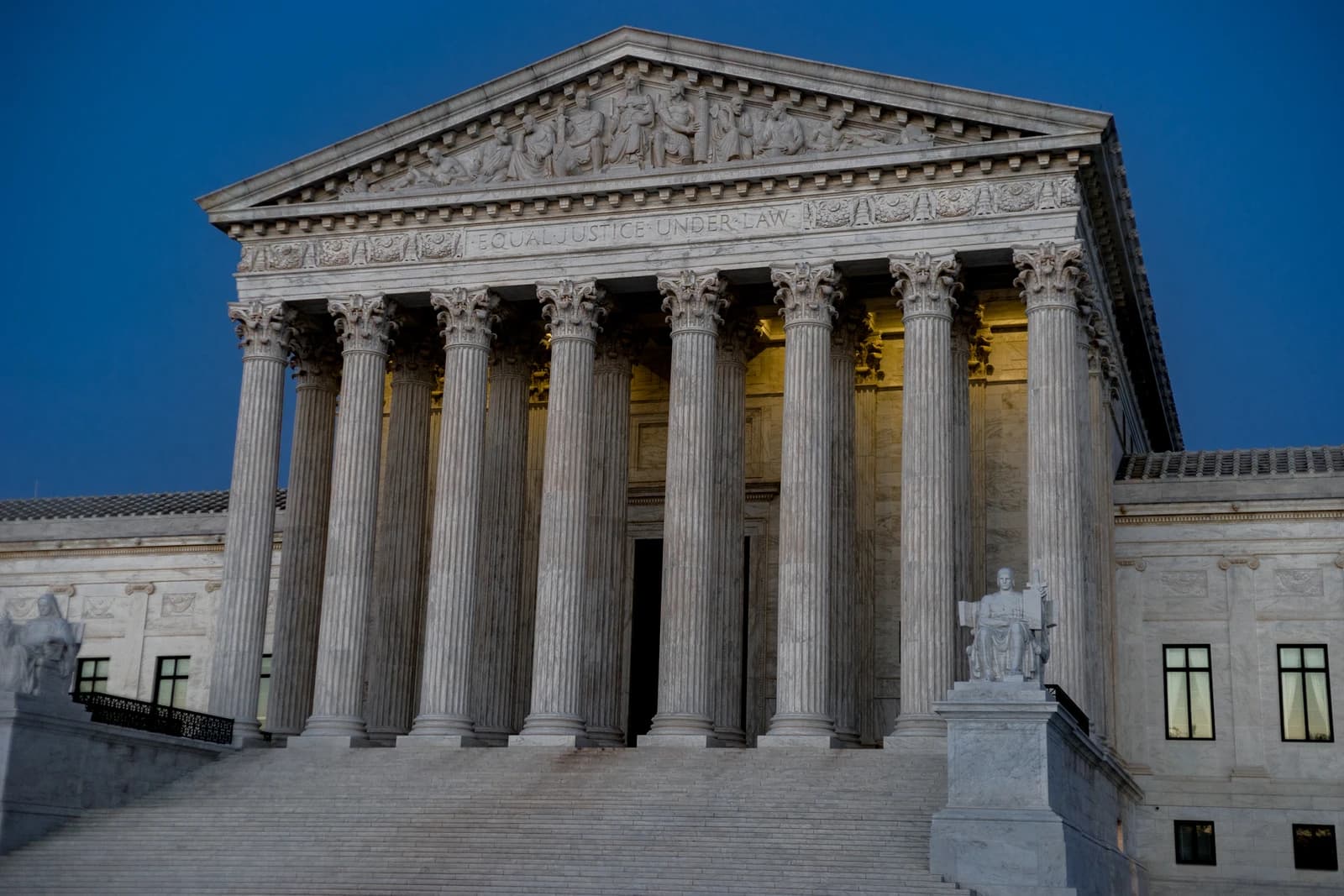
The US Supreme Court is set to test how far religious schools can go in excluding LGBTQ+ families while still receiving public money, a ruling that could redraw the legal boundary between religious liberty and state nondiscrimination rules.
Supreme Court hears Colorado Catholic preschool case

At issue in St. Mary Catholic Parish v. Roy is whether two Colorado Catholic preschools should be allowed into the state’s free education system even though they reject children with LGBTQ+ parents. The case matters beyond Colorado because it goes to the broader question of whether governments can attach civil-rights conditions to taxpayer-funded programs that religious institutions want to access.
Sentiment Indicators
For investors, the most direct market read-through is limited, but the case feeds into a wider policy environment in which the Supreme Court has increasingly sided with religious claimants in disputes involving public benefits. That can influence everything from education policy and nonprofit funding structures to litigation risk for state agencies and school operators that rely on public reimbursement or grants.
The economic significance lies in the precedent. If the court rules for the preschools, states may have less room to insist that participants in publicly funded education programs comply with sexual-orientation and gender-identity nondiscrimination standards. That would strengthen private religious providers’ bargaining power in state-run or state-subsidized systems, while potentially forcing governments to redesign funding rules, raise oversight costs or defend more lawsuits.
A decision for Colorado would do the opposite, reinforcing the power of states to condition public dollars on compliance with broad civil-rights rules. That would support the current framework for public-school partnerships and early-childhood programs, but could also deepen the long-running clash between religious organizations and LGBTQ+ advocates over access to taxpayer support.
The timing is politically sensitive. The case comes amid a broader national debate over LGBTQ+ rights and public accommodation law, and it follows a series of high-profile Supreme Court rulings that have expanded religious exemptions. For markets, the immediate impact is more about regulatory uncertainty than valuation, but institutions that operate in education, childcare, and other publicly funded social services will be watching for whether the court grants religious providers wider latitude to opt out of anti-discrimination requirements.
Investors should read the case as a policy risk marker: a ruling in favor of the Catholic preschools would likely encourage more challenges to state funding conditions, while a ruling for Colorado would preserve existing compliance standards and limit the scope for publicly financed exclusions.
| Entity | Gains | Losses |
|---|---|---|
| Catholic preschools | ▲Broader access to public funds | ▼Limits on religious autonomy |
| Colorado and other states | ▲Stronger nondiscrimination rules | ▼Greater litigation burden |
| LGBTQ+ families | ▲Civil-rights protections | ▼Risk of exclusion from programs |
| Private school operators | ▲Clearer funding precedent | ▼Compliance costs if states prevail |